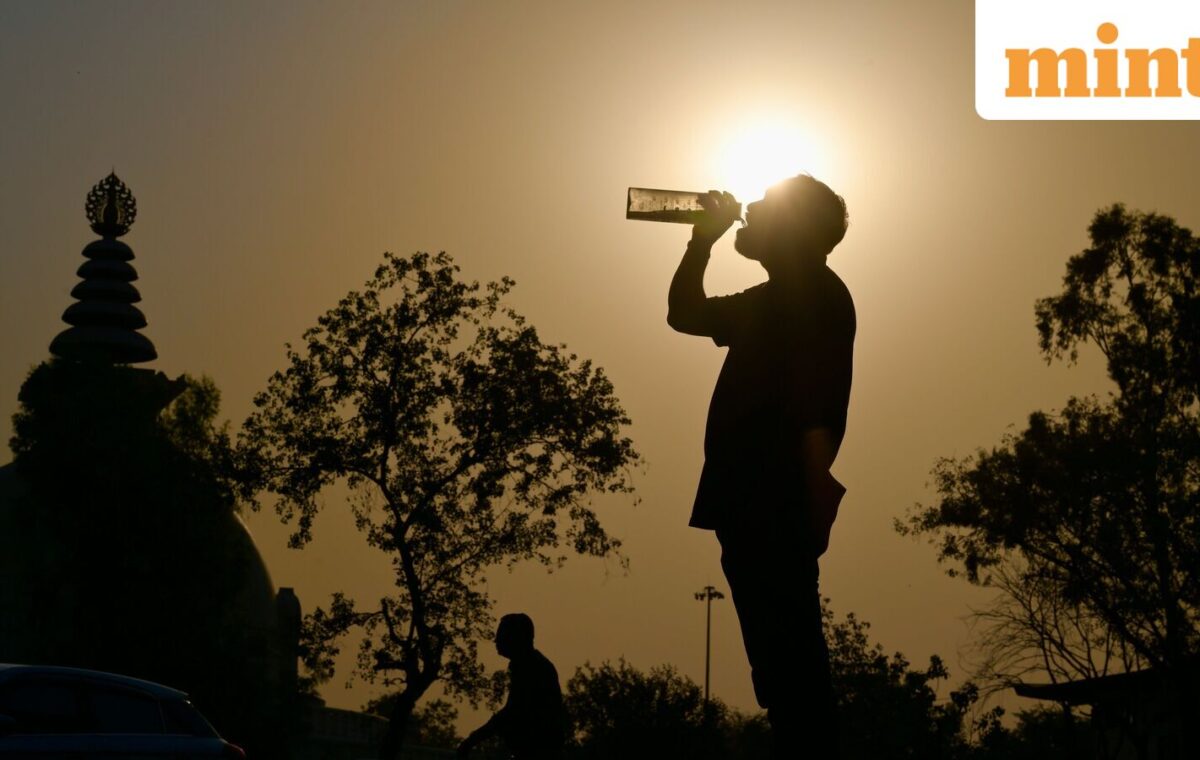
India’s monsoon could face prolonged disruption from a potentially record-strength El Niño, with unusually warm Pacific Ocean waters also raising concerns about an exceptionally hot summer in 2027, according to The Telegraph.
Although the climate phenomenon is forecast to reach its strongest phase between the end of 2026 and early 2027, its effects may linger well beyond its peak. As per scientists, the heat generated during El Niño can persist for months even as the event weakens, potentially continuing to influence the monsoon, temperatures and weather conditions in India and other parts of the world.
The projections have sparked concern in India, where monsoon rainfall is currently 13% below normal, the report noted. Around 40% of the country has received at least 20% less rainfall than average, raising concerns over crop production and the broader economy.
The UK Met Office said on Friday that the El Niño currently developing could be the strongest recorded since the 19th century. According to some forecasts, Pacific sea surface temperatures could climb to more than 3°C above the normal level by late 2026 or early 2027.
“I have never seen an El Niño signal this intense in our forecasts,” Adam Scaife, head of the long-range forecasting division at the UK Met Office, said in a statement on Friday.
Madhavan Rajeevan, atmospheric physicist, monsoon expert and former secretary of India’s earth sciences department, told The Telegraph, “The one thing we know with absolute certainty is that the El Niño will reverse", adding, "El Niño is part of an oscillatory, pendulum-like system that involves the ocean and the atmosphere — like a pendulum, it will swing back.”
Roxy Mathew Koll, a climate scientist at the Indian Institute of Tropical Meteorology, said temperatures could remain unusually high for several months even after El Niño begins to shift.
Studies examining the period following strong El Niño events have indicated a higher likelihood of extreme heat across parts of India during spring and early summer. Koll said this lingering warmth could contribute to 2027 becoming one of the hottest years ever recorded globally.
However, scientists cautioned that this does not mean every part of India will see record temperatures in April or May. The distribution of heat will depend on factors including regional atmospheric circulation and conditions in the Indian Ocean, they said.
Jerome Vialard, a climate scientist at France’s Research Institute for Development, said natural processes eventually cause El Niño to weaken and shift the Pacific towards La Niña, which is characterised by a slight drop in sea surface temperatures.
“Changes in winds during El Niño send a slow-moving signal through the ocean that eventually brings cooler water towards the equatorial Pacific, helping push the system towards La Niña. El Niño events tend to be followed by La Niña, and vice versa," Vialard told this newspaper.
Vialard said an El Niño event can temporarily increase the planet’s average surface temperature by around 0.2°C to 0.3°C during its peak and subsequent decline. This comes on top of approximately 1.4°C of human-driven global warming since pre-industrial times, a combination that could make 2027 an exceptionally warm year globally, he said.
However, El Niño does not always result in a weak monsoon in India. Rajeevan and his colleague D. Sivananda Pai of the India Meteorological Department (IMD) analysed 125 years of monsoon patterns and found in a 2007 study that rainfall was below normal in only 43% of El Niño years. In the remaining years, rainfall was either normal or above normal.
Rajeevan mentioned, “But almost all exceptionally strong El Niño events are associated with large deficits in the monsoon or drought. And we’re seeing significant rainfall deficit this year.”
India’s June-to-September monsoon accounts for almost 75 per cent of the country’s annual rainfall, making it crucial for farming, reservoir levels, hydropower production and the broader economy.