Account subscription benefits alongside Premium Stories, Editorials,
Opinions and more. Unlock these with Subscription
The View From India
Looking at World Affairs from the Indian perspective.
First Day First Show
News and reviews from the world of cinema and streaming.
Today's Cache
Your download of the top 5 technology stories of the day.
Science For All
The weekly newsletter from science writers takes the jargon out of science and puts the fun in!
Data Point
Decoding the headlines with facts, figures, and numbers
THEdge
At the cutting edge of education and careers
Health Matters
Ramya Kannan writes to you on getting to good health, and staying there
Gender Agenda
Stories from beyond the binary.
The Hindu On Books
Books of the week, reviews, excerpts, new titles and features.
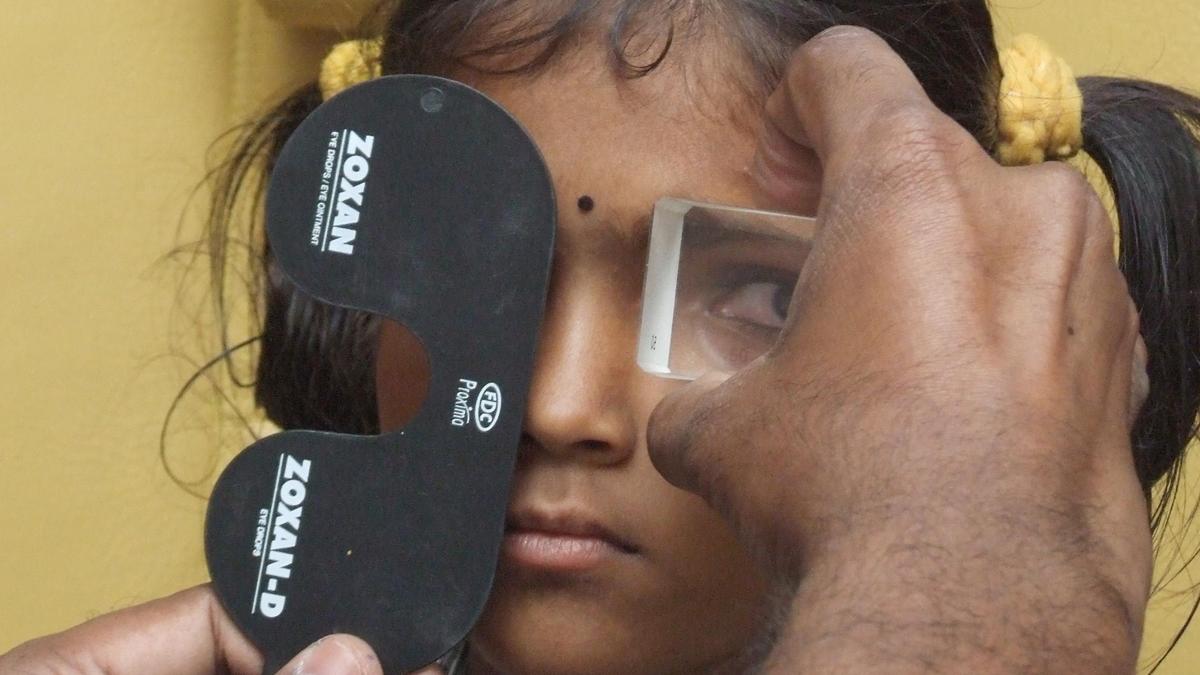
An estimated 1.81% of the global population has horizontal strabismus, according to a recent systematic review and meta-analysis. Image used for representational purposes only
| Photo Credit: RAJARATHINAM RM
Squint, or strabismus, is a condition in which the eyes are not aligned and do not look in the same direction at the same time. One eye may turn inwards towards the nose (esotropia), outwards (exotropia), upwards or downwards, while the other eye remains focused on an object. This misalignment may be constant or may occur intermittently, such as when a person is tired.
A recent study estimated that horizontal strabismus affects 1.81% of the global population, or about 138.5 million people. Exotropia affects an estimated 1.14% (87.5 million), compared with 0.67% (60 million) for esotropia. The pattern has also shifted across generations, with exotropia now more common globally. The study found regional differences, but noted that parts of South Asia remain under-represented in research.
The World Health Organization (WHO) recognises strabismus as one of the eye conditions that can require long-term monitoring and treatment. WHO’s guidance on vision screening in preschool children notes that strabismus is one of the causes of amblyopia, or reduced vision resulting from abnormal visual development.
The most obvious sign is that the eyes appear to point in different directions. Some children may close one eye in bright light, tilt or turn their head to see, or have difficulty judging distances.