You have reached your maximum number of saved items.
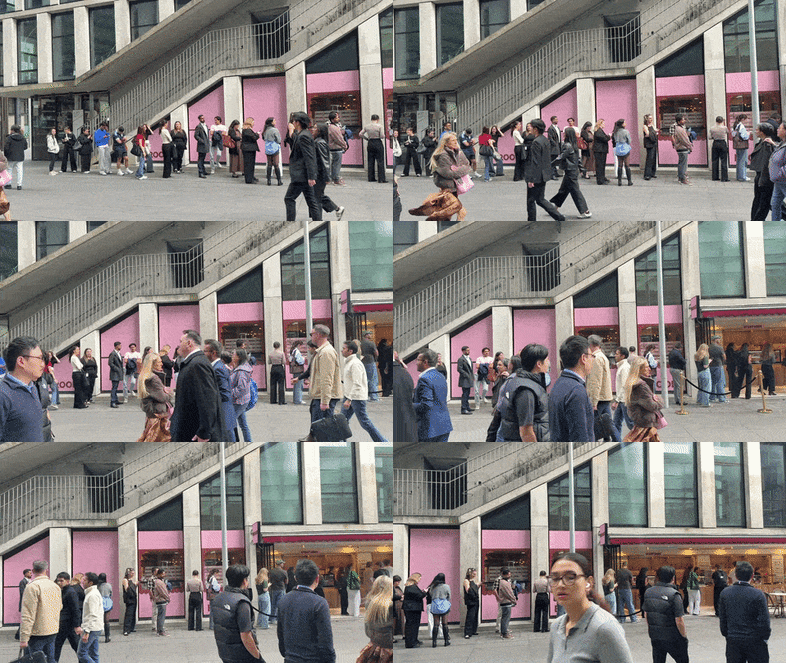
Queuing for cookies and frozen yoghurt, waiting for watches, standing for sandwiches and even lining up for lipstick has become a modern pastime.
Australian cities are spoiled with a smorgasbord of cuisine and shopping choices offering instant gratification, often online, but consumers are increasingly opting to spend free time waiting.
Instead of repelling us, queues are drawing us in. Tapping into evolutionary psychology, a growing body of evidence suggests queues boost revenue per customer and cut costs – all while acting as free marketing. That’s spurring businesses to actively cultivate lines out the door.
On a Thursday afternoon in Sydney’s Barangaroo, a 20-person queue stretched outside Brooki Bakehouse. The viral Brisbane-founded bakery recently launched there and in Melbourne, drawing constant lines.
The visual appeal of their gooey cookies, with stringy strands of melted chocolate that stretch between two halves of a freshly broken warm biscuit, make for engaging TikToks and Instagram reels.
That is exactly what drew in Mahibhana Mahinthan and Hannah Nemovi. The 21-year-old law students had four hours of classes that day, but used their sole hour of break to travel and queue for the snacks.
“We like sweet treats and going around Sydney trying them,” Mahinthan sad, planning to try the Nutella and Pistachio options and review them on Instagram.
The wait was no barrier; they meet friends almost weekly at frozen yoghurt chain Yo-Chi, which has a reputation for long lines across the country.
“[Yo-Chi] isn’t even that good, it’s more of a social thing for us, a way to catch up with friends,” Mahinthan said.
Nemovi agreed: “I don’t even like yoghurt, I go for the social aspect, you talk to your friends in the queue, then after, the whole experience”.
Their view of cult-food queues as a third space to hang out makes sense, said Geetanjali Saluja, a senior lecturer at the University of Technology Sydney researching consumer decision-making.
Gen Z avoids public drinking and nightclubs, Saluja said, partly fearing making a fool of themselves in such situations and online permanence. “They don’t want to be captured doing something embarrassing. Going out to eat frozen yoghurt is very different,” she said.
A non-alcohol-centric space “with a vibe” strongly appeals to Mahinthan. “[Younger people] need more hobbies outside of drinking,” she said.
The friends are far from alone in their willingness to queue. Many Australian businesses are infamous for lines. After The New York Times suggested Melbourne’s Lune could be the world’s best croissanterie in 2016, pre-dawn queues formed, following the brand as it expanded nationally.