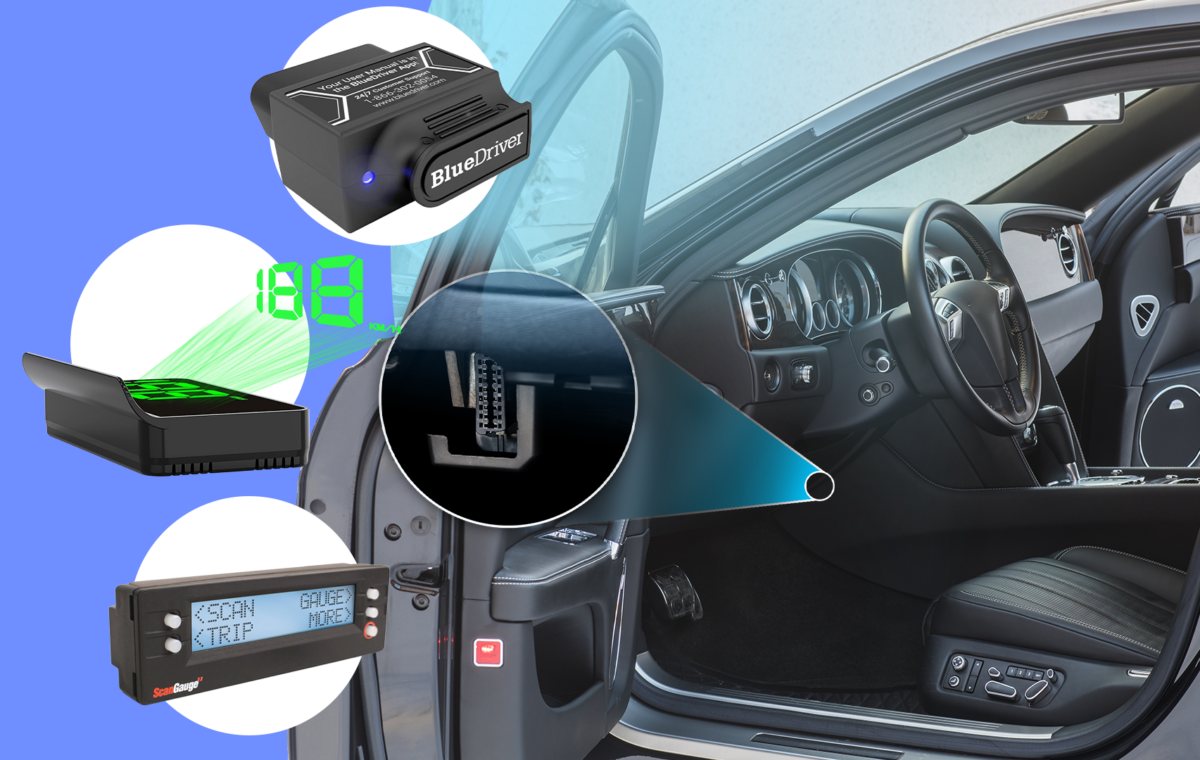
Have you ever looked under your car's steering wheel at all the wires, fuses, and plugs? If so, you might find an odd plug called an OBD-II port. That's the same port any technician uses during a smog test, and mechanics access it to scan for check engine light errors, but that's not all it can do. You can plug several useful or weird things into that 16-pin port.
An OBD-II (or OBD2) on-board diagnostic port is a standardized, 16-pin rectangular port in most modern vehicles. Before 1996, it was known as an OBD port, but any vehicle made after 1996 now uses a standardized OBD-II port. So, what does it do?
The OBD2 port allows diagnostic tools to connect to the car's computer. This connection is what mechanics use to scan for codes, clear a CEL (check engine light), and access other diagnostic trouble codes, known as DTCs. Additionally, the OBD2 port can provide real-time usage and performance data about the engine, EVAP and emissions system, transmission, and more. It's the gateway to the computer in any modern vehicle.
For example, when a car detects a problem, it illuminates a check engine light on the dashboard, and the system stores a DTC code on the computer. From here, any mechanic or scanner tool can access those codes to help troubleshoot and solve the problem.
While the OBD2 port is mainly for troubleshooting, it's also a power source and an extremely useful port for an array of devices. There's a good chance you only see or deal with it by watching a technician plug in your vehicle for a smog test. Here are more uses and weird things that you can plug in down there.
If you're a DIY type, you can access the OBD2 port with affordable tools like the MOTOPOWER scanner and fault code reader. So, the next time you have a check engine light, you can clear it before smog tests and registration, and you can also look up the code and try to troubleshoot the problem yourself without paying a mechanic.
Most people plug OBD2 code scanners into the port, which range from cheap $20 scanners with limited controls to hundreds or thousands of dollars for professionals. Here's a decent one to get you started.
Using an inexpensive OBD-II scanner can save you money, time, and frustration.
Another common and perhaps more mainstream use of the OBD2 port is GPS tracking and similar vehicle tracking data. Parents can get an OBD2 GPS tracker and install it in a child's car, enthusiasts use them to potentially track a stolen vehicle, and these trackers are commonplace on company fleet vehicles.
For example, some insurance providers like Progressive or State Farm offer safe driver discounts. To see that you're a safe driver, or to continue to get those discounts, many insurance companies will install a GPS-type tracker that collects data like speed, acceleration, and other factors. They look for rapid acceleration or hard braking, etc., as indicators. Get one through your provider, or add your own GPS tracker to a family vehicle.
While some people will want to plug directly into the OBD port using a scanner tool like the one mentioned before, modern times call for modern solutions. Instead of dealing with wires and a bulky device, try something like the BlueDriver OBD-II scanner for iPhone or Android.
The BlueDriver OBDII dongle works via Bluetooth or Wi-Fi and lets you instantly connect to your car computer right from a smartphone or tablet. Then, everything you can do with bigger scanners is available on your phone: check and clear codes, get real-time performance stats, and more. Sure, there are cheaper dongles all over Amazon, but the BlueDriver is what I use and recommend for anyone wanting to be their own mechanic.
Easily connect to your car's OBD-II port over Wi-Fi or Bluetooth with the BlueDriver dongle.
Have you seen some newer (or luxury) vehicles with a HUD? A head up display typically shows the speed, navigation direction arrows, and other information right into the windshield below a driver's line of sight. It's a popular high-end option on some vehicles.
Thanks to that OBD2 port in your car, you can add some third-party HUD options to your older vehicle. Whether you have a daily driver that you race on the weekends, an off-road vehicle, or otherwise want additional information than what's on the dash, or in a different location, you'll want an OBD2-powered HUD. Many HUD options on Amazon will pull speed, tachometer, temps, and other details—along with power—from the OBD2 port that you can mount to your dash or windshield.