You have reached your maximum number of saved items.
What in the World, a free weekly newsletter from our foreign correspondents, is sent every Thursday. Below is an excerpt. Sign up to get the whole newsletter delivered to your inbox.
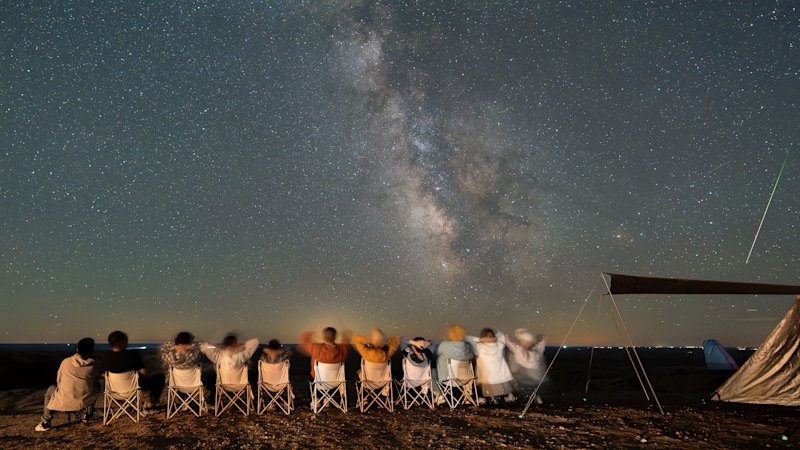
Dahongshan, China: A sparkling night sky deep in the red dirt desert of Inner Mongolia is one of the more spectacular, if unexpected, backdrops to an invocation of Immanuel Kant.
On a stretch of untamed escarpment dotted with camping tents and hand-dug toilets near China’s northern border, the German philosopher’s musings on the “starry heavens above and the moral law within” have been dropped into casual conversation.
“There are only two things in the world that truly move people – one is the lofty moral standard in our hearts, and the other is the brilliant starry sky above our heads,” a camper tells me, paraphrasing Kant’s famous line from his 1788 Critique of Practical Reason.
“Ever since I was a child, I’ve heard that saying,” she adds. “It has always deeply moved me.”
Our quoter works in the education bureau of central China’s Hebei province and has used the cover of the school holidays to slip away for a long weekend, unbeknownst to her bosses, so she declines to give her name.
The chance to see the Perseid meteor shower rain down over the Inner Mongolian sky was too good to miss, so she persuaded six friends and their four children to accompany her. They took three cars, packed them with camping gear, and drove 900 kilometres north.
“When we were kids growing up in the countryside, we used to see the stars clearly. Children today basically have almost no chance to experience that,” the stargazer says.
“That’s why I believe that besides Chinese language, maths and other academic subjects, they also need some education about nature in their lives.”
For the same reason, accountant Li Dan and her husband loaded their two children into their electric four-wheel-drive and set out for the desert from Wuhan in Hubei province, a multi-day drive.
“Living in the city, we rarely get to see stars. This year, it’s a rare opportunity because it’s a new moon,” Li says, adding that previous years were spoiled by bad weather.
I, too, have come to see the Perseid show and to chat with the stargazers who have trekked across the country to watch. It is an annual cosmic event best seen in the northern hemisphere around August, when Earth passes through the dust trail left by the comet Swift-Tuttle.
What look like shooting stars streaking across the night sky are actually rock particles burning up as they smash into Earth’s atmosphere.
“I find work so exhausting in recent years. Getting out once in a while to stroll around and gaze at this vast, open starry sky just makes me feel so much more at ease,” says Wang Chunxu, a 25-year-old teacher from Beijing. “I feel like all my worries are melting away.”