NBC Selected independently determines what we cover and recommend. When you click on or buy through our links, we earn a commission. Learn more.
As a Florida native, I’ve endured a lot of hurricanes and I’ve seen the damage they can cause. If you don’t take proper precautions, the destruction hurricanes leave behind can be catastrophic. This is why it’s important to know how to prepare for a hurricane, and make sure you have all of the supplies necessary to keep you and your family safe. Storms have already started making their way across the United States, with tropical storm Lala impacting Hawaii earlier this week. Plus, a potentially record-breaking El Niño is growing in the Pacific ocean, according to the National Oceanic and Atmospheric Administration (NOAA).
Power outages, flooding, broken windows and damage to homes and cars from fallen trees are just some of the things you need to be ready for. And while you may have a generator in case the electricity goes out, it’s important that you know how to use it properly to avoid carbon monoxide exposure.
I talked to a meteorologist and professor at the University of Florida to learn what measures you should take to make sure your home withstands a storm, and the best emergency kits and other supplies you should always have handy during hurricane season.
Want more from NBC Selected? Sign up for our newsletter, The Selection, and shop smarter.
There are many different ways to prepare your home ahead of a hurricane to prevent damage, and to keep everyone safe, particularly in the event that you lose power during and after the storm.
“If you live by the coast, you should be thinking about storm surge, rainfall, and wind speed,” says Stephen Mullens, a meteorologist and assistant instructional professor of meteorology at the University of Florida’s Department of Geography. “Most fatalities and property damage comes from flooding as a result of both storm surge (water that has been moved from the ocean onto land) and from too much rain during the storm.”
The below preparedness tips are key for dealing with common problems during a hurricane, including flooding, power outages, broken windows from strong winds and fallen trees.
Watch for an evacuation warning: “If you are by the coast, look up whether you are in an evacuation zone,” says Mullens. “If you must evacuate during a storm, you only need to travel just outside the evacuation zone.” State government officials will traditionally issue evacuation warnings at least a few days ahead of a hurricane if not more, depending on what category the storm falls under. Be sure to stay on top of news updates. “You will need to leave before the wind and rain arrives, so your home preparations must happen with a deadline in mind,” says Mullens.
Prepare for flooding: Flooding is not only dangerous and a threat to your safety, but it can also cause irreparable damage to your home, which, even with insurance, can be extremely costly to deal with. Mullens recommends using things like sandbags to blockade your home if possible. “These can help prevent water from seeping under [home] doors and garage doors. Most of the time, you won’t experience the worst-case scenario, and sandbags can really help when flooding is only a few inches,” says Mullens. “No amount of [sandbags] will allow you to stay in an evacuation zone [though]. If flooding is forecast to be more than a foot, then plan to evacuate in case the forecast gets worse or your emergency management deems evacuation to be mandatory.”
Mullens also recommends preparing other areas around your home for excess water, too. “Outside your home, clear your gutters and drainage areas of leaves and other debris,” he says. “You don’t want water backing up and pooling in ways you don’t expect.” If your home does get flooded, there is a very short window of time before it will cause mold growth and become a pain to handle, according to Mullens. “It’s a race against time to prevent the build up of mold in drywall and furniture. If your roof has been damaged, a large tarp will prevent future rain from entering your home,” he says. “Inside, fans and a lot of towels will help dry things out.”
Prepare for strong winds: “To prepare for wind, trim branches on trees and bushes so they won’t hit the house. Bring furniture and outdoor decorations inside,” says Mullens. “For large items, stake and tie them down or they will likely fly away. If you live near the coast, nailing plywood over your windows can prevent damage inside your home from flying debris.” Additionally, make sure your cars aren’t beside trees, especially ones with coconuts or large branches that could fall during the hurricane and damage the body, windows or windshields.
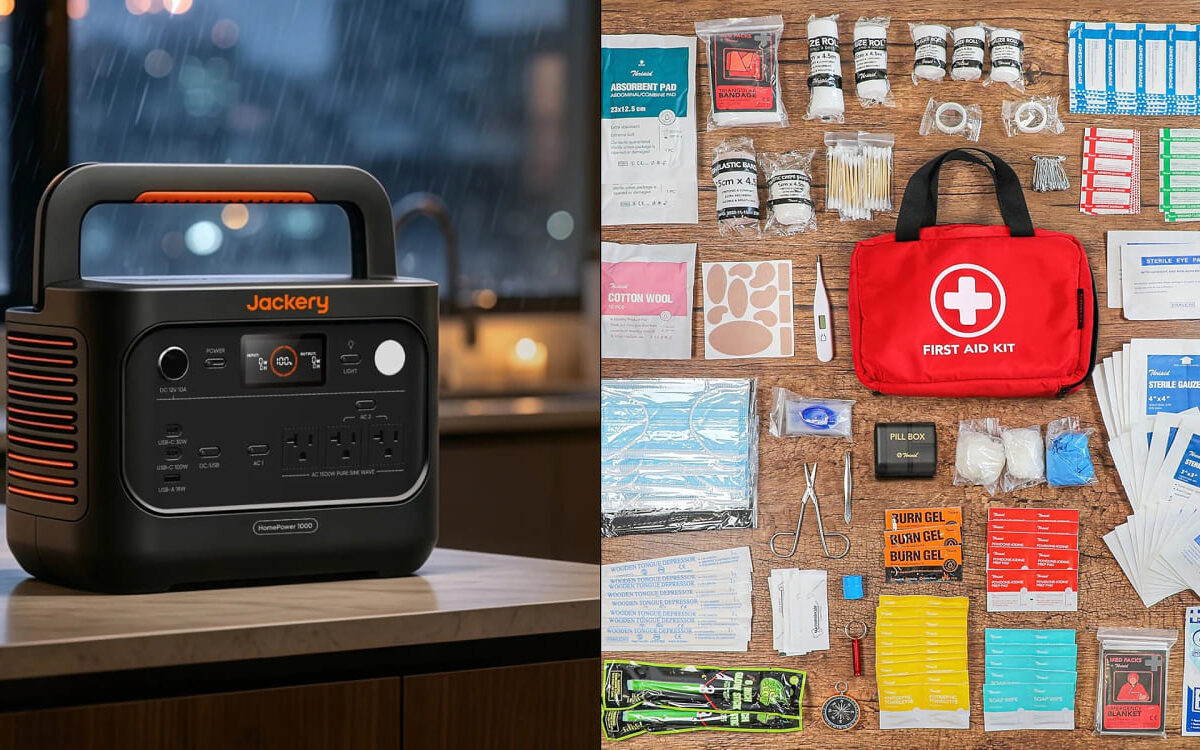
Keep electronics charged: Make sure all your electronics are charged before the storm arrives and be sure to stock up on batteries as needed for things like flashlights and other essential devices. “Charge phones while power remains,” says Mullens. “Write down important information in case your phone’s battery runs out before power is restored.” Depending on the severity of the storm, a power outage is very likely, even if it’s just temporary.
Gas generators are one of the most common appliances that people use to restore power in their homes during and after hurricanes, according to Mullens. If you don’t have or plan on using a generator, there are alternatives you can consider, too. Some batteries work for home appliances, not just small handheld electronic devices, according to Mullens. “Today, large batteries can power an air conditioner, well pump, refrigerator, oven, or microwave for several hours,” says Mullens. “It’s important to assess what you most want to have power during an extended power outage, your ability to store the unit when you don’t need it, and cost to guide your purchases.”
Prepare for a disruption in water supply: A loss in access to clean water is also a common issue during and after a hurricane, so it’s important to make sure you have a plan in case you don’t have water for a few days. “Buy large water jugs for drinking and sanitation. Fill them with water prior to a storm,” says Mullens. “You can also fill a bath tub with water so you can flush your toilets. Most storms won’t be the worst-case scenario, but if it does happen you will want enough water for drinking and food for seven days.”