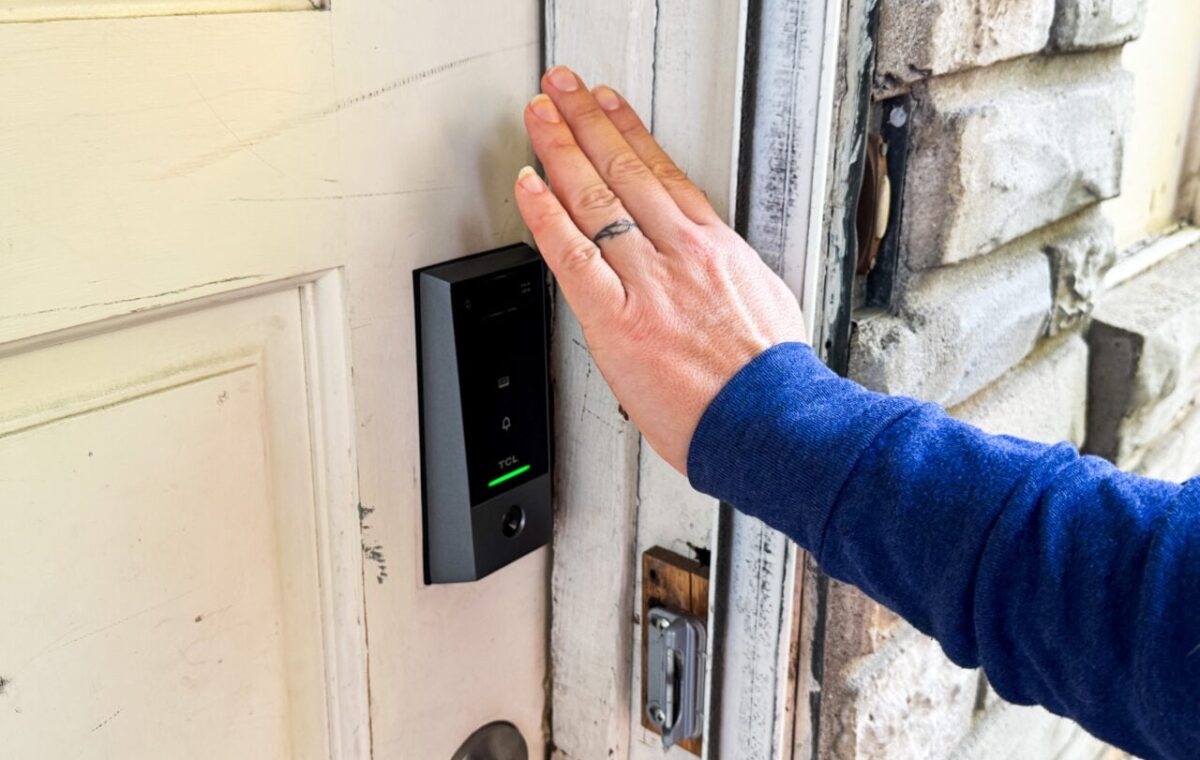
When I first reviewed the palm vein-scanning TCL D2 Pro smart lock, I thought it was a great product with one glaring flaw made worse by another: TCL’s own software was too limited, and it had paltry third-party smart home platform support. Now, TCL has released a platform-agnostic version that should fix both problems: the D2 Pro Palm Vein Smart Lock with Matter over Thread.
In a crowded field of smart locks with all manner of capabilities, support for the universal smart home protocol Matter has become, for me at least, indispensable. That’s about more than being able to use it with whatever platform I like—after all, TCL did release an Apple Home version of this lock. ItsMatter support also means that the new D2 Pro doesn’t require an internet connection and that it must meet security standards the industry has agreed upon. In fact, although this lock supports Wi-Fi, its Thread radio means if you have a Thread border router like an Apple HomePod Mini, you don’t even have to add the lock to your Wi-Fi network. Also, Matter devices can get their updates via your smart home platform of choice, totally obviating the need to use TCL’s app. Whether good or bad, I’ve always hated needing multiple apps to control these devices.
That key upgrade aside, this is the same D2 Pro it was before. It still looks like someone slashed the top off a miniaturized Cybertruck, slapped a number pad on it, and called it a day. Beyond that, I don’t have many complaints about the D2 Pro. The one I tested was quick to register my palm scan and unlocked very quickly in response. It can also be operated via a keypad, a TCL key fob, the TCL app, and your chosen smart home app. The lock supports geofenced unlocking, as well, via the TCL app. It has a built-in doorbell button and uses a 10,000mAh rechargeable battery with an outward-facing USB-C port that lets you recharge it without removing it if you have a nearby outlet or power bank—I’ve only done so twice that I can remember since I first reviewed it a year ago. (I kept the original D2 Pro on my back door until I tested the Schlage Sense Pro for a recent review.)
Palm vein scanning is a great biometric unlocking tech that came at somewhat of a bad time. The first smart locks using it have only been around for the last year or so and were quickly followed up by locks with the other good hands-free unlocking tech, ultra-wide band. UWB, which senses your phone or smartwatch as you approach and unlocks automatically, is used by both the Sense Pro and the Aqara U400 I reviewed earlier, and it has become the only way I want to unlock my doors. That said, I think palm vein scanning has its place—if I don’t have my phone on me, still being able to quickly unlock my lock by waving my hand at it is a fine alternative, and more fun than smushing my fingertip against the door, digging out my keys, or tapping out a PIN code to get in.
The only real downside is that you’ll pay $200 for a D2 Pro with Matter support, versus the $170 for the version I reviewed that only works with Google Home or Alexa. Still, that’s way cheaper than the $270 U400 or $400 Sense Pro, and the original D2 Pro, at least, is almost as nice to use. Presumably, this one is, too.