We can't stop the memory price hikes, but this discount helps save a few dollars in the RAMpocalypse
When you purchase through links on our site, we may earn an affiliate commission. Here’s how it works.
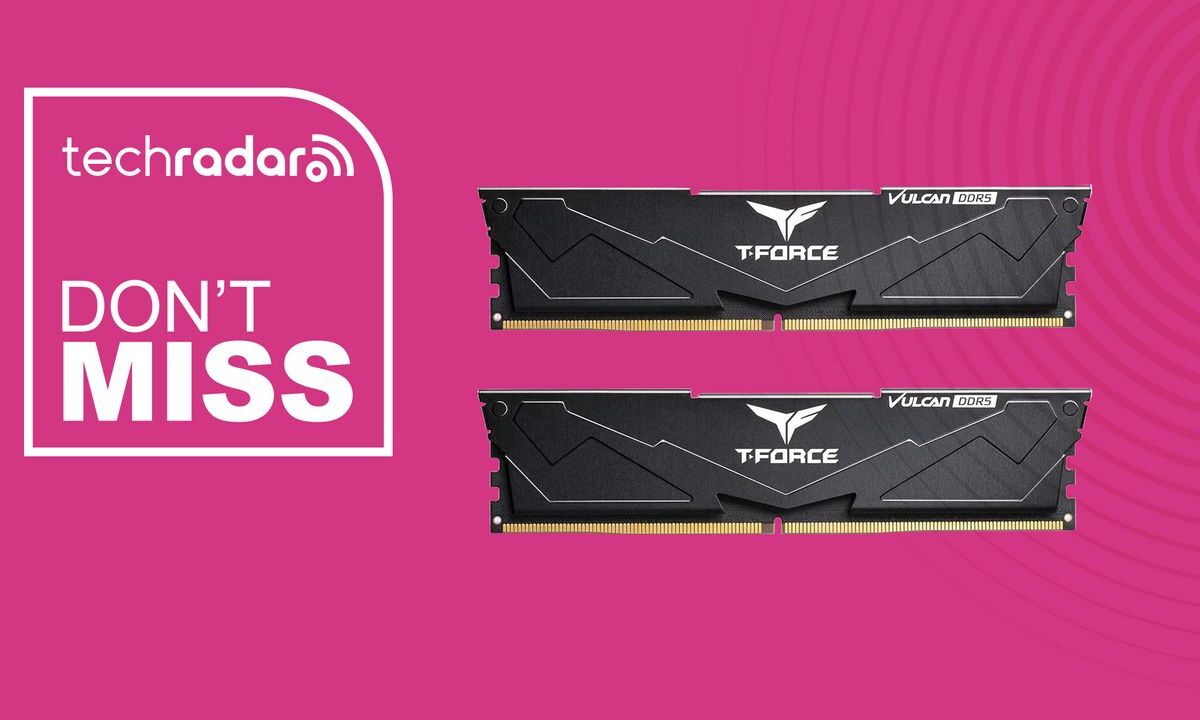
TeamGroup is a name we see often in budget and mid-range memory kits, and this one's worth a look if you need a DDR5 upgrade amid sky-high component costs. Right now the TeamGroup's 16GB DDR5-6000 CL38 kit has dropped to $215 (was $248) at Newegg with code BTSF3667.
It's already reduced down to $240, but Newegg's coupon code shaves an extra $25 off the price at a time where we're seeing sharp increases on RAM pricing across the board driven by AI data center demand.
16GB (2x8GB) DDR5-6000 (PC5-48000) kit with CL38 timings, 1.25V operating voltage, and support for both AMD EXPO and Intel XMP 3.0 profiles. Black heat spreader design, non-ECC unbuffered. For the full discount, use code BTSF3667.
TeamGroup has a solid track record in the budget-to-mid-range memory space, and this kit covers the fundamentals: DDR5-6000 speeds with CL38 timings, a common and well-supported configuration for both Intel and AMD platforms, plus AMD EXPO and Intel XMP 3.0 profile support so you're not stuck manually tuning timings.
The bigger context here matters more than usual. DDR5 prices have risen dramatically since late 2025, driven by AI data centers absorbing memory manufacturing capacity that would otherwise go toward consumer RAM. Kits that cost $80 to $120 a year ago now regularly run $350 or more for larger capacities, so a straightforward 16GB kit at this price, while not a steep discount, is landing in a market where prices have been climbing rather than falling.
✅ Buy the TeamGroup DDR5-6000 kit if…
You need to build or upgrade a system now and can't wait out the current memory shortage, you want a straightforward DDR5-6000 kit without RGB lighting driving up the price, or your motherboard is confirmed to support EXPO or XMP 3.0 at this speed.
❌ Skip the TeamGroup DDR5-6000 kit if…
Your current build doesn't strictly need more memory right now, you're hoping for a return to pre-shortage DDR5 pricing (that's not coming soon), or you'd rather wait and watch prices given how volatile this market has been.
What makes this worth flagging at all is the broader memory market: DDR5 prices have roughly tripled to quadrupled since late 2025 due to the ongoing shortage, and industry analysts don't expect meaningful relief until 2027. In that context, this isn't a dramatic deal, but it's also not an inflated price relative to where DDR5 currently sits.
For more savings, every week we track the best RAM deals on the market.
It's worth checking your motherboard's QVL or compatibility list before buying, since DDR5-6000 speeds aren't guaranteed on every platform without manual tuning. Given how volatile memory pricing has been, it's also worth comparing against other retailers before checking out, since prices on kits like this one can shift day to day.
This is a 32GB dual-channel kit comprising two 16GB DDR5-6000 modules. It runs at CL30 with 30-38-38-76 timings and supports both Intel XMP 3.0 and AMD EXPO profiles, making it easier to run the memory at its advertised settings on compatible systems. Use promo code BTSF3652 for the full discount.