The increasing price of games and consoles is creating a barrier for the everyday gamer – advertising can help lower the cost of access
Virginie Chesnais is CMO at the ad tech analytics platform Happydemics.
Gamers have long been wary of in-game adverts, and not without reason. Ads in gaming have a mixed reputation, with redirects to different websites or apps, deceptive content, or impossible-to-find close buttons all being common frustrations.
A recent eMarketers study found that 52% of gamers would quit playing if they encountered multiple disruptive ad features. Losing half your audience at the point of engaging them isn't a great strategy.
But ads don't have to be bad. Indeed, the same survey claimed that one in five gamers would play a title more frequently if in-game ads were of high quality.
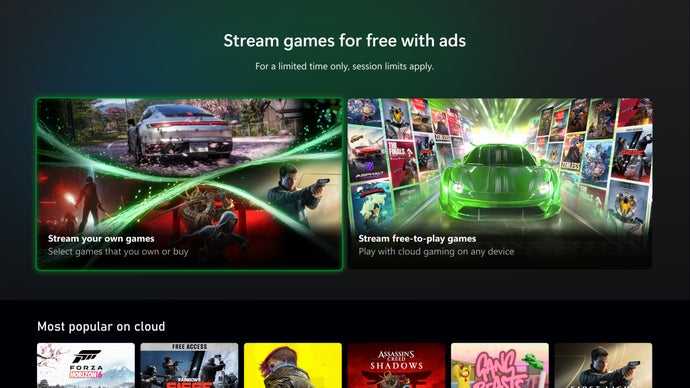
So, with Xbox currently testing out its new ad-supported game streaming service and the cost of playing steadily increasing, high-quality ads may well find a happy home in gaming.
The case for providing some form of ads-for-games-type deal is more attractive than some may think, having been at least partially proven by linear media. As Netflix, Disney, and other streaming services have shown, there is money to be made by providing a consistent service while also offering ad-supported tiers. If Xbox's approach proves successful, it will not only retain paid customers through its subscription service, but it will also unlock a brand new, previously untapped revenue stream at a time when the brand sorely needs it.
This matters because console gaming is becoming much more of a premium service. The prices of games, consoles, accessories and downloadable content are becoming harder and harder for people to justify, creating a barrier for the everyday gamer.
As Xbox itself said in its announcement, when done well, advertising can help lower the cost of access to gaming. We've already seen from mobile gaming that ad-supported tiers can open up a new way for players to enter the gaming sector without having to fork out for large upfront purchases.
Plus, it's important to remember that this is entirely optional. Players who don't want to watch ads can do so if they choose, albeit through a paid subscription fee. By providing a two-tier system, Xbox is hoping to retain its loyal base of fans while also making games more accessible to newcomers.
Although no survey data on the news exists right now, I'm willing to bet that the vast majority of gamers would be willing to watch a 30-second advert if it meant playing one of their favourite games or a brand new title for an hour. Xbox will almost certainly know that's true.
Happydemics data for 285 in-game campaigns across the UK and North America show that in-game ads consistently outperform TV, social, and online ads for ad recall and attribution. The data indicate that in-game ads are much more likely to be remembered and be correctly attributed to the brands that showed them.
This is where Xbox's around-the-game approach – that is, adverts that sit outside the game environment, for example being shown before the game starts – gets interesting as part of a bigger picture. Our data show that around-the-game formats have a clear edge on ad recall and attribution when compared with intrinsic in-game placements.
This matters because even though we can remember certain ads popping up when we're watching TV or scrolling through social media feeds, this doesn't always mean that we're linking those ads to certain brands. Gaming, it seems, is in its own league in terms of this metric, which is probably the reason why Xbox and other companies such as EA are increasingly looking into ad-based gaming.
But it's important to remember that Xbox's ads aren't in-game – they're pre-game. In-game ad formats hold the advantage further down the funnel, outperforming on brand image uplift, consideration, interest, and ad likeability. Combining both pre-game and in-game adverts, with their respective advantages, might be the ideal for advertisers – but it would also risk more pushback from players.