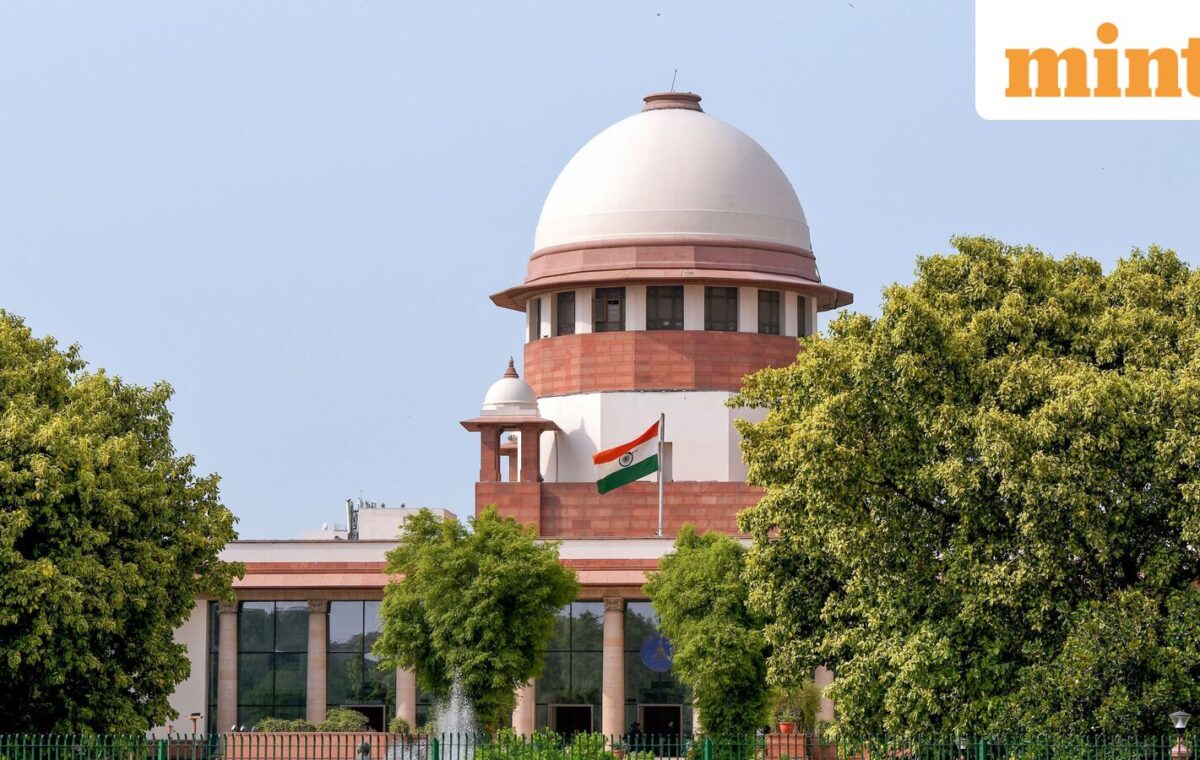
The Supreme Court on Friday revised its May 2025 ruling on eligibility for entry-level judicial service examinations, cutting the mandatory legal practice requirement for law graduates from three years to one year, according to PTI.
A bench comprising Chief Justice Surya Kant and Justices AG Masih and K Vinod Chandran delivered the decision by a 2:1 majority while rejecting a review petition
Under the revised framework, successful candidates will be required to complete training at a judicial academy followed by an additional one-year clerkship.
The Supreme Court has cut the mandatory legal practice requirement for civil judge aspirants from three years to one year.
The revision was made to provide relief to young lawyers and recent law graduates, noting that the previous three-year requirement caused difficulties.
Law graduates will now be eligible to apply for judicial examinations without needing to provide proof of three years of legal practice, but they must complete training at a judicial academy and an additional one-year clerkship.
While the transition may lead to an influx of candidates, it aims to ease entry into the judiciary, ensuring young advocates still gain necessary practical exposure through training and clerkship.
Successful candidates will undergo a one-year training as trainee judicial officers, including a structured clerkship period divided between law clerks and sitting judges.
The court also clarified that candidates applying for judicial examinations notified between May 25, 2025, and March 31, 2027, will remain eligible to appear without having to meet the prior practice requirement.
"The direction is that all law graduates will be eligible to apply notwithstanding the three-year practice requirement, having regard to the fact that more than one year has elapsed since the judgment under review was pronounced. Such candidates, for the purposes of their applications, will be deemed to have completed one year of active practice and shall not be required to produce a certificate of practice in respect of the said period," Bar and Bench quoted the Court as saying.
It mentioned successful candidates would initially be appointed as trainee judicial officers for a year, followed by another year of structured clerkship.
"The first six months shall be spent as a law clerk under the supervision of the Principal District Judge or members of the higher judicial service, and the remaining six months under the supervision of sitting judges of the concerned High Court. The aforesaid one-year period of law clerkship shall also be treated as equivalent to one year of practice at the Bar for the purposes of satisfying the three-year requirement," the Court mentioned.
On May 20, 2025, the Supreme Court had ruled that fresh law graduates could not appear for entry-level judicial service exams without completing at least three years of legal practice.
It observed that reinstating the three-year practice requirement without a transitional mechanism had caused difficulties for young lawyers and recent law graduates, warranting limited relief.
The court further clarified that the revised framework will apply to candidates appearing for judicial service examinations notified on or after April 1, 2027.