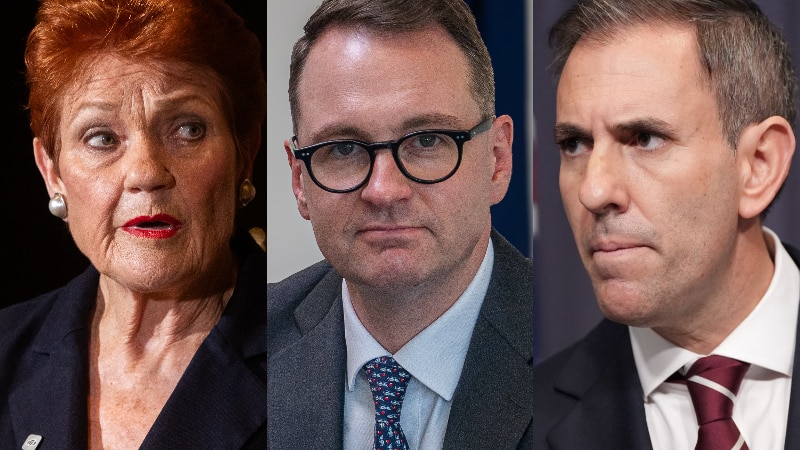
Liberal Andrew Bragg's declaration that compulsory super was a mistake set off a war between Jim Chalmers and Pauline Hanson. (ABC News: Matt Roberts and Andrew Irvine)
Barnaby Joyce had just said "lie" for the 17th time when the line went dead.
A few moments later, dialled back into his Radio National interview, he joked listeners had missed him in "full flight" about Jim Chalmers's claim One Nation and the Coalition were "against universal super". It was, he said, a lie to rival the infamous "Mediscare".
It's a telling comparison. Joyce fought the 2016 election when Bill Shorten's Labor ran the brutally effective scare campaign that the Coalition planned to privatise Medicare.
And Chalmers, invigorated by comments about super from Pauline Hanson and Liberal Andrew Bragg, has wasted no time in framing the next election as a super "referendum", spamming social media with claims his opponents want to "destroy" the system.
That's a bit much. Hanson only said super should be "lightened up a bit", perhaps by letting people access more of their funds pre-retirement. Bragg was more colourful, calling compulsory super "a loss of liberty", but his colleagues ran a mile from him.
Still, the line isn't totally fanciful either. One Nation has flagged more policies to come, and there is genuine hostility to super among Coalition MPs, several of whom told the ABC this week they did want to carve out a point of difference with Labor on the subject.
Some within Labor are salivating at that prospect. Asked whether super was as much of a vote-winner as Medicare, a senior Labor figure jubilantly declared: "It's bigger."
But on the right, some believe that voters weighed down by economic gloom will be tempted by the thought that super is their money and they should access it now, not later. So would a super referendum deliver the resounding Yes vote Labor expects?
Labor ran a campaign in the 2016 election accusing the Coalition of a secret plan to privatise Medicare. (Dan Peled: AAP)
Since it began in 1992, compulsory super has substantially boosted the wealth with which Australians retire. That's even before the system is "fully mature" — that is, when retirees have had super for their whole working lives, a milestone still years away.
Super's logic is neat: require people to save some money for their own retirement, give everybody access to the power of compound returns on long-term investments, and reduce the need for pension payments. Labor hails it as "the envy of the world".
But the fact remains that putting money away for tomorrow means less money today. In a legal sense, the amount employers must pay into their workers' super — currently 12 per cent of their wages — is on top of their wages, not instead of them.
But for businesses, the dollar is still a dollar, and a 2020 Grattan Institute report based on a study of enterprise agreements found super increases had come at the expense of wage increases most of the time.
This is contentious terrain, and that finding landed in the middle of a political debate about whether the compulsory amount should increase from 9.5 per cent to 12 per cent. The Coalition resisted, but Labor delivered it in government.