(Bloomberg Opinion) — Fresh off a blockbuster public markets debut, Unitree Robotics’ founder Wang Xingxing conceded that his company still hasn’t figured out how to make humanoids truly useful.
Robots can perform well in controlled settings, but are still far from a general-purpose technology in the real world, Wang acknowledged during a keynote at the World Robot Conference in Beijing on Thursday. Even so, he expects “mass-market” reach was within a decade. That’s very optimistic.
Whether it’s Wang or Elon Musk peddling visions of the future, a healthy dose of skepticism is warranted in the humanoid boom. For all the hype, they still faces a steep climb toward practical commercial uses — and may never reach the point where most people want one in their homes. Flashy demos and viral stunts have made it dangerously easy to mistake PR performance for technical progress.
One of the biggest obstacles, as I’ve argued before, is giving these mechanical bodies a brain. Wang said the hardware lacks sufficiently capable world models, or AI systems that let machines understand and navigate the physical environment rather than merely process language. The best humanoid brains currently have the ability to perform with only the equivalent of 10% of the human mind, JPMorgan Chase & Co. notes. It’s proven a much more difficult task than just scaling up large language models.
For all my misgivings, humanoids may prove to be stickier than other tech fads. Few companies can get a marketing video instantly picked up by tabloids around the world, yet Unitree regularly does. Its clips rack up hundreds of millions of views. Humans have long been beguiled by machines built in our own image, in a way they’ve never been by cryptocurrencies or metaverse real estate. That fascination isn’t disappearing anytime soon.
The economics of physical AI, however, are less enchanting. Chinese humanoids are significantly cheaper compared to Western offerings, but still prohibitively expensive for mass adoption. Costs would have to plunge by at least half before they could be commercially viable, the Mercator Institute for China Studies estimates.
China nonetheless has an early advantage, especially in costs. Deep electric vehicle supply chains provide an edge. Data show it produces roughly 70% of the world’s actuators, which convert energy into motion, and can comprise up to half the total costs of humanoids. It’s no wonder that US robotics startups are stuffing their suitcases with parts during trips to the country. And Chinese firms shipped more than 97% of global humanoid robots in the first half of 2026, according to data from San Francisco-based Smart Analytics Global.
But as with EVs, competition is already fierce. Unitree might be the closest to a household name, but China had more than 150 humanoid robot companies last year. This year, AgiBot already overtook Unitree to become the world’s largest vendor. Picking eventual winners will take time.
There’s another problem Unitree itself has previously acknowledged: Most of its robots are still bought by researchers rather than for true commercial applications. Can these academic hobbyists truly prop up a multibillion-dollar company? Founder Wang’s former employer, SZ DJI Technology Co., suggests they can at least provide a launchpad. The drone maker began by selling low-cost products largely to consumers and tinkerers before becoming the hardware giant it is today.
There are signs the transition is beginning for Unitree, too. Humanoids for industrial and commercial applications represented more than 70% of global shipments in the first half of 2026, up from roughly 50% last year, according to SAG. That’s encouraging, but it’s still unclear how many of these are mostly for display at front desks or bought by government agencies eager to support the physical AI boom. For investors, who’s buying these robots — and why — will matter more than shipment figures alone.
Then there’s geopolitics. Washington last month barred the import of foreign-made “advanced robotic devices,” including humanoids and quadrupeds. Analysts have said that the US accounted for as much as 18% of Unitree revenue last year. Losing those sales hurts, but losing access to feedback from American researchers and hobbyists may sting just as much at this stage.
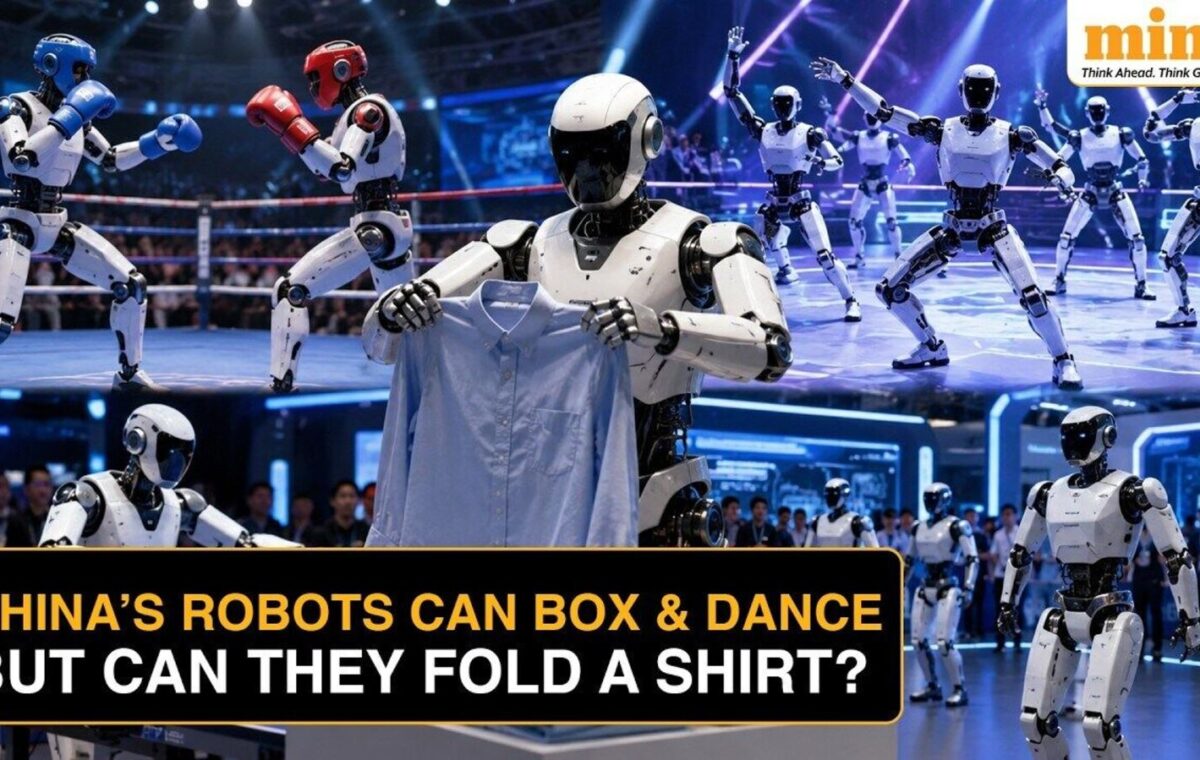
I’ve watched humanoids deployed in almost every imaginable setting. The Buddhist monk robot was a publicity stunt. Companion bots I saw operating in eldercare facilities in Tokyo did little to convince me that this future was around the corner. Dancing, serving beer or folding laundry in controlled conference settings make for a good show. The real opportunity is far less glamorous: the dirty, dangerous and dull jobs that humans don’t want. That’s where Unitree and its peers must prove themselves, and not merely by performing the work, but by doing it safely, repeatedly and cheaply. A decade may not be enough.
The march of the humanoids may eventually catch up with the hype. For now, the risk is that investors are the ones sprinting ahead.
This column reflects the personal views of the author and does not necessarily reflect the opinion of the editorial board or Bloomberg LP and its owners.
Catherine Thorbecke is a Bloomberg Opinion columnist covering Asia tech. Previously she was a tech reporter at CNN and ABC News.