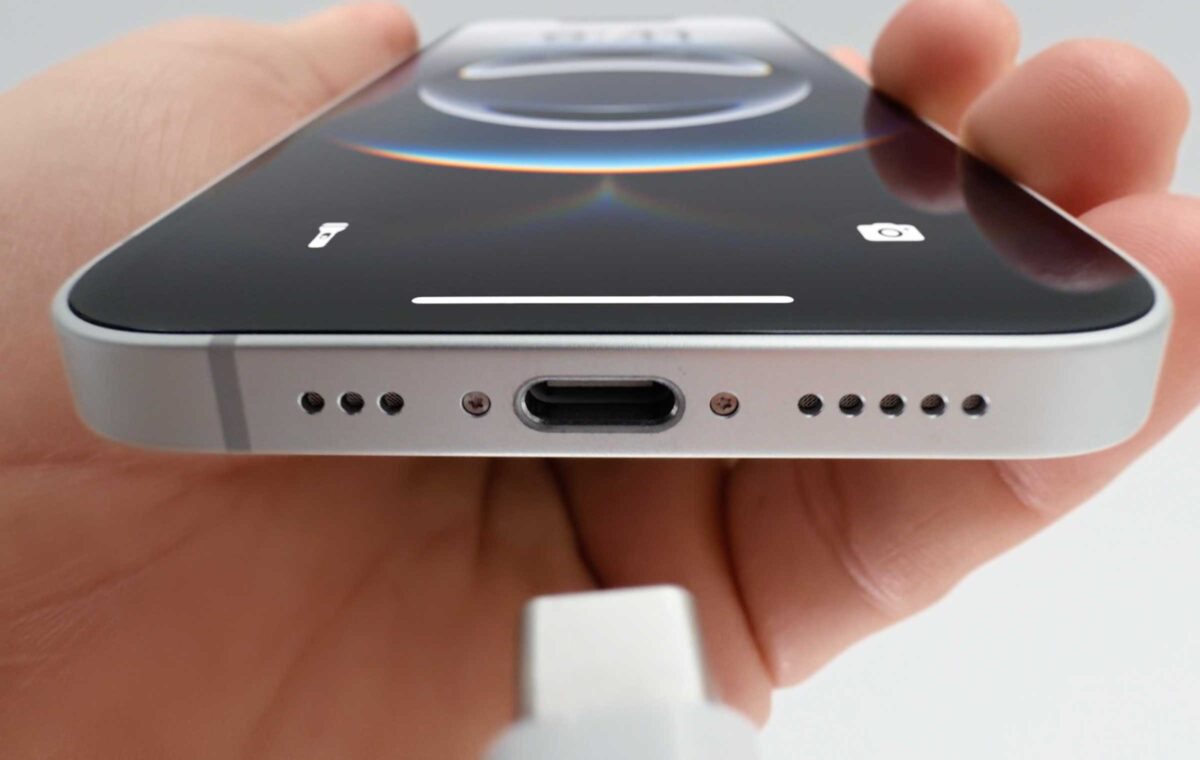
It took the iPhone an eternity to strike Lightning in favor of the universal USB-C port. Now that it’s here on all models, including the low-end 16e, many users still limit its use to charging, overlooking the slew of other advantages it offers over Lightning. If you’ve got an iPhone 15 or newer, you can expand the USB-C port’s functionality beyond fast charging, and we’ve got a few ideas to share.
Rival companies, like Samsung, have long supported reverse wireless charging, letting users turn their smartphones into portable Qi pads. However, it’s not all that practical, forcing users to flip over their phones and rendering both unusable. With the iPhone 15 and newer models, Apple introduced its own version that works via the USB-C port.
Your iPhone can now deliver up to 4.5W of power, letting you charge your AirPods, Apple Watch, or even a friend’s Android phone. To do so, simply plug your USB-C cable into the iPhone and the other end into the USB-C port on the other device.
Even with 128 GB as the standard, we’ve probably all come across the iPhone’s full storage alert. While data stored in iCloud can easily be offloaded from the local memory, not all users trust cloud storage. Fortunately, the iPhone supports a wide range of external storage devices, including USB sticks and hard drives. This makes it easy to free up space by moving large files to a separate drive. To get started, connect a compatible flash drive to your iPhone using its USB-C port. You can then view, manage, and transfer data using the built-in Files app.
One of the solid options out there is this tiny Samsung Type-C Flash Drive ($80), which supports regular file transfers and real-time ProRes video storage. As a Pro exclusive, those with the highest-end iPhone models can directly record ProRes video to a compatible external storage device. Given the considerable size of raw footage, being able to write the data directly onto a separate device can help you shoot for longer periods and avoid filling up your iPhone’s memory.
Your iPhone’s USB-C cable can do more than just charge your iPhone.
While iPads and Macs are better suited for long-form typing, iPhones—especially the near-7-inch Plus and Pro Max models—can still handle productivity tasks effectively. To make the most of the relatively small screen, though, you may want to pair it with a dedicated keyboard. Fortunately, iOS natively supports this through the USB-C port.
Most standard keyboards, such as this compact Macally keyboard ($30), will work with your iPhone just fine. Or if you want to always have a keyboard with you, you can opt for a Clicks case ($139), which connects to your USB-C port so it’s always ready for a text or email.
In the era of TikTok, everyone is a content creator, so a high-quality microphone is an essential tool. Fortunately, your iPhone’s USB-C port can support a wide range of them, letting you pair your footage with crystal-clear high-quality audio. One reliable option is the Rode Wireless Micro ($85), which utilizes your iPhone’s port while maintaining the convenience of wireless recording.
Photographers and videographers love the handy SD card slots on board the newest MacBook Pro and Mac Studio, but that convenience doesn’t extend to the device that does most of your shooting. Fortunately, that can be easily remedied with a wired SD card reader. While newer cameras generally support wireless photo transfers via their respective companion apps, the process tends to be slower than the wired alternative. Apple’s USB-C to SD Card Reader ($39) connects to your iPhone through its charging port and should work with all relevant SD cards. You can also use this same dongle with your Mac or iPad when editing on a larger screen.
If you’re staying at a hotel that blocks wireless media casting, you may be able to mirror your iPhone’s screen to the TV using a wired solution. Apple’s USB-C Digital AV Multiport Adapter ($69) transforms your iPhone’s charging port into an HDMI connector, allowing you to watch 4K content on bigger displays using a regular HDMI cable.
Your iPhone can connect to most displays with a single cable.
Thanks to the A17 and A18 chips, the latest Pro-tier iPhones can run some AAA games. Notably, though, these titles typically need a controller, as touch controls don’t always offer the best gameplay, if they’re available at all. While Sony’s DualSense controller ($75) supports Bluetooth pairing, opting for wired mode using the iPhone’s USB-C port can minimize latency and enhance overall performance.
Speaking of gaming, the iPhone fully supports Ethernet dongles, allowing for faster download and upload speeds. While Wi-Fi and 5G are sufficient for most users, Ethernet can come in handy when seeking an even more dependable connection. Belkin’s USB-C to Ethernet Adapter ($23) is one of the solid options that is guaranteed to get the job done.
There are many accessories that you can plug into your iPhone’s USB-C port, but none are cooler than a borescope/endoscope camera. Basically, it’s a snake wire with a tiny HD endoscope camera at the end and an LCD light. It’s flexible yet rigid enough to fit into the smallest of crevices, and you’ll wonder how you ever lived without it. We haven’t tested them, but this model has a 4.3-star rating with nearly 7,000 reviews and costs just $30.