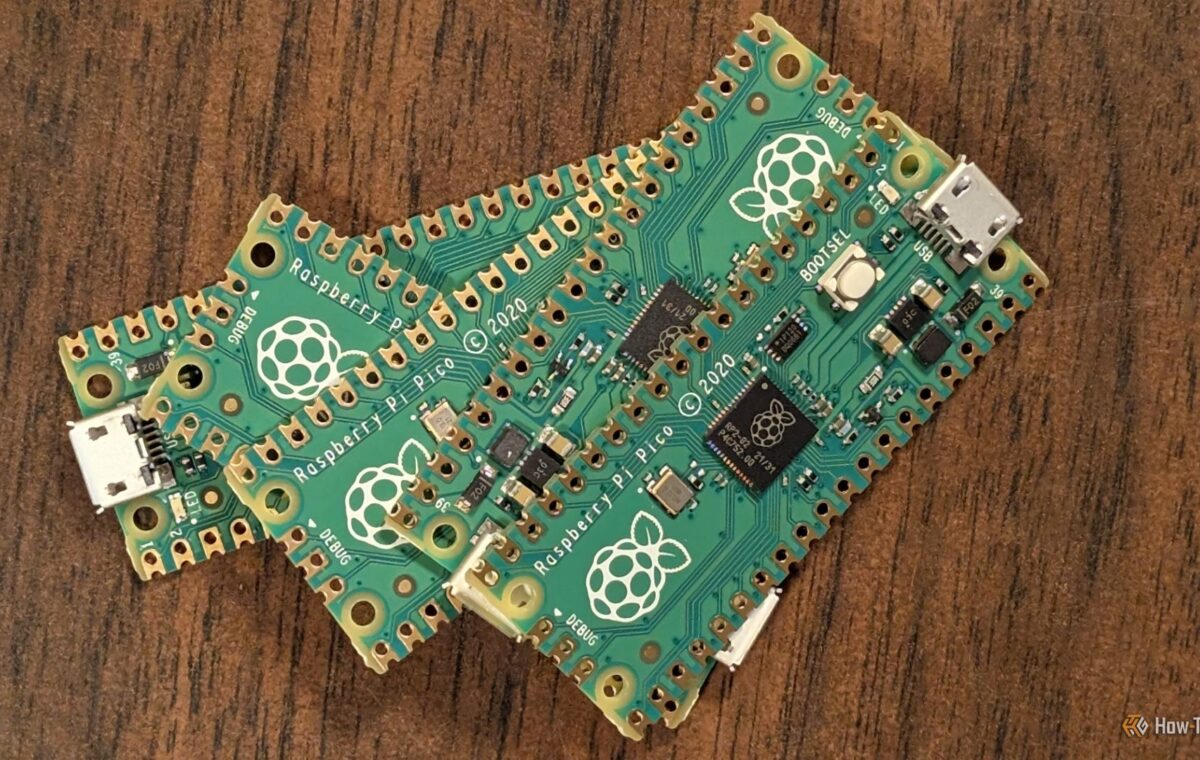
Are you ready to spend some time soldering and setting up projects on your Pi this weekend? Then today's post is for you! Below, I talk about building a custom turntable with a Pi Pico, designing a custom OBD-II dashboard for your car, and building a tabletop game soundboard.
As a small business owner, I'm always taking pictures of products or projects. I've looked into getting a product turntable, but just have never pulled the trigger. The Raspberry Pi Pico W is actually the perfect microcontroller to make a DIY turntable with.
The Twirly Shirley project features a Pico W for control and is built to be a turntable for product photography, 360-degree documentation, and even rotating time-lapses. All it needs is the Pico W, some 3D-printed gears, a stepper motor, and something to rotate.
There's a phone-friendly web interface that allows you to trigger manual rotation, preset angles, and a mode that divides a rotation into steps with pauses between for capturing specific angles.
This project isn't designed for a normal Pi, though. It does require the Pi Pico microcontroller since it's built on MicroPython. The Twirly Shirley project also has an official wiring guide that walks you through how to set up the stepper drivers and everything, making this a fun beginner project if you've never played with microcontrollers before.
The Raspberry Pi Foundation's affordable and powerful microcontroller just gained Wi-Fi support. Get the Pico W now for just $6.
If you didn't know, your car has something called an OBD-II port. It stands for on-board diagnostics, and it's how a car dealership can plug into your vehicle and pull check engine codes or reprogram parts of your car.
However, your OBD-II port actually outputs a ton of useful information, like current speed, RPM, turbo PSI, coolant temperature, throttle position, and so much more. All you need is an ELM327-compatible adapter that can plug in to the OBD-II port and then connect to a Raspberry Pi.
The Pi needs to be connected to some form of a display for you to see the information. An HDMI screen works, or the official Touch Display 2. You could also hook up the Raspberry Pi to an aftermarket radio that supports either composite or HDMI inputs.
Something to keep in mind is that every vehicle is different with what the OBD-II port can read. Some are pretty locked down and others are wide-open, so make sure that you do some research to see what all your vehicle supports.
There's not really a ready-made platform out there for this type of project, but there is the python-OBD project that you can base this on. You'll need to do some coding to make this work—or just use Codex or Claude Code to do it for you.
Also, not everu ELM327 OBD-II adapter is made equal. Some have more capabilities than others, so you'll want to find one that supports whatever you need.
Either way, this could be a super fun project to add some extra capabilities to your ride. Just make sure you have enough time set aside to do any debugging since the interface will need to be custom made to your ride.
This small OBD2 dongle is a convenient way to scan your car for error codes and clear a check engine light directly from your phone.
My wife's family is huge into board games, and now I am too. But there are some games that are just better with sound effects, music, or timers. One of our favorite games is Escape: The Curse of the Temple, which requires a music track to play.