The team that brought us the original selfie drone innovates again
When you purchase through links on our site, we may earn an affiliate commission. Here’s how it works.
DJI dominates the drone space, leaving precious little room for others. However, HoverAir has repeatedly given the market a crack, innovating in gaps left by the leading drone maker.
First we had the X1, the first self-flying drone that took off from the palm of your hand for easy aerial 4K selfies, which was followed up by HoverAir's X1 Pro with beefier 8K video. DJI acted swiftly, answering with the Neo (and consequently Neo 2), which cost much less than HoverAir's, too.
Then there was HoverAir's Aqua, the world's first waterproof drone, which remains unique today. Now, we have the new Versa — the first 2-in-1 pocket gimbal camera and drone — making a trio of firsts.
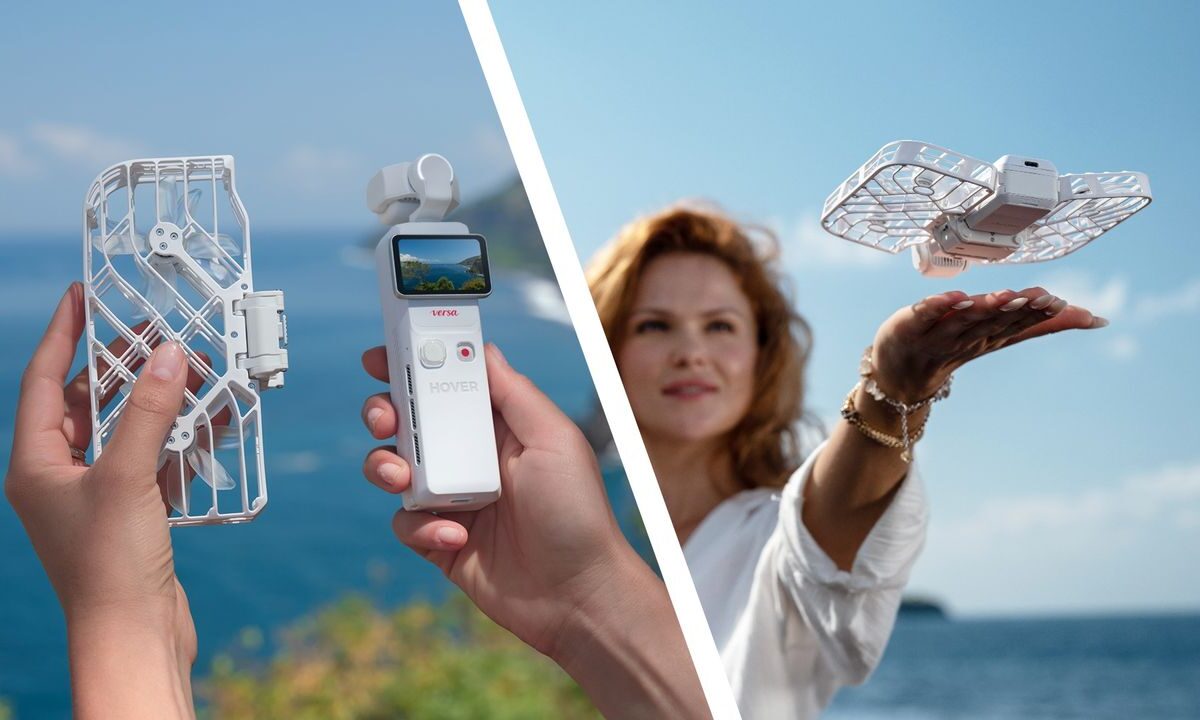
Versa looks like HoverAir's previous X1 series efforts, only its wings can be removed in a simple motion, leaving the drone body as a DJI Pocket-like pocket gimbal camera. Drones and gimbal cameras are two popular camera categories, yet Versa can be both of those things.
It seems like an obvious move when you think about it. After all, both camera types feature a camera unit supported with a 3-axis gimbal. Can the Versa genuinely serve both jobs? We will find out very soon once our Versa review sample lands.
HoverAir has, it seems, another advantage over DJI, saying it's new Versa has FCC certification. This means Versa can go on sale in the US, meanwhile DJI is still banned from selling its new products in the US.
There could be light at the end of the US ban tunnel for DJI, mind you, with recent news that a judge is set to review evidence that has categorized DJI as a Chinese military company. It's a decision that DJI described as 'a significant step toward correcting an unjustified designation'.
Sign up for breaking news, reviews, opinion, top tech deals, and more.
For now, however, DJI's US ban remains, and it's a huge headache for the leading drone maker that was just compounded by fresh competition, especially with its access to the US.
We learnt more about the Versa when HoverAir launched the product on Indiegogo on August 18, and it will make its public debut at IFA, which takes place in Berlin, Germany, from September 4-8, 2026.
The self-flying camera shoots 4K video up to 60fps onto a 1/1.3-inch sensor, 4K HDR video up to 30fps with 10-bit color depth and up to 17.5EV dyanmic range, plus 12MP photos (there's no mention of RAW format).
It features a host of flight modes that simplify aerial selfies, including palm take-off and landing, AI subject tracking, auto framing, bird's eye flight move, plus voice and gesture commands.
It can pair with your phone or HoverAir's Beacon device (debuted with the Aqua) for clear audio, and has a maximum 14 minute flight time (realistically it will be less than that), with flight speeds up to 36km/h and a solid Level 5 wind resistance.