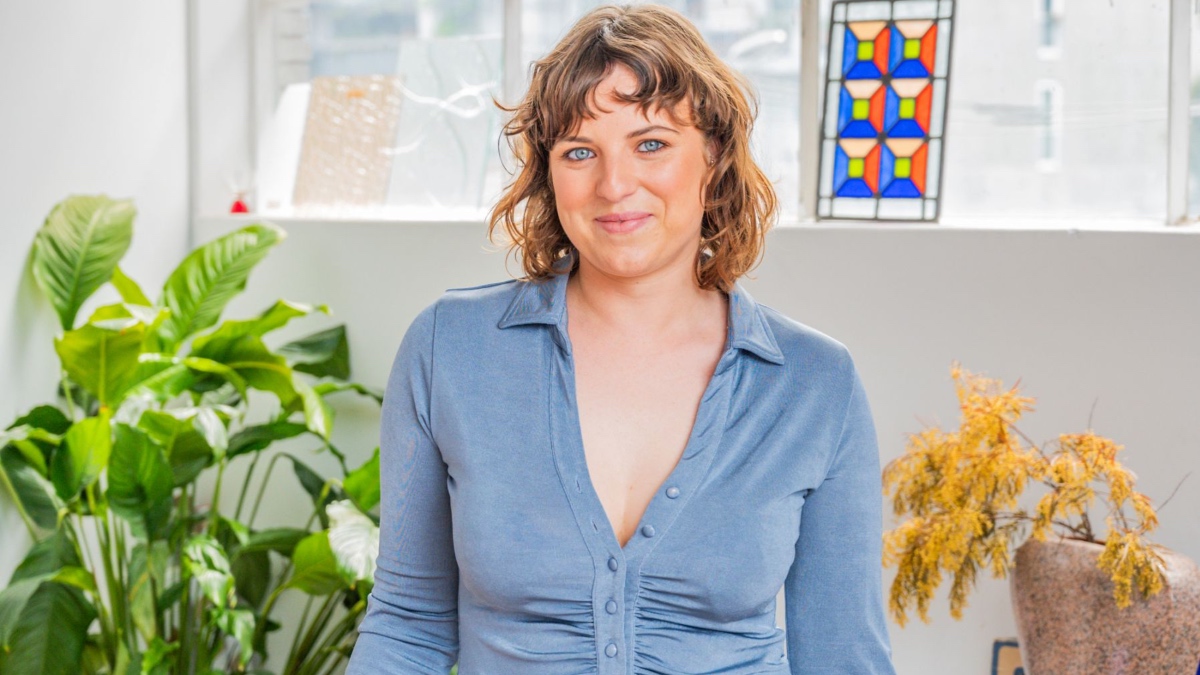
Melbourne’s Eloise McCullough just moved into a bigger studio, four years after starting her stained-glass business from scratch.
Australia’s economic confidence is sliding, but its sole traders don’t seem to have gotten the memo.
New research from Hnry’s Sole Trader Pulse, described as the only independent survey of the country’s 1.7 million sole trader workforce, has found that many are expanding their businesses rather than pulling back. Almost half have diversified into new income streams, 76 per cent say they have a loyal customer base, and two thirds are using technology to work more efficiently.
Average quarterly gross income, before expenses and tax, climbed 14 per cent, from around $29,150 to $33,200. More than half of sole traders said they earned more than they had three months earlier, up from 47 per cent in March and well ahead of the 25 per cent whose income had dropped.
Melbourne stained-glass designer Eloise McCullough is one of them. Four years after launching her business, Fools Glass, she’s moving into a larger studio to keep up with demand for her bespoke leadlight windows, kiln-formed glass artworks and growing workshop program.
“I feel really excited about where the business is heading,” she says. “Every year has been bigger than the last, and now I’m moving into a larger space so I can continue to grow and teach more people the craft.”
Eloise works with architects, interior designers and private clients on handcrafted stained-glass commissions that pair traditional technique with contemporary design. Over the past three years she’s also built a workshop business alongside her custom glazing work, a decision that turned into more than just a side project.
“I realised pretty early that workshops weren’t just something I enjoyed, they became an important part of the business,” she says. “They’ve allowed me to diversify what I offer, connect with incredible people, expand my audience and create another pathway for growth.”
The broader numbers back up her experience. Sixty per cent of sole traders rated their personal satisfaction as good, and 57 per cent said they had good work-life balance.
Hnry Australia Managing Director Karan Anand says Eloise’s story reflects a pattern playing out across the sole trader economy more broadly.
“Sole traders don’t have the luxury of waiting for the economy to improve, they have to adapt in real time. That’s exactly what we’re seeing,” he says. “Consumer confidence is falling across Australia, inflation is a major concern, and business confidence is still gloomy, but sole traders are refusing to stand still. They’re diversifying their services, embracing technology, finding new customers and continuing to invest in themselves.”
Eloise isn’t ignoring the wider economic picture, though. She’s just found her niche holds up.
“My clients are people who genuinely value craftsmanship, art and design, so of course I pay attention to what’s happening economically because it can influence spending,” she says. “But I’ve found people still want to invest in locally made pieces designed specifically for them, and that’s given me confidence to keep investing in the business.”
Anand argues that sole traders’ willingness to keep growing says something about the wider economy too.
“Sole traders often experience economic change before anyone else because they’re making commercial decisions every single day,” he says. “The fact that so many are still investing, growing and backing themselves despite softer economic conditions is encouraging, not only for the self-employed, but for Australia’s broader economy.”