Account subscription benefits alongside Premium Stories, Editorials,
Opinions and more. Unlock these with Subscription
The View From India
Looking at World Affairs from the Indian perspective.
First Day First Show
News and reviews from the world of cinema and streaming.
Today's Cache
Your download of the top 5 technology stories of the day.
Science For All
The weekly newsletter from science writers takes the jargon out of science and puts the fun in!
Data Point
Decoding the headlines with facts, figures, and numbers
THEdge
At the cutting edge of education and careers
Health Matters
Ramya Kannan writes to you on getting to good health, and staying there
Gender Agenda
Stories from beyond the binary.
The Hindu On Books
Books of the week, reviews, excerpts, new titles and features.
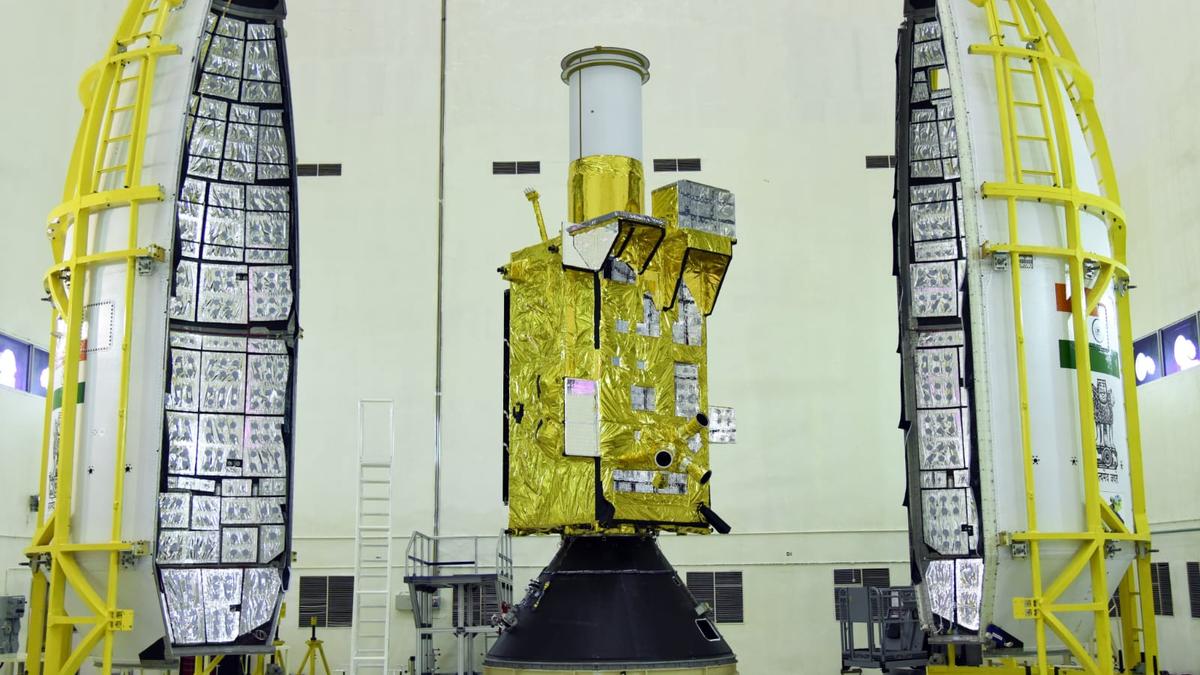
ISRO had built GISAT to watch the Indian subcontinent from a greater distance, thus keeping almost the entire landmass in its view for large parts of the day. Photo: X/@isro
The Indian Space Research Organisation (ISRO) is set to launch the GISAT-1A satellite in September, in a mission that will be watched closely for many important reasons. Since the two successive PSLV mission failures, in 2025 and early 2026, ISRO had paused launches as it investigated the reason why its workhorse rocket had suffered such an uncharacteristic setback. In this time, important satellites were parked on the launchpad waiting for the clearance.
While Union Minister Jitendra Singh told The Hindu on June 13 that the government had determined the cause of the failures and had resolved them, he said the government would also not publish the ‘National Level Expert Committee’ report. This break from historic tradition, even if not from the recent past, raised public concerns and, in some quarters, ire. Now, with the GISAT-1A launch planned in a few weeks, ISRO will take to the skies again, hoping this time for success.
science (general)
/
space programme
Copyright© 2026, THG PUBLISHING PVT LTD. or its affiliated companies. All rights reserved.