Published: 22:20 BST, 18 August 2026 | Updated: 03:59 BST, 19 August 2026
Lake Mead, the largest reservoir in the US, has dropped to its lowest water level in history, sparking urgent warnings that water shortages and power outages could be coming soon.
Formed by the Hoover Dam on the Colorado River between Nevada and Arizona, the reservoir was once considered full when the water level was at a height of 1,220 feet above sea level. As of Tuesday, the water had dropped just under 1,040 feet.
The massive drop-off, and a similar decline at the Glen Canyon Dam, which supports another reservoir fed by the Colorado River 300 miles away, may soon lead to hydroelectric power production being shut off at both facilities.
The US Bureau of Reclamation, which manages dams and reservoirs, has warned that each dam is just feet away from being forced to shut down their turbines, which supply nearly two million people with electricity in Arizona, California, Colorado, New Mexico, Nevada, Nebraska, Wyoming and Utah.
Overall, 30 to 40 million people could be affected by the Colorado River drying up, as seven states rely on the major waterway for drinking water, household plumbing and farming.
Cities such as Las Vegas, Phoenix and Los Angeles, as well as many smaller towns across the Southwest, get a large share of their water from these reservoirs.
The water crisis stems from extreme drought conditions throughout the region, but particularly near the Colorado River's source in the Rocky Mountains, where very low snowpack totals have meant less frozen water melting into the river to fill it.
The problem has become so dire that the dropping water levels in Lake Mead and Glen Canyon Dam's Lake Powell can be seen from passenger planes thousands of feet high flying into the Southwest.
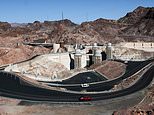
Pictured: Hoover Dam, which holds back the largest reservoir in the US, Lake Mead
The former water line in Lake Mead can be visibly seen from passenger planes flying over Arizona and Nevada
At Lake Mead, the power outage problem has already reached alarming levels. Lake Mead's current water levels sit just five feet from hitting the point where older turbines at the hydroelectric facility will be forced to shut down to avoid damage.
Only newer 'wide-head' turbines can keep running at the lower water levels, however, this will lead to a sharp drop in power output.
The power coming out of Lake Mead at Hoover Dam serves over one million people across Arizona, California and Nevada. It generates about four billion kilowatt-hours of hydroelectric power each year.
Once the drought conditions drop those levels below 950 feet, the entire facility will have to shut down.