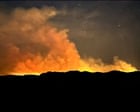
Effects of global heating in NT worsened by ‘dangerous and fire-promoting buffel grass’, expert says
Get our breaking news email, free app or daily news podcast
Fire authorities have warned large parts of the Northern Territory are facing heightened fire danger throughout spring, with above average fuel loads leaving much of the territory vulnerable.
Low soil moisture has also led to elevated fire risk for parts of New South Wales, including some areas that were badly burned during the black summer fires, and south-east Queensland as an El Niño system continues to strengthen in the country’s south-east.
The national snapshot of bushfire risk, by the Australian and New Zealand Council for fire and emergency services (AFAC), also predicts greater fire risk in parts of Victoria, Western Australia, Tasmania and South Australia.
Chief executive Rob Webb said the outlook was driven by dry conditions in the country’s east and increased fuel loads through parts of central and northern Australia.
“The variety of risk factors across different regions reinforces the need for communities to understand their local conditions and prepare early,” he said.
In NSW, the northern tablelands, including Armidale, faces heightened bushfire risk through spring, as well as a small area of the far south coast around Bega.
Below average rainfall has also increased the fire danger for north-east and eastern Tasmania and parts of Victoria including the East Gippsland region, the far south-west, the Surf Coast, and the area west of Geelong to the southern Wombat Forest.
The council said Victoria faced “one of its warmest and driest spring outlooks in some time”.
Most of the Northern Territory south of Timber Creek and Borroloola is facing heightened fire risk. It follows intense rainfall and flooding in parts of the territory earlier this year.
Andrew Warton, commissioner of Fire and Emergency Services NT, said the wet season had driven above-average vegetation growth, particularly in the Barkly and southern regions. He said areas where grass fuels had remained unburnt for a year or more were expected to face the greatest danger.
Alex Vaughan from the Arid Land Environment Centre said: “This is sadly the climate and nature crises in action.
“More intense rainfall, followed by accelerated drying conditions have left landscapes in the NT a tinderbox ready to burn,” he said.
Vaughan said the effects of global heating in the territory were worsened by “dangerous and fire-promoting buffel grass”, a species introduced for pasture improvement that has become dominant in large areas of inland Australia.