This is read by an automated voice. Please report any issues or inconsistencies here.
See more from the L.A. Times in Google Search. Set us as preferred
When was the last time you skipped rope? Or did pogo hops?
Everyone knows that when it comes to the body, it’s “use it or lose it.” We lose muscle mass as we get older, a condition known as sarcopenia. But we also lose muscle strength and power as we age, a condition known as dynapenia, which affects reactivity. And that plays a role in balance and fall prevention — at any age.
Good balance is beneficial for living a longer, healthier life — at any age. Check out our series featuring the latest research, a balance IQ test and simple at-home exercises.
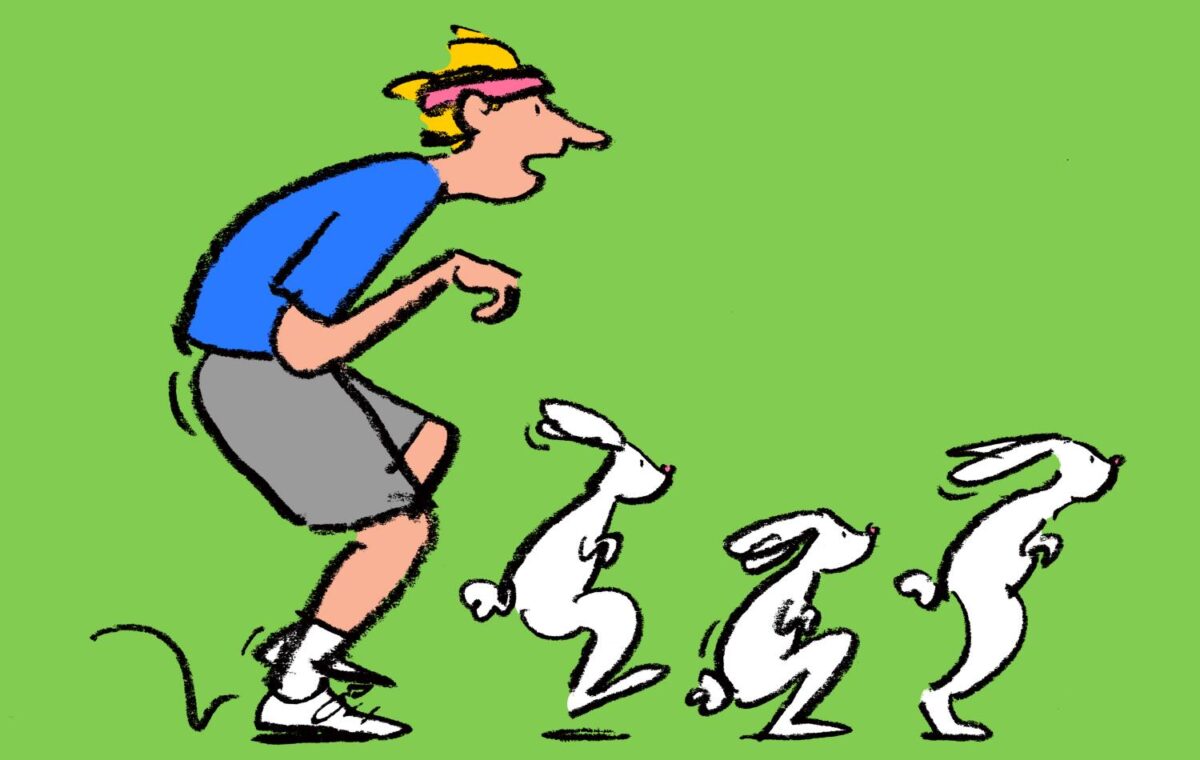
“You start to lose reactivity the moment you stop moving quickly,” says Trina Altman, a personal trainer and fitness writer based in the South Bay. Plyometric exercises — explosive, fast-paced movements, like jumping, skipping, running and hopping — are critical in balance training for fall prevention, she says. “Because we lose the ability to exert force quickly as we get older. Plyometrics — involving motor control, coordination, agility and reactivity — trains quick responses.”
Altman takes a real-world approach to balance training: When you fall, you don’t typically fall on one leg, she reasons. It’s more often due to a sudden misstep, like tripping over a crack in the sidewalk or stepping off an unforeseen curb. Or someone bumps into you at a concert. How quickly the brain and body react after tripping — with your foot automatically thrusting forward, for example, to prevent yourself from face-planting — is what plyometrics trains for.
“If you want to get better at standing on one leg for balance, stand on one leg,” Altman says. “But if you really want to prevent yourself from falling and breaking a bone — and dynapenia — do plyometrics so you don’t lose muscle power and bone mass.”
Plyometric exercises are important for balance training at any age, Altman says. That said, safe progression is key as plyometrics are a more athletic routine. If you’re an older adult who’s physically deconditioned, or someone who doesn’t exercise regularly, and you want to train for better balance, Altman recommends starting with strength training to build muscle mass first as well as stiffness in the tendons and ligaments (doing pushing, pulling, hinging and squatting exercises with progressive overload).
Move over strength and cardio, researchers reveal why balance is the missing piece in healthy aging — and how simple daily movements can lower your risk of injury.
“Having strength is important for being able to balance,” Altman says. (If you have a health condition such as osteoporosis, joint pain, neuropathy, a vestibular disorder or foot issues, she recommends starting with physical therapy before progressing.)
Then, Altman says, move on to balance training with static and dynamic exercises. “You know: How long can you stand on one leg without having to put your foot down?” Then proceed to more athletic plyometrics, making sure to note any prerequisites for each exercise. (They’re typically just easier versions of the same exercises and Altman assigns them to all her clients doing plyometrics.)
“If you’re training plyometrics, you’re training the explosivity of your tendons, and that’s bulletproofing whatever joint that tendon is attached to — the tendons in your foot or ankle or hip,” Altman says. “But you do plyometrics progressively, so you’re strong enough and don’t tear a muscle or a ligament or tendon.”
Plyometric routines don’t need to be long or crazy-intense, Altman says, in order to work toward better balance. Cardio isn’t the goal. “It could simply be a minute each of two different plyometric exercises, twice a week,” she says. “Like two sets of 10 jumps or two sets of eight skater hops.”
Here are four plyometric exercises Altman suggests, from easiest to hardest. Increase the number of sets and reps over time to make the routines harder. They’re demonstrated by Los Angeles Times staffer Mack Baysinger.