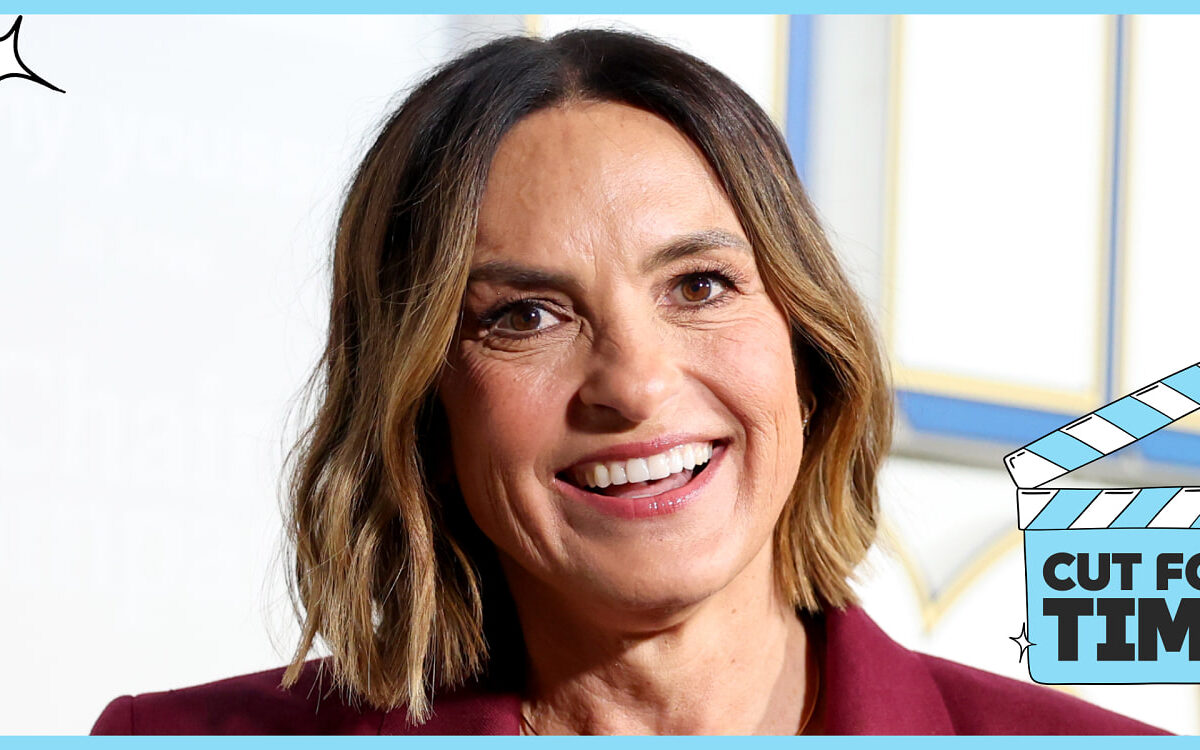
When the camera cuts, the interview isn’t over. With “Cut for Time,” TODAY.com asks the questions our anchors couldn’t get to on air.
In Hollywood, there are A-listers and then there’s royalty. Mariska Hargitay lands in the latter category. The daughter of screen legend Jayne Mansfield, Hargitay has followed in her mother’s footsteps, becoming luminary in her own right for her portrayal of Olivia Benson on “Law & Order: SVU.”
It’s a role that’s earned her both an Emmy and a Golden Globe. Not to mention that, at 27 years and counting, it’s the longest-running primetime series in NBC history.
On this day, however, Hargitay hasn’t come to unpack the latest season of the crime drama. Instead, we sit down in TODAY’s Orange Room to talk about the latest season of her life, a chapter that’s been especially fulfilling for a number of reasons.
Among them? She’s just wrapped her successful Broadway debut, sat courtside with bestie Taylor Swift before her beloved Knicks took home the championship, and premiered the deeply-personal film “My Mom Jayne,” which earned the 62-year-old yet another an Emmy nomination.
If she wins, she won’t have far to go to pick up the trophy since Hargitay is also hosting the Emmys this year, the first time a woman has hosted the awards show since Jane Lynch held the distinction back in 2011.
It’s undoubtedly Hargitay’s moment. The actor reflects on the “profound healing” that got her here and how the Knicks’ Jalen Brunson played a part in it. She also delves into her work with the Purple Leash Project, a partnership between Purina and the nonprofit RedRover that spotlights the need for more pet-friendly domestic violence shelters, an initiative near and dear to her heart.
This interview has been lighted edited for clarity.
First of all, I just want to acknowledge the fact that I didn’t think about it either and that’s what hit me so hard when I learned about it, because I don’t think anybody thinks about that.
So, it’s a really powerful and extraordinary initiative. Just the idea that a survivor shouldn’t have to choose between her safety and her animals. There’s already so many barriers of why not to leave and why not to go, but this one is a huge one.
This idea that pets are actually family members and oftentimes the most consistent, steady presence in a survivor’s life, that provides so much comfort, so much support, so much safety, really. And here was a reason that people weren’t going.
Up to 50% of survivors were not wanting to go, to leave their animals. So, it’s actually a brilliant initiative to a way of supporting survivors. It takes that off their plate and they’re doing it all over and I was just so moved by it and so happy to get on board.
They’re like your children. They are an extended part of your family. Also, the idea of animals being used as threats or used as tactics to keep the person there or threaten that if they leave, they’ll hurt the animal. More than 70% of women in shelters report that their abuser has used an animal as a form of control.
So, it’s innovative, brilliant and so survivor-centric. And it is truly something that supports healing and gives survivors the courage to leave and supports them in a profound way.
I’ll tell you what it feels like: When I made this film, everything changed. I think the way I described it is finding so much more internal space that I didn’t have. It really settled my nervous system and was very profoundly healing for me in ways I was aware of, and in ways that I wasn’t.