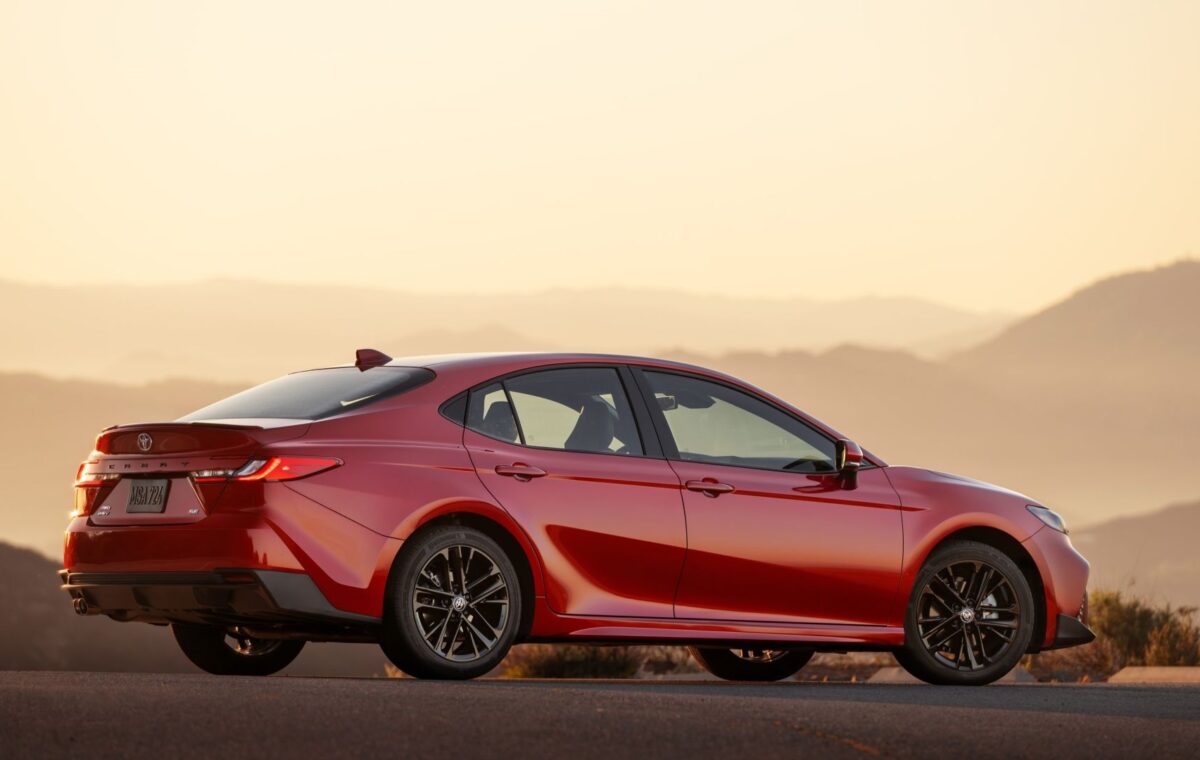
SUVs might be the default choice for a lot of buyers these days, but the Toyota Camry is proving there's still plenty of life left in the humble sedan. Toyota's July sales figures show the Camry is gaining ground, with year-to-date sales up 15.5 percent from the same point last year.
That's especially interesting because the Camry isn't trying to reinvent the family car. It's sticking with a straightforward formula built around value, fuel efficiency, build quality, and reliability, which is exactly the sort of combination that can make a practical car hard to ignore.
And with the current Camry starting at $29,600, Toyota has given buyers another reason to take a second look at a sedan instead of automatically reaching for an SUV.
In order to give you the most up-to-date and accurate information possible, the data used to compile this article was sourced from Toyota and other authoritative sources, including CarEdge, iSeeCars, Edmunds, J.D. Power, and TopSpeed.
The Toyota Camry Hybrid outsells the Corolla Hybrid with more power, space, and comfort—making it the better choice for most buyers.
The Camry's hybrid powertrain isn't something buyers have to choose between. Toyota offers the current lineup with a hybrid setup across all five trims, giving buyers the same basic efficiency-focused formula whether they choose the entry-level LE or the range-topping XSE.
The front-wheel-drive LE is the most efficient version, returning 53 mpg in the city, 50 mpg on the highway, and 51 mpg combined. It also has a 663-mile range claim from its 13-gallon tank, while its fuel costs work out to around $1.59 for every 25 miles.
Even the all-wheel-drive XSE remains relatively frugal, returning 43 mpg in the city, 43 mpg on the highway, and 43 mpg combined. That means choosing a higher trim or adding all-wheel drive doesn't suddenly turn the Camry into a fuel-hungry sedan, which is a big part of why the hybrid-only approach makes sense for everyday buyers.
Roomy, dependable, fun to drive, and impressively fuel-efficient—this car checks all the right boxes.
Toyota starts the 2026 Camry range at $29,600 for the front-wheel-drive LE, making it the most competitively priced hybrid in its segment. That's a pretty important part of the Camry's appeal, because buyers don't have to stretch into a higher trim just to get an efficient family sedan.
The range tops out at $36,000 for the XSE, while all-wheel drive is available across the five trims for an additional $1,525. Toyota also keeps the options list relatively short, preferring a straightforward five-trim strategy rather than loading the lineup with expensive extras.
That gives buyers a fairly simple choice. You can spend more for a higher trim or all-wheel drive, but the Camry's basic formula remains the same throughout the range, keeping the price of entry relatively accessible.
These cars prove efficiency doesn’t have to be expensive.
The Camry has built its reputation around being a practical family car that buyers can count on. That matters when you're looking beyond the sticker price and thinking about what it'll be like to live with the car for years.
iSeeCars gives the Camry an 8.6/10 reliability score and estimates that the model can run for 13.1 years or 171,901 miles without encountering any noteworthy mechanical issues. It also gives the Camry a 31.8-percent probability of reaching 200,000 miles.