Dr Max Pemberton isn’t uncompassionate or especially radical, but he assembles a team of medics whose stance on the condition is clear from the off. This is a documentary that will incense and offend many
Presenter Max Pemberton, a psychiatrist in the NHS, Daily Mail columnist and author, and the experts he has assembled, waste no time in setting out their stall in The Great ADHD Myth?. This is a documentary that will incense and offend some of its viewers, and its scepticism regarding ADHD is clear from the outset. “It’s certainly not a medical condition as far as I’m concerned,” says the former president of the Royal College of General Practitioners, Dr Iona Heath. “We’re going to look back and think: did we actually put a chemical cosh on an entire developing generation of brains?” says a neurophysiological psychologist. “The industry around ADHD is about making money at the cost of the misery of others,” says a former president of the Royal College of Psychiatrists.
These represent the three main questions raised by Pemberton. The first is whether ADHD is a neuro-developmental disorder – ie do those diagnosed with the condition have different brains from those without – or whether it is a way of suppressing natural tendencies (especially those of children) and inducing behaviours that society deems acceptable. The second is how doctors should approach treatment, which most often involves amphetamines. “These are controlled drugs,” says consultant child and adolescent psychiatrist Dr Sami Timimi. “There’s good reason why we warn the rest of the population [about them].” The third question is – who benefits from the increase in diagnoses we have seen in the past decade or so? How has ADHD moved from a relatively unknown condition 10 years ago to affecting about 2.5 million people in the UK today (including a 200% increase in people being referred for diagnosis in the past five years)??
Pemberton interviews cognitive neuroscientist Prof Katya Rubia, who has 30 years of experience working with brain imaging. She says that there is no convincing data that “ADHD brains” are any different from “normal” brains. Others go through the list of diagnostic criteria, which include things such as finding it difficult to wait your turn, squirming in your seat and being unable to play quietly. The broadness with which the criteria are drawn means that, according to Dr Heath: “If you want the diagnosis, you will be able to get it.”
Pemberton himself undergoes a £1,200 private assessment and comes away with a diagnosis of “combined” ADHD (impulsivity, hyperactivity, inattentiveness) and a prescription for medication. He takes a dose to see what it’s like and reports feeling blunted, not wanting to chat as he usually does (“The fact you’re here is quite irritating actually,” he tells the crew) and feeling as if he could happily sit quietly alone. It’s a stunt, but, I suppose – much as I would love him to stick with the science and do a deeper dive on the data – an inevitable one.
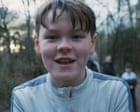
The main stunt, however, is following 10-year-old Mason as he comes off the ADHD meds he has been on for two years (“They take my fun-ness away”) for a six-week period to see if a programme of yoga, outdoor activities, no screen time and less processed food and sugar can help instead. It can. Mason, says his mother, Shauna, is funnier, happier, more of a character, more himself. But he is more trouble at school. His teacher says that seeing “his true, honest self” is more important than him being easier to teach. His mother decides to keep him off the drugs.
We live in a time when to question any prevailing orthodoxy will, in many cases, be met with an emotional outpouring. Casting any form of doubt on ADHD will absolutely not be the exception. But Pemberton answers his questions convincingly. And the redresses proposed – try changing diet, screen and activity levels first, making school curricula more flexible, and making drugs the last resort – seem neither radical nor uncompassionate. They seem, if primum non nocere (“first do no harm”) is your goal rather than profit (there is little money to be made in encouraging parents to take their children to the park), to be quite the opposite.