This is read by an automated voice. Please report any issues or inconsistencies here.
See more from the L.A. Times in Google Search. Set us as preferred
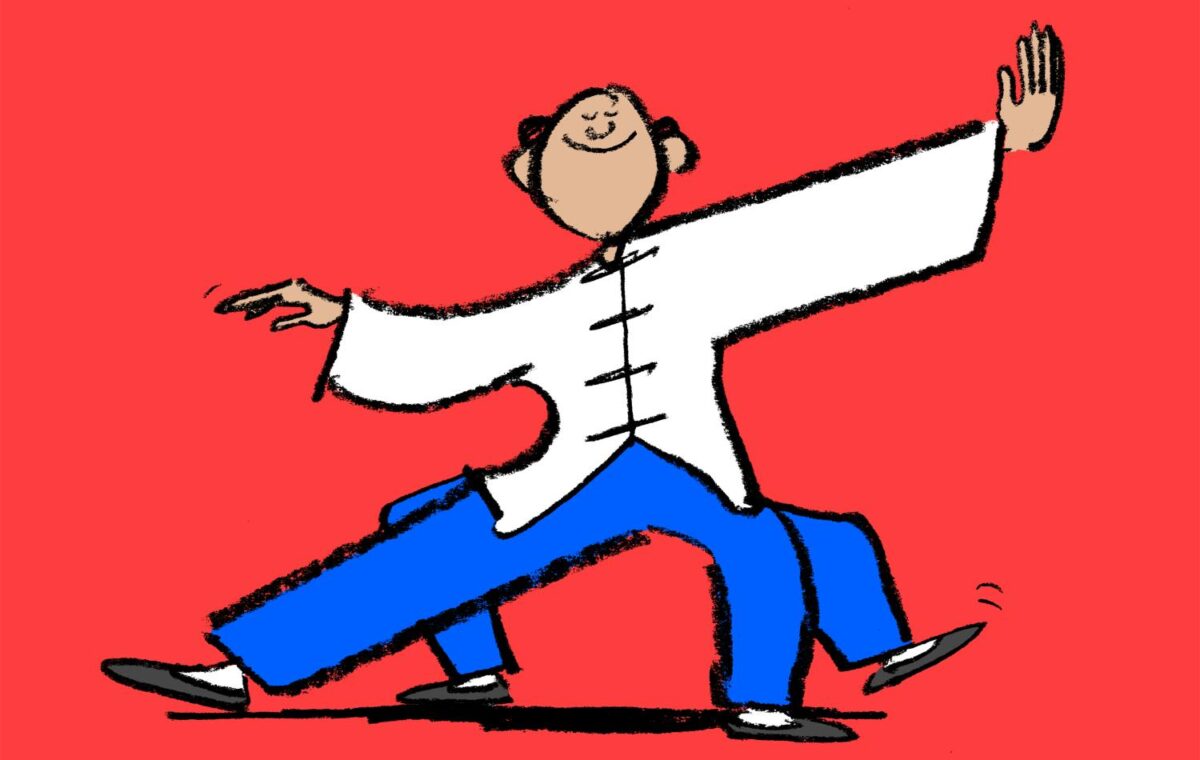
That’s one of the guiding principles behind tai chi, a hundreds-year-old Chinese martial arts practice that today is considered a form of meditative movement. It’s also a “gold standard” for balance training, says Ann Swanson, a tai chi instructor and author of three mindful movement books.
Good balance is beneficial for living a longer, healthier life — at any age. Check out our series featuring the latest research, a balance IQ test and simple at-home exercises.
“We have decades of research. One review, in 2023, reveals that tai chi practitioners have a 24% lower relative risk of falling than older adults who don’t practice,” Swanson says. “And it’s not some boring balance training program — it’s fun and enjoyable and people actually stick with it.”
Rather than focusing on explosive, fast-paced movements, tai chi is generally composed of slow, smooth, continuous movements staying within a modest range of motion. It’s especially gentle and accessible to people with disabilities, those healing injuries and older adults. Because it’s done so slowly and fluidly, emphasizing “soft joints” instead of locking out or bracing body parts, it’s low-impact. And because it’s typically done in an upright posture, it’s accessible to those with back or joint pain, arthritis, osteoporosis and vertigo, as it doesn’t require hinging forward.
“It’s adaptable, you can do the movements in different ways — big steps, small steps,” Swanson says. “It’s become a shining light in the field of balance and fall prevention.”
As tai chi doesn’t push extremes, it may feel counterintuitive in Western culture; but that’s part of its power, Swanson says, likening tai chi to water.
“Water is soft but strong: There could be an intense hurricane or flood, but it’s also adaptable and pliable; it fills a space. Tai chi is water-like that way.”
Move over strength and cardio, researchers reveal why balance is the missing piece in healthy aging — and how simple daily movements can lower your risk of injury.
Tai chi isn’t just for old folks, however. Movements are often more challenging to your balance when done slowly with gentle resistance. The exercise can also be made more intense with a lower stance or squat. Tai chi strengthens the lower-body and builds postural and core muscles — the body’s deep stabilizing muscles — though it does so gently, over time. It improves mobility (fluidity of movement) and agility (pivoting quickly). Mindful dynamic movement, working different body parts at once, also challenges the brain and helps improve coordination.
“We often lose our balance when doing two things at once — walking and talking or carrying groceries — and tai chi builds the capacity to coordinate and do multiple things simultaneously,” Swanson says.
Softening rather than stiffening when moving through space requires embracing your body’s natural sway and tiny micro-movements, like an ankle wobbling or knee jiggling. That not only builds muscles supporting the joints, but improves proprioception (awareness of your body moving through space), a key factor in balance. It also helps build interoception (awareness of bodily signals, like breathing or a heartbeat). The slow, intentional pace of tai chi paired with conscious breathing and present-moment awareness, Swanson says, also help release stress.
Over time, all of those things can help participants overcome fears of falling.
“People get scared of the sway, the wobble. If you’ve had a fall before, you get a fear of falling again and you stiffen up, you become protective,” Swanson says. “But that’s actually counterproductive — it makes you more likely to fall. We have to build the capacity to feel OK with a little wobble. With tai chi, your body is learning to catch yourself before you fall, you’re practicing stumbling gracefully.”