India’s art auction market is increasingly becoming a story of price rather than volume. After turnover jumped 87% to ₹3,040.65 crore in 2025, the market has extended that run this year, with collectors continuing to bid up a small pool of coveted modern masters even as the number of lots sold barely changed.
Modern art sales rose 43.7% year-on-year to ₹1,548 crore in the six months through June, accounting for nearly three-fourths of the market, per Asign.art’s Asign Data Sciences Indian Auction Art Market report for January-June 2026, accessed exclusively by Mint.
Collectors are still chasing a handful of masters. M.F. Husain led with ₹253 crore in sales, followed by Ganesh Pyne at ₹187 crore, F.N. Souza at ₹107 crore, S.H. Raza at ₹97 crore and V.S. Gaitonde at ₹39 crore. Together, the five artists accounted for 44% of the market. The number of lots fetching more than ₹1 crore rose nearly 35% on-year to 413 in the first half of 2026.
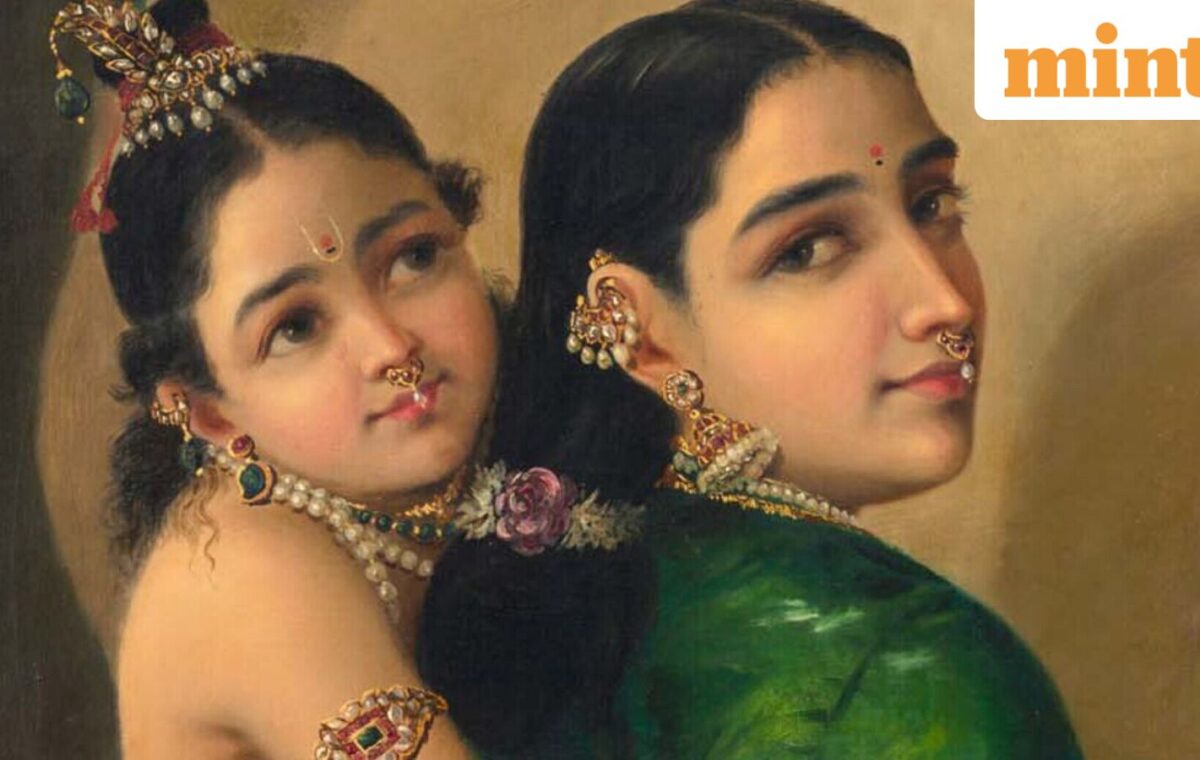
The biggest sale in the first half of 2026, however, came from an earlier generation. Raja Ravi Varma’s Yashoda and Krishna (1890) sold for ₹167.2 crore at Saffronart’s April sale in Mumbai.
Pyne's The Fisherman (1979) followed at ₹48.95 crore, and Husain's Second Act (1958) at ₹48 crore. Pyne had an especially strong run, placing four works in the top 10 priciest lots of H1CY26.
The growth was overwhelmingly value-led, said Ashvin E. Rajagopalan, co-founder of Asign.art. Turnover rose 43.7% year-on-year, while the number of lots sold increased just 3.21% to 2,091 from 2,026 a year earlier. The average price per sold lot jumped 39.23% to ₹74.07 lakh from ₹53.20 lakh in H1CY25, while the sell-through rate stood at 92.60%.
In 2025, the market’s turnover rose to ₹3,040.65 crore while the number of lots sold dipped slightly. The average price per lot nearly doubled to ₹73 lakh. The sell-through rate fell from 95% to 90%, suggesting that the market’s expansion was driven more by the value of works changing hands than by a larger number of transactions.
Most transactions remain at the lower end. Nearly 83% of all sold lots in H1CY26 fetched less than ₹50 lakh. Yet works from the 1950s, 1960s and 1970s together generated ₹737 crore.
Most modern masters were never prolific to begin with, and with much of their surviving work now locked into museum and foundation collections, very little is left to come to market, said independent art critic Uma Nair.
Provenance, including ownership and publication history, is also becoming central to buyers' due diligence, Nair added.
Auction houses are seeing the same dynamic. Damian Vesey, director and international specialist for South Asian modern and contemporary art at Christie’s, told Mint in April that demand had outpaced the supply of high-quality works, with more than 90% of works offered by the house in its Indian art auctions over the previous two years being fresh to the market.
The dominance of established masters has not completely shut out newer names. More than 60 artists appeared in the H1 auction dataset for the first time, while new auction records were set for Ramkinkar Baij at ₹6 crore, Vivan Sundaram at ₹8 crore and Shanti Dave at ₹3 crore.
Auction houses expect this broadening to continue into the second half, as collectors look beyond the most established names but remain selective about quality.
Manjari Sihare-Sutin, Sotheby’s senior vice president and worldwide head of modern and contemporary South Asian art, said collectors are increasingly discerning, favouring rare, well-provenanced, art-historically significant works, even as interest expands beyond established names. She called the outlook for the second half "very positive," citing an active autumn season alongside a growing number of exhibitions and private initiatives building visibility for Indian art.
Sotheby’s September sale will feature Husain’s Mithuna Crimson, from the Chester and Davida Herwitz collection, alongside Bhupen Khakhar’s Old Men Playing Chess, an early work from the artist’s estate.