Published : Aug 17, 2026 15:59 IST – 2 MINS READ
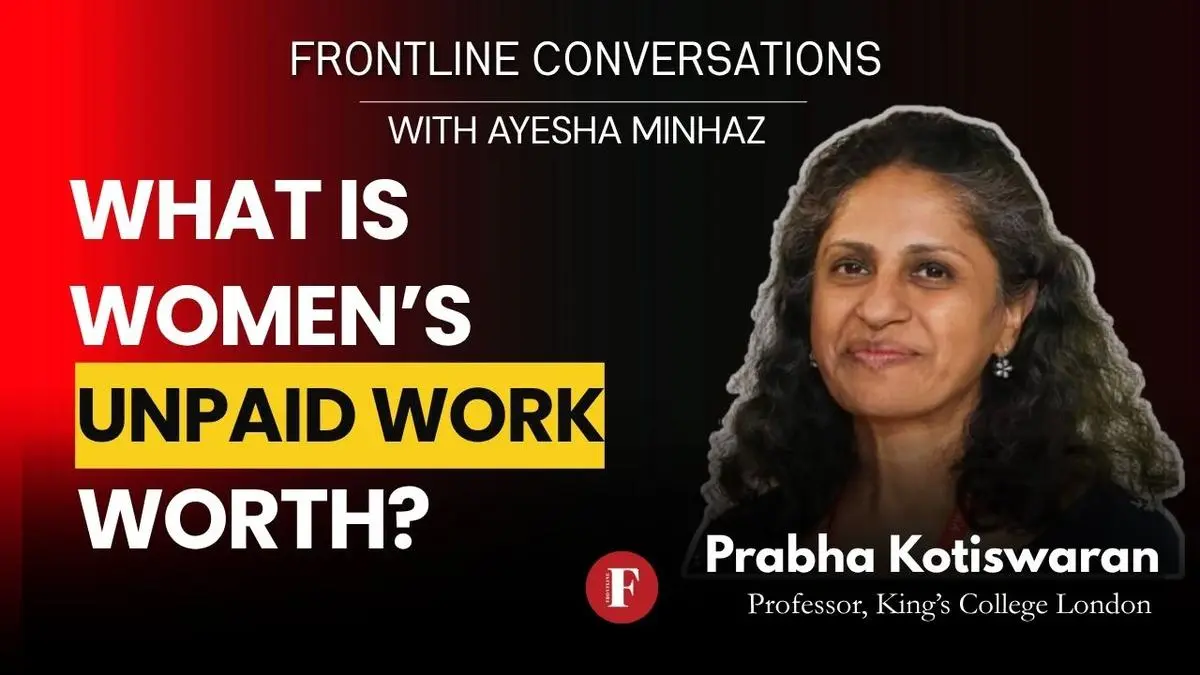
In this episode of Frontline Conversations, Prabha Kotiswaran, Professor of Law and Social Justice at King’s College London, speaks about her book “Wages for Housework: India’s Experiment with Unconditional Cash Transfers to Women”. The book looks at India’s growing use of unconditional cash transfers to women through the lens of feminist social reproduction theory, with field research in Goa, Assam, and West Bengal.
Kotiswaran discusses the feminist history behind the idea of “wages for housework” and explains why recognising women’s unpaid domestic and care work does not necessarily mean reinforcing it. She argues that unconditional cash transfers can be redistributive even when they are not fully transformative, particularly when women have little control over household finances or are excluded from paid employment. She also addresses the criticism that these schemes are primarily electoral tools, arguing that women beneficiaries exercise agency in how they understand welfare, the state and their voting choices.
Kotiswaran explains why feminist participation in policymaking is necessary when designing cash transfer programmes and why unconditional cash transfers must remain part of a broader agenda for gender equality, women’s economic empowerment, and transforming the care economy.
Comments have to be in English, and in full sentences. They cannot be abusive or personal. Please abide to our community guidelines for posting your comment
We have migrated to a new commenting platform. If you are already a registered user of The Frontline and logged in, you may continue to engage with our articles. If you do not have an account please register and login to post comments.