When you purchase through links on our site, we may earn an affiliate commission. Here’s how it works.
The corner of the TechRadar site that swaps processors for press-ups, The Fit List is our regular series of fitness listicles. We explore how to improve your health in handy bite-size pieces of advice. You can read the whole series here.
When I started regularly going to the gym several years ago, I did so without bothering with the best fitness trackers. These gadgets, I thought, were only good for running, tracking my sleep and counting my steps. But I’ve since learned that I was totally wrong.
Now I keep a cheap fitness tracker as a handy weightlifting companion. That’s right, a budget option; all of the functions I need, I can use on my low-cost Xiaomi Smart Band 10, making a purchase like the Apple Watch Ultra 3 totally unnecessary.
New to the gym, or eyeing up a new wearable purchase and wondering how it could help you? Let me walk you through five small-but-mighty functions of a cheap fitness tracker which will help you out at the gym.
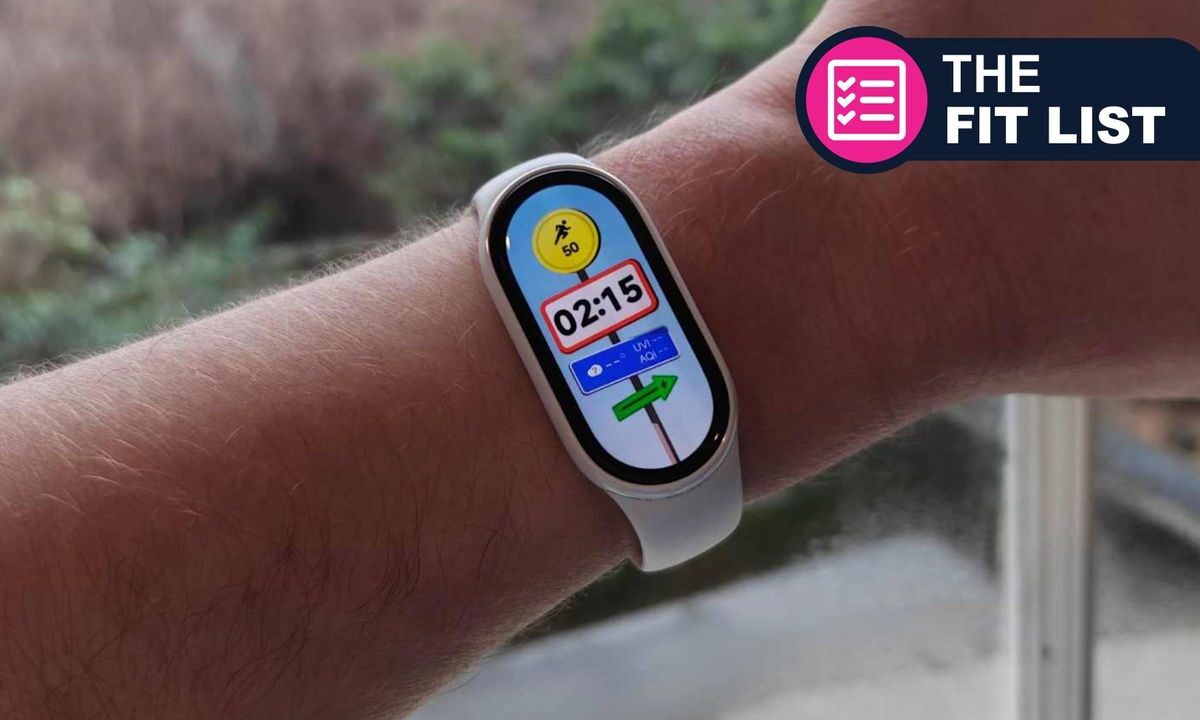
Honestly, it’s one of the simplest features of my fitness tracker that helps my workout the most. When you start tracking a workout on any wearable, you’ll see an on-wrist timer to tell you how much time has elapsed, and I use that timer constantly.
I use this not to see how long I work out for after the fact, but to dictate how long I exercise for during each set. I make sure I take a consistent amount of time for each set to maintain the right level of intensity and, more importantly, rest for the same amount of time between sets. I'll try to keep each rest period to a minute or less.
When I first started using the gym, I could sometimes rush through sets if I had lots of energy, or waste absolutely ages of time if I didn’t. Neither of those is good practice.
With my fitness tracker’s stopwatch, I’ve been treating my body better, between sets and rest periods. It also makes it far easier to predict how long a session will be – if my work on each kit is reliable span of time, and I know what I want to do ahead of time, I know how long I’ll be at the gym. Great for planning my day, and encouraging me to try shorter workouts if I have less time instead of not working out at all.
Sign up for breaking news, reviews, opinion, top tech deals, and more.
One of the basic functions of any fitness tracker is that it can monitor your heart rate. They all do so, to varying degrees of accuracy, and again I find this a really useful metric to help me stay healthy on a workout.
According to the British Heart Foundation’s simple math on ideal heart rate during exercising (220 minus your age, then work out 50% to 70% of that), my heart rate should be between 95bpm and 133bpm when working out.
Suffice to say, it isn’t always that. Sometimes when I’m really pushing myself with a new heavier weight, or I’m still recovering from my trip to the gym (I always run or cycle), my heart rate will push higher. And at other times, like when I’m being sluggish (should’ve kept a better eye on that timer!) or if I’m spending my rest times typing elaborate article pitches to TechRadar’s editors [like this one! — Ed.], I might be dropping too low.
As before, having my fitness tracker update me on my heart rate during the workout can help me decide how long to rest between workouts, whether to spend my rest period doing active recovery exercises or in 'true rest', and often what workout to do next too if I don't have a pre-prescribed plan to follow. Most wearables make this even easier, by having a ‘red zone’ indicating my heart rate is too high, and a blue zone if it’s low.
Both of my previous points have been about using a fitness tracker’s stats to dictate how I plan and adapt my workout. That principle stands on a longer-term scale too: fitness trackers are almost always tied to a fitness app on your phone, which can track performance over time and provide an insight into how our exercise habits are affecting our bodies.