You have reached your maximum number of saved items.
Remove items from your saved list to add more.
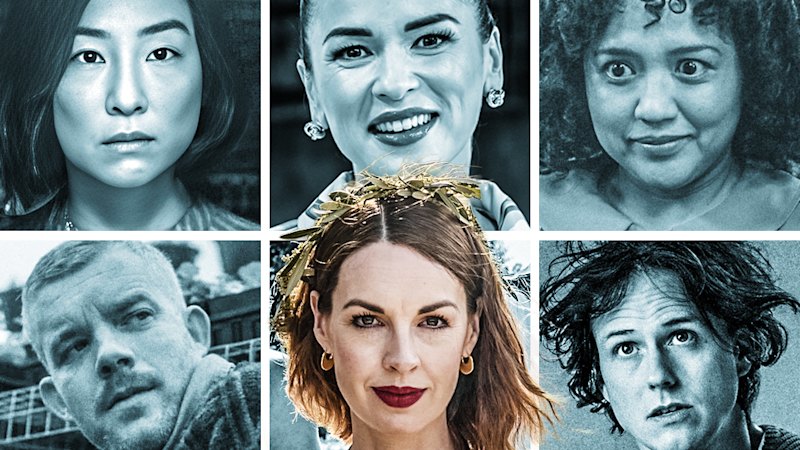
This week’s picks include The White Lotus-esque Two Weeks in August, the return of a sweet Australian baking show, the nonsensical sci-fi thriller The Last House, a Mexican police drama and a stand-up special from Weapons star Whitmer Thomas.
Don’t let Two Weeks in August’s generic, placeholder-that-stuck title turn you off, nor its familiar premise – the resentments of the London vacationing class sizzle under the relentless late-summer heat of a gorgeous, unnamed Greek island.
Yes, this British drama is yet another post-White Lotus entry into the “luxurious holiday from hell” subgenre. Between the infidelity, co-dependent friendships, terrible French nanny and an ominous flash-forward to a wildfire ravaging through the island, Two Weeks in August offers plenty of schadenfreude for those left at home shivering in Australia watching a never-ending social media parade of Euro summers.
But this eight-part BBC series, created by Catherine Shepherd, uses TV’s trending tropes for its much more startling centre: a deeply embodied reawakening within Zoe (Jessica Raine, The Devil’s Hour; Call the Midwife), a middle-aged teacher, mother and people-pleaser who has sanded down her personality into an unremarkable, forgettable politeness.
It doesn’t make up for the title, but it’s easy to imagine “two weeks in August” as Zoe’s mantra of sorts in the months leading up to this holiday. If her sunny disposition can’t brighten up her unemployed husband Dan (Damien Molony), maybe soaking in the Mediterranean rays with their old university friends (and kids) can? Maybe not.
On day one, Dan could be mistaken for her sullen teen son, sticking to a black hoodie while complaining of the heat and rejecting suggestions for a swim. But the show refuses to villainise Dan or valorise Zoe, whose self-sacrifices to avoid upsetting others (taking the worst room; lying to her friends about Dan’s depression) carry an air of pride and resentment. Zoe’s deep unhappiness is instantly clear to everyone but herself, held brilliantly in Raine’s quivering smiles, erratic laughs and frantic, panicked eyes.
When a drunken transgression occurs on night one, Zoe’s anger emerges – not just as a gale force, but a reassessment of her compulsion towards peace-keeping. She’s not the only one on the trip who realises that a holiday can’t reset relationships, including self-centred actor Solomon (Nicholas Pinnock) and his younger wife (Antonia Thomas), as well as best friends Nat (Leila Farzad) and Jacob (Hugh Skinner, Twenty Twenty Six), who struggle to tap into their usual role as the fun, child-free friends.
One potentially alienating element is the show’s supernatural bent. Throughout, Zoe is haunted by foreboding, alluring apparitions from Greek mythology only she can see, including scorpions and three women embodying the Fates. A sprinkling of divine intervention within a grounded character-driven drama is jarring, but so is Zoe’s new self – anything but generic.
It’s no surprise The Last House is a hit, generating 27.5 million views within three days of landing on Netflix. While it’s a bland, nonsensical mess of a sci-fi thriller, its high-concept premise – a family of four is suddenly trapped in their house by an invisible force, unable to open doors or smash windows – is the exact right blend of silly and intriguing to generate a, “Oh yeah, I’d watch that” from a group. There’s an illusion of prestige, too, if you recognise its two Golden Globes-nominated leads, Wagner Moura (Narcos; The Secret Agent) and Greta Lee (Past Lives).
The duo play, with little chemistry, a resourceful married couple who vow to survive and thrive this ordeal, doing their best to keep their young children alive by rationing food, keeping routine and staying positive, even as the days turns to months and it becomes clear the entire world as they know it has ended.
The first 40 minutes of the film are a family drama, seeing the four adapt to their new life before the menacing, water-based species locking all of humanity inside is introduced. The Last House then descends into a limp, illogical survival showdown. The pulse of the film is the family’s dynamic, but it remains fairly unfrayed as the years pass. Again and again, the script takes a turn away from any sustained tension.
Loosely inspired by Mexico City’s first female police force the Las Azules (translating to the show’s English title), Women in Blue sees the force of four take on serial killers and sexism alike. Back for a second season, the Spanish-language series sees the group – now slightly more respected – investigate the death of a student activist, uncovering corruption linked to the historic 1968 Tlatelolco massacre, where upwards of 300 students were murdered by the Mexican military. While heavy-handed at times, the tense, vibrant Women in Blue links Mexico’s past to a global present.
The nation’s sweetest show is back – as are comedians Natalie Tran and Tom Walker as hosts, an delightfully oddball duo that add a little extra quirk and zest to the show. But it’s all about the bakers, and season nine features an eclectic, loveable crew of 12 who take on classic cakes and show-stopping creations. Episode one – the first of 10, dropping weekly – hits all the classic low-stakes drama of the show, where dropped bakes, sunken cakes and floppy fondant aren’t edited as a catastrophe. A light, sugary delight.