This content is provided by Exco Player and may use cookies or similar technologies. Please click 'Allow and Continue' below to load the content.
Get our award-winning daily news email featuring exclusive stories, opinion and expert analysis
I would like to be emailed about offers, event and updates from Evening Standard. Read our privacy notice.
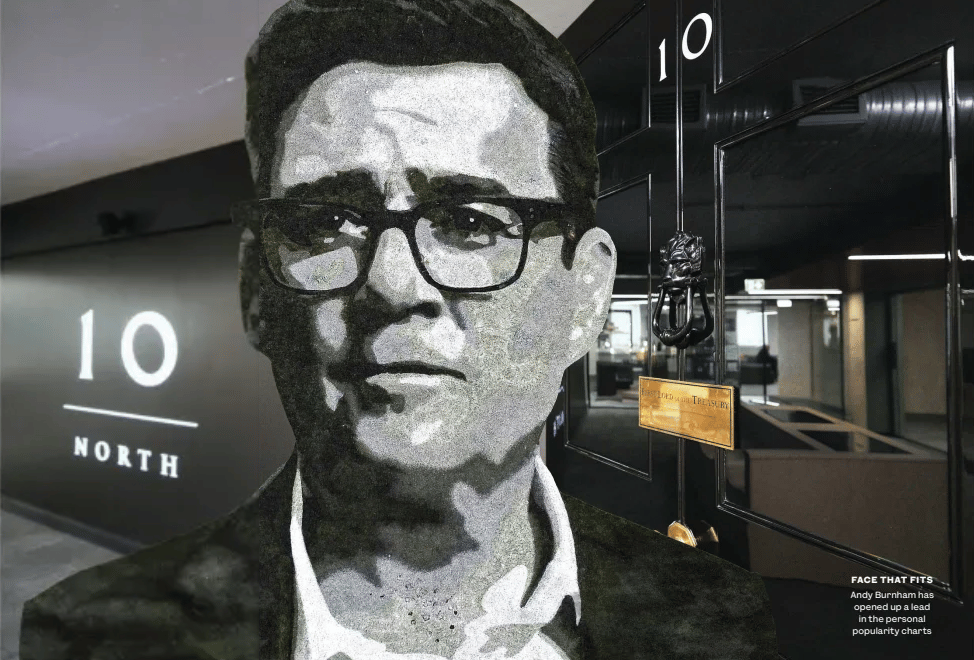
Few leaders have had as golden a summer as Andy Burnham. Heading off for a family break with his wife Marie-France van Heel and their trio of twenty-something offspring, Jimmy, Rosie and Anne-Marie, before settling fully into Number 10 and the official PM’s flat, he did not specify a destination, though it is thought to be a short-haul Europe trip for a brief recharge.
This week, it was back to Blighty, looking tanned as he hit the road on a national tour — in essence a chance to introduce himself to the many parts of the country outside his Manchester fiefdom where the Burnham brand is either unfamiliar or treated with the scepticism that accompanies a change of leader only two years after a general election that saw his predecessor shoot to power on the wings of a strong majority only to crash out in July.
If Sir Keir Starmer and Rachel Reeves proved a disappointment to the party and public, his successor is riding high, throwing off the gloom, political stasis and strategic uncertainty of the previous regime. Planet Burnham is a more pro-active place — driven by a character who believes in his own magic as a “people person”.
He believes in his own magic as a people person
There have often been doubts about Burnham’s consistency and policy depth down the years. In 2009, I debated him on an LBC radio phone-in about healthcare — and left not much the wiser about how he thought the NHS should be run or how far he agreed with a public-private mix. He was health secretary at the time.
But he did make clear that social care, a challenge that has defeated many governments since, needed a full and expensive reform. Speaking movingly about the toll providing care for the elderly and other care recipients takes on their families was a reminder that the subject that moved him a decade and half ago is now his to resolve in power.
No one doubts now that Burnham has forged a ruthless path to the top. First, by putting his stamp on the Greater Manchester mayoralty; then, in a cheeky affront to Starmer, by turning up the heat on his leadership at party conference last September. Then we saw his determination to fight a by-election and how he wielded his political gamesmanship to get through the Starmerite resistance to that to win a parliamentary seat in Makerfield. “They said it couldn’t be done” is his mantra.
Seeing the Labour candidate Bev Craig hang onto the mayoralty he vacated — trouncing Reform UK — in early August concluded an impressive spread of internal victories and confounded many who underestimated him as just “nice Andy”.
Since succeeding Starmer, he has undertaken a “Burnham Blitz” of announcements, demarcating that Labour is under new ownership. He moved swiftly in the past fortnight to undo plans to water down jury trials and begin early-release schemes for about 5,000 offenders in order to deal with an acute shortage of prison places.
He has instructed ministers to ensure two of those responsible for the death of Pc Andrew Harper, killed by a getaway car after trying to arrest a teenage gang of quad bike thieves, are excluded from the government’s early release scheme — despite initial concerns about direct political involvement in determining who is and is not released and worries about the consequences of rapidly abandoning a policy intended to avoid prison capacity being exceeded as soon as October.
Burnham counters that he is “not giving up” and is “increasingly confident” that the pair’s release can be halted. A less edifying view came from the Tory justice spokesman Chris Philp, who posted on X that this zigzag was a sign of policy chaos on criminal judgment at the heart of the government. And even Burnham conceded: “I am doing all I can, but it is simply not possible to prevent all offenders from being released early without the prison system collapsing.”
Clearly, he intends to marry the “soft Left” progressive language and positions he used to build a power base with tougher stances on issues he knows can easily unleash an avalanche for a centre-Left government if it is seem to move too far from public opinion.