Fox News Flash top headlines are here. Check out what's clicking on FoxNews.com.
What if the nearest hospital was hours away and there was no reliable electricity once you got there? A group of university students in the Netherlands is tackling that problem with a vehicle unlike any ambulance you have probably seen.
Solar Team Eindhoven has unveiled Stella Juva, which the team calls the world's first solar-powered ambulance. Instead of focusing on getting patients to a hospital, the vehicle is designed to bring medical care directly to people who live far from one. Even better, Stella Juva can generate the electricity needed to drive and operate its medical equipment using sunlight.
That could make a huge difference in remote communities where fuel is hard to find and dependable electricity cannot be taken for granted. I have followed some fascinating solar vehicles over the years. This one caught my attention because the technology has a very human purpose behind it.
New! Free live CyberGuy class: Protect Your Money From Today’s Biggest Threats
Join us Saturday, Aug. 29, at 10 a.m. ET for a free CyberGuy LIVE class covering five simple steps to help defend yourself against AI scams, fraud, identity theft and financial hacks. Kurt "CyberGuy" Knutsson will explain how to set up bank alerts, strengthen your account logins, protect your phone number, freeze your credit and help secure your retirement savings against unauthorized transfers. No technical experience is needed. You’ll also receive our financial protection checklist, and every registrant will get a link to the class recording afterward.
Reserve your free spot today at CyberGuyLive.com.
COULD A PAINT-ON ELECTRONIC TATTOO SPOT HEART ATTACKS?
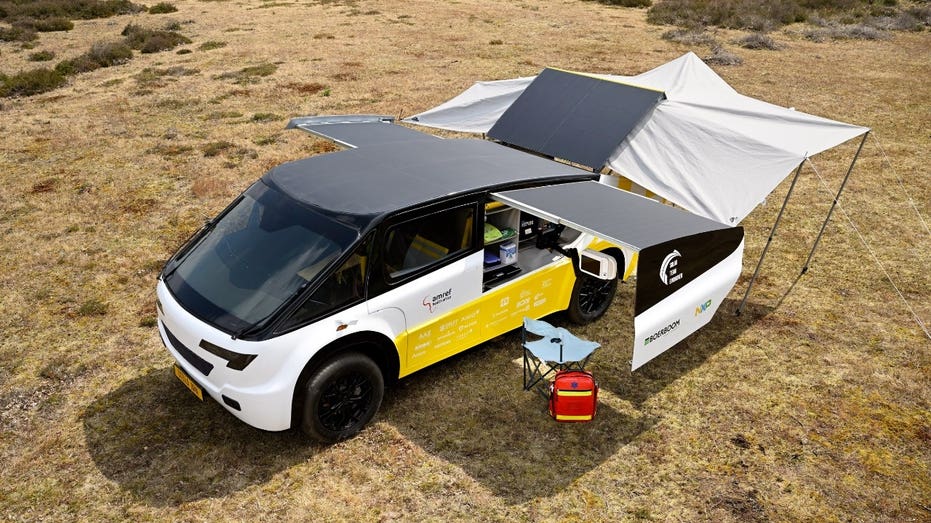
Stella Juva unfolds into a solar-powered mobile clinic, using its onboard energy system to support medical care far from reliable electricity (Solar Team Eindhoven)
Stella Juva comes from a team of 23 students at Eindhoven University of Technology. They designed the vehicle for places where reaching healthcare can be difficult because of poor roads or limited fuel. Electricity can also be unreliable. That last issue is especially important.
The World Health Organization has estimated that about 1 billion people worldwide are served by healthcare facilities with unreliable electricity or no electricity at all. Without dependable power, even basic medical services can become much harder to provide.
Stella Juva tackles that problem by taking its own source of electricity along for the ride. Instead of working like a traditional ambulance, the vehicle functions more like a mobile clinic. Healthcare workers can travel to an underserved community and provide care without depending on nearby charging infrastructure. That changes the entire idea of what an ambulance can do. We have seen a similar shift with technology such as drones being used to deliver medicine. Sometimes the fastest way to improve access to healthcare is to rethink how the care gets to you.
The roof of Stella Juva is covered with high-efficiency solar cells made by AIKO. They use a design known as All Back Contact technology. Most solar panels have electrical contacts that take up some space on the front of each cell. This design moves those contacts to the back, leaving more surface area exposed to sunlight. That is especially useful on a vehicle because roof space is limited.
The students needed enough solar power to move Stella Juva through challenging terrain while also supporting the medical equipment inside. The vehicle stores that energy in a 50-kWh lithium-based battery pack. That stored electricity can keep the vehicle and its medical systems operating when sunlight is limited. It can also provide power after dark. Under favorable solar conditions, the team expects Stella Juva to travel as far as 715 kilometers in a day. That works out to about 444 miles. Its top speed can reach roughly 75 mph.
The 444-mile figure is an expected maximum under good solar conditions, so real-world performance could vary depending on weather and terrain. Still, being able to generate meaningful driving range from the roof of the vehicle is impressive.