While the media has been agog and aghast at the occasional successes of 2026 candidates aligned with the Democratic Socialists of America, I haven’t been feeling the hype. A canny read of the electorate reveals that establishment Democrats, like Xavier Becerra and Amy Klobuchar, are doing just fine. Many primary winners are getting lumped in with the DSA despite not being members, or even socialists, like Brad Lander and Abdul El-Sayed. And as Lander would attest, the electorate isn’t looking for leftist bona fides from their candidates; they simply want fighters, not fakers.
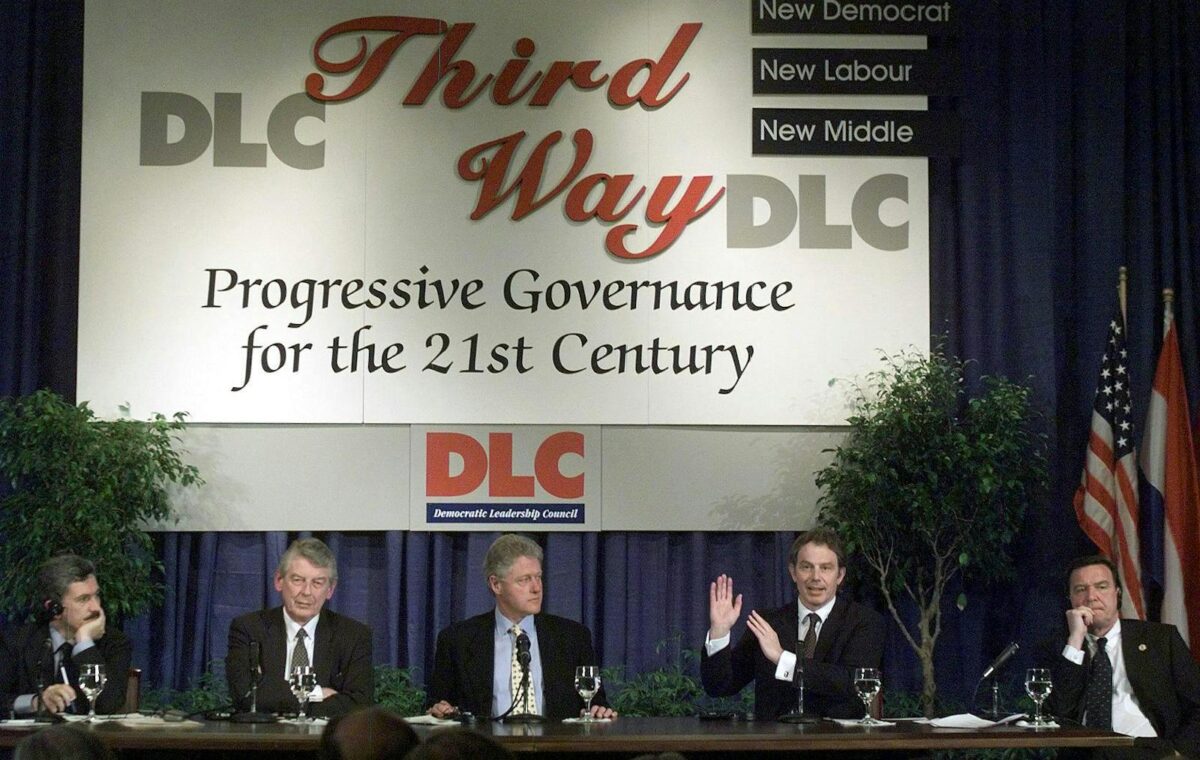
But no one is more choleric over the occasional success of progressive politicians than the dismal corporate dullards at Third Way. After the aforementioned El-Sayed won his Senate primary in Michigan, the centrist organization announced that it was going to “war” with a $15 million campaign against democratic socialist candidates between now and 2028. Both the sense of aggrievement and the paltry amount of money being dispensed makes this extremely sad.
The opening salvo in this supposed “war” is also pretty sad: a wan op-ed by the organization’s top dogs, Jon Cowan and Matt Bennett, in the pages of The Washington Post. The two combine for a few hundred words of grievance, in which they argue that the Democratic Party’s recent woes can be attributed to its extreme politics, which is a very strange thing to say about a party whose recent standard-bearers were Joe Biden and Kamala Harris. Cowan and Bennett, in fact, fault Harris for not doing enough to pivot from the leftier positions she espoused on the 2020 stump. This makes me wonder if they were in a coma during the 2024 election, because I distinctly remember Harris both veering wildly toward the center, abandoning previous positions with something approaching a frenzy, and even campaigning with Liz Cheney.
The op-ed is, nevertheless, revealing. Third Way’s politics seem frozen in amber. There’s scant evidence that Cowan and Bennett have spent any time ruminating on the political shifts we’ve undergone since the 2024 election. There’s no mention of the hot-button issues that are fueling the fires of the Democratic electorate, such as the high costs of early childhood, opposition to data centers, the war in Iran, or the GOP’s corruption. The only thing they point to that could be called “recent” is a New York Times poll showing that 62 percent of the Democratic electorate identifies as either somewhat or very liberal, and that most voters want “a fighter for working people who gets things done and is authentic in his or her beliefs.”
That doesn’t describe the kind of candidate that Third Way would support. As Robert Reich wrote this week, “If you bother to look at the funding sources of Third Way … you’ll find a Star Wars cantina of billionaire megadonors, Fortune 500 CEOs, corporate dark money bundlers, and giant corporations.” Third Way’s donor base is a “Trojan horse” packed to the gills with scoundrels: Wall Street cretins and private equity goons; “members of the GOP-aligned American Legislative Exchange Council,” best known for producing cookie-cutter right-wing legislation that is diametrically at odds with just about every Democratic Party policy priority; and supporters of the Republican Attorneys General Association, “which helps elect Republicans who fight federal environmental and other regulations.” In addition, Reich points out that two of the organization’s former honorary co-chairs are Joe Manchin and Kyrsten Sinema. Enough said! (Sludge’s David Moore also reported this week that Third Way has received donations from health insurance interests that undoubtedly oppose Medicare for All, which was the centerpiece of El-Sayed’s campaign.)
Third Way’s limitations as a political organization stem from the fact that its leaders have an umbilical connection to Republican money and probably haven’t talked to a human outside of a cable news green room in years. In fact, the last time anyone from the organization sought to learn what life is like for normal Americans, it was chronicled by Molly Ball in The Atlantic, who trailed the researchers the organization dispatched to Wisconsin after Donald Trump’s first election to find the mythical 70 percent of the population that they believed occupied a position of non-partisan purity.
As Ball’s piece described, things didn’t go the way Third Way expected. Instead of finding a centrist majority out there in the hinterlands, it found a population that was extremely partisan—and fairly skeptical of the organization’s donors. But Third Way’s superpower, it turns out, is the ability to perform vertiginous mental hijinks when its priors are challenged. As Ball reported, the study that Third Way published after its tour of flyover country neatly omitted any of the doubts that she watched the researchers wrestle with on the road. “The report surprised me when I read it,” Ball wrote. “Despite the great variety of views the researchers and I had heard on our tour, the report had somehow reached the conclusion that Wisconsinites wanted consensus, moderation, and pragmatism—just like Third Way.”
This is the biggest irony: The successful politicians who so terrify Third Way are actually really good at listening to the concerns of voters and then organizing those voters around campaigns to address those needs. A recent New York Times report on the insurgent left reveals that these candidates aren’t really reinventing the wheel, they’ve just—well, mastered politics: “The campaigns themselves say the secret is in the basics. They have built old-fashioned ground games, harnessing the anger and energy on the left to recruit armies of volunteers, who in turn have greeted the moment’s protest movement with open arms.”
In fact, if there’s one thing that the smattering of successful DSA-aligned candidates have done in recent campaigns, it’s been the thing Third Way refuses to do: show a willingness to abandon preconceived dogma when it doesn’t survive an encounter with reality. As Nathan Newman recently wrote, the local DSA-aligned politicians who are winning elections have learned something that the national DSA is still struggling to accept: “To win local office, you not only have to activate the maximum number of DSA members possible, you need to reach out to a wide range of other progressive individuals and organizations to win election.” There’s something nifty going on here: It turns out that the successful socialists, through their mastery of retail politics, are showing that they’re capable of a little moderation.
Third Way could really stand to learn a thing or two from the politicians it disdains. But that’s not what the Republican funny money backing its every move wants. Instead, you are going to get $15 million worth of Red Scare fulmination. And that rhetoric will be used by the right to disparage every single Democratic candidate—not just the ones who want to enact Medicare for All. Third Way will be arming both the conservative media machine and the slop merchants at CNN and The New York Times with talking points, and using its phony-baloney identity as a liberal organization to color these attacks as coming from the illusory center.
This article first appeared in Power Mad, a weekly TNR newsletter authored by deputy editor Jason Linkins. Sign up here.
At the start of 2025, Elon Musk looked as if he was going to become a permanent fixture in American politics. Strutting across the stage, giving the Sieg heil!, the far-right mogul set up shop in the Trump administration’s DOGE dojo and started chaotically pulling the load-bearing beams out of the civil service and heisting the private data of an untold number of taxpayers. In June of this year, however, Musk expressed regret over getting so caught up in the political scene. Ahh, but the ketamine has since hit: In recent weeks, Musk has said that he’s going back to being a GOP bankroller, to the tune of $120 million. And the first beneficiary of his dirty money is slated to be endangered Maine Republican Susan Collins. She should suffer for it.
Part of me wonders if Elon’s willingness to spend his cash is any great concern. His investments seem to often make things more janky than they were before. He turned Twitter into a hellsite dominated by like-minded thugs that is essentially a GOP super PAC. He’s soiled the legacy of Tesla’s founders by creating a “giant rusting dumpster swasticar” that’s recently been compared to the Edsel. He just crashed a rocket into the moon. His most recent foray into political kingmaking—the $25 million he injected into the Wisconsin Supreme Court race—was a Cybertruck-level flop. And he may end up catching a criminal charge for election bribery to boot.
If Collins actually needs Musk’s money, maybe that’s a sign she’s worried that her new Democratic opponent, former state Senate President Troy Jackson, won’t be the same type of cakewalk as Graham Platner, whose Nazi tattoo put his campaign into a permanent “if you’re explaining, you’re losing” doom loop that ended last month with sexual assault charges. Still, Musk’s close-up involvement with Susan Collins should come at a high cost to the incumbent senator.
Here’s one big reason why. The guy who’s pitching himself as the GOP’s next big megafunder has spent much of his time “out of politics” becoming a pioneer in the field of manufacturing nonconsensual pornographic images of minors. Perhaps the one thing that differentiates Musk’s Grok from other AI products is that it’s become regarded as a one-stop shop for the production of child sexual abuse material, or CSAM. This has already spawned a class-action suit against Musk’s firm, xAI. He seems very concerned that his company may be further restricted from promulgating deepfake pornography: xAI attorneys are suing the state of Minnesota over a state law banning apps from generating nonconsensual deepfake nudes of people.