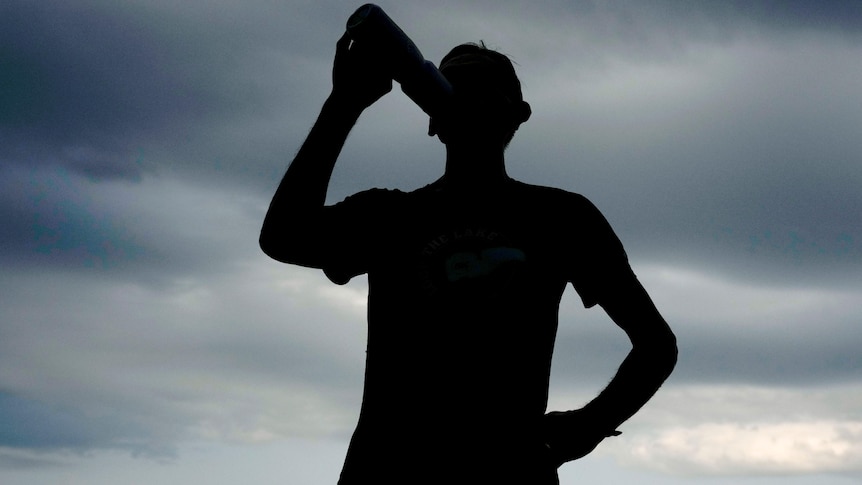
Paul Grinvalds is an avid runner, running marathons across the US. (AP: Charlie Neibergall)
Paul Grinvalds has completed 114 marathons in all 50 US states, but he still wilts when he races in temperatures beyond 16 degrees Celsius.
It's the same for most runners, as the body can't cool down during exertion, and heat makes that even harder.
"One thing about marathoners is typically we're kind of stubborn," Grinvalds, 68, said.
"So if we have a goal and it's hot, a lot of times we're still going to try to do that goal, which is just stupid because you're almost guaranteed to have a very painful experience."
Such an experience can also be dangerous, a reality that marathon organisers are having to confront as climate change, caused mostly by the burning of fuels like coal and gasoline, pushes temperatures up.
Hotter temperatures are forcing marathon organisers to rethink when they hold events. (AP: Charlie Neibergall)
To improve the chances of having the 42-kilometre race in cooler weather, organisers are shifting race dates, starting earlier and even giving options for participants to cut their runs short.
Organisers of the Sioux Falls, South Dakota, marathon last year similarly moved their annual race from August to September after cancelling the 2024 race due to hot conditions.
Other races across the United States, including the Air Force Marathon in Dayton, Ohio, the Little Rock Marathon in Arkansas, and the Long Beach Marathon in Southern California have also moved start times to earlier in the morning in search of cooler temperatures.
In Los Angeles in March, warm conditions prompted race organisers to give runners the option of stopping after 18 miles and still receiving a finisher's medal.
Less than 5 per cent of participants opted for the shorter finish and only 14 of roughly 27,000 runners were treated at a hospital, with all released the same day. Still, the move led to some online derision.
"We welcome the feedback and it's certainly something that caused a lot of discussion, but when we're grading ourselves on it, it has to do with how safe our runners were on the day of the event and we're very happy with the outcome," Meg Treat, a spokesperson for the marathon said.
At the Twin Cities Marathon, race director Ed Whetham called the decision to cancel the 2023 marathon "devastating" for runners and the organisation.
Whetham said it prompted an extensive analysis of weather patterns that resulted in the decision to permanently delay the race by a couple of weeks.