When you purchase through links on our site, we may earn an affiliate commission. Here’s how it works.
I’ve played a lot of Battlefield. Across the series, I’ve spent more than 1,500 hours running and gunning through its virtual combat zones* — that’s about 0.7 per cent of my entire life.
And as our Battlefield 6 review details, 2025’s flagship first-person+ shooter from Battlefield Studios has put the long-running franchise back in the spotlight after an extended off-season. It even beat Call of Duty: Black Ops 7 to become the best-selling FPS game of 2025.
However, Battlefield 6 didn’t release with a huge amount of content, and not everyone loved the game’s compact maps, weapon balance, or seasonal update cadence. I myself felt let down by the glacial progression system.
To its credit, Battlefield Studios announced a roadmap in April 2026, led by a third season designed to stir nostalgia for Battlefield’s previous present-day installments, Battlefield 3 and Battlefield 4.
Having spent a cool 675 hours in-game, Battlefield 4 is one of my most played titles of all time — for comparison, I’ve put 135 hours into Battlefield 6 since launch. It seems Battlefield Studios is keen to remind us of the good old days, so when Season 3 came around, I plugged in my PS4 to see how far my favorite shooter series has come. (*675 hours in BF4, 510 hours in BF1, 135 hours in BF6, 50 hours in BFV, and an estimated 200 hours in BF3. Sheesh.)
With my bipod knife equipped, I was ready to jump into Battlefield 4 — but finding a game in 2026 isn’t as easy as pressing ‘Quickmatch’.
Amazingly, there are still a few official PS4 servers, but they’re always empty. The server browser is the best way to find a game via community servers, which means dealing with smaller map rotations, unofficial rules, and the occasional power-tripping admin.
Sign up for breaking news, reviews, opinion, top tech deals, and more.
Battlefield 6 has the opposite issue — a server browser is on the way, but for now, your only option to find a game is to quickmatch into a lobby full of randoms. That’s a win for Battlefield 4; I’ve always enjoyed learning the ebb and flow of a server and its residents over the course of a few matches.
Once I got online, I was genuinely surprised by how the game felt. It’s much slower-paced than I remembered; the sliding and vaulting and diving that defines Battlefield 6’s movement system is totally absent, maps are larger and sparser, and it takes longer to get in and out of combat.
All of this speaks to how Battlefield 4 is designed — compared to the infantry-focused corridors and choke points of Battlefield 6, older Battlefield games were built from the ground up as huge clashes between coordinated squads of troops, armored ground vehicles, and air support.
Furthermore, certain weapons are class-locked in Battlefield 4, meaning you can’t use, say, a sniper rifle and a rocket launcher at the same time. It asks for a bit more thought in how you approach your in-game role, which makes laying down suppressive fire as a Support class or rushing objectives as an Assault player feel more considered and rewarding.
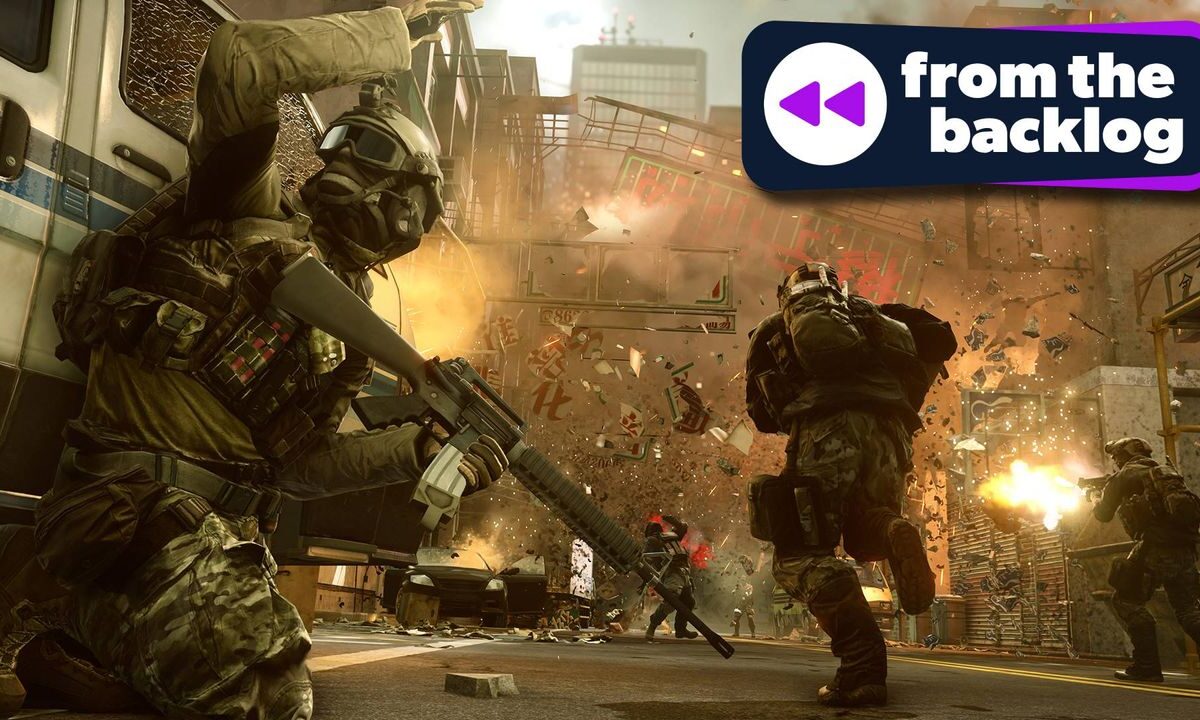
As I settled in on classic maps like Dawnbreaker and Siege of Shanghai, I found myself choosing fights carefully and wordlessly working with my teammates to take objectives. In contrast, matches in Battlefield 6 can often feel determined by the skill of each team’s best individual players.
Another thing you notice pretty quickly about Battlefield 4 is just how much stuff the game has to offer.