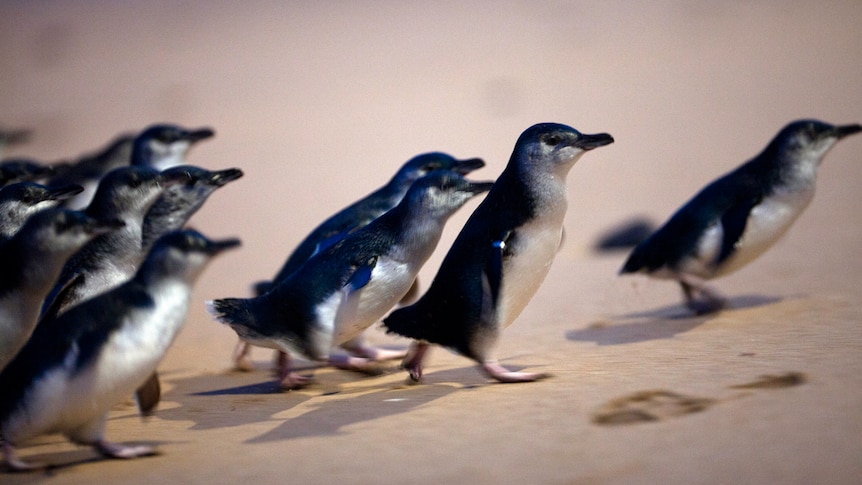
There are about 5,000 little penguins on Phillip Island. (Supplied: Phillip Island Nature Parks)
A Phillip Island little penguin has died from the deadly H5N1 strain of bird flu.
Authorities say it is one of three new detections of the virus in Victoria.
Victoria's chief biodiversity officer says the death will not affect plans to begin vaccinating the little penguin colony on Monday.
A Phillip Island penguin has died from H5N1 bird flu in the first detection among the island's little penguin colony.
The new detection is one of three announced by Victoria's chief veterinary officer, Graeme Cooke, on Saturday.
It comes ahead of plans to begin vaccinating the Phillip Island penguins against the virus on Monday.
The Phillip Island penguin parade is a major attraction that draws national and international visitors.
Authorities found the dead penguin away from the area where the penguin parade takes place.
A great crested tern found in Lakes Entrance in East Gippsland and another in Dromana, on the Victorian Mornington Peninsula, also died of bird flu.
It brings the total number of bird flu cases in Victoria to 74, but Dr Cooke said there were likely more birds sick or dead in the state.
"We … recognise that this is distressing for Victorians to see and to hear," he said.
Dr James Todd says the latest bird flu detections could lead to large losses of wildlife. (ABC News)
Victoria's chief biodiversity officer, James Todd, said the latest cases were significant because the areas hosted several at-risk bird species that would congregate for the upcoming spring breeding season.
"It's highly likely the conditions are conducive for H5N1 spread in those areas that would lead to large losses of wildlife," Mr Cooke said.