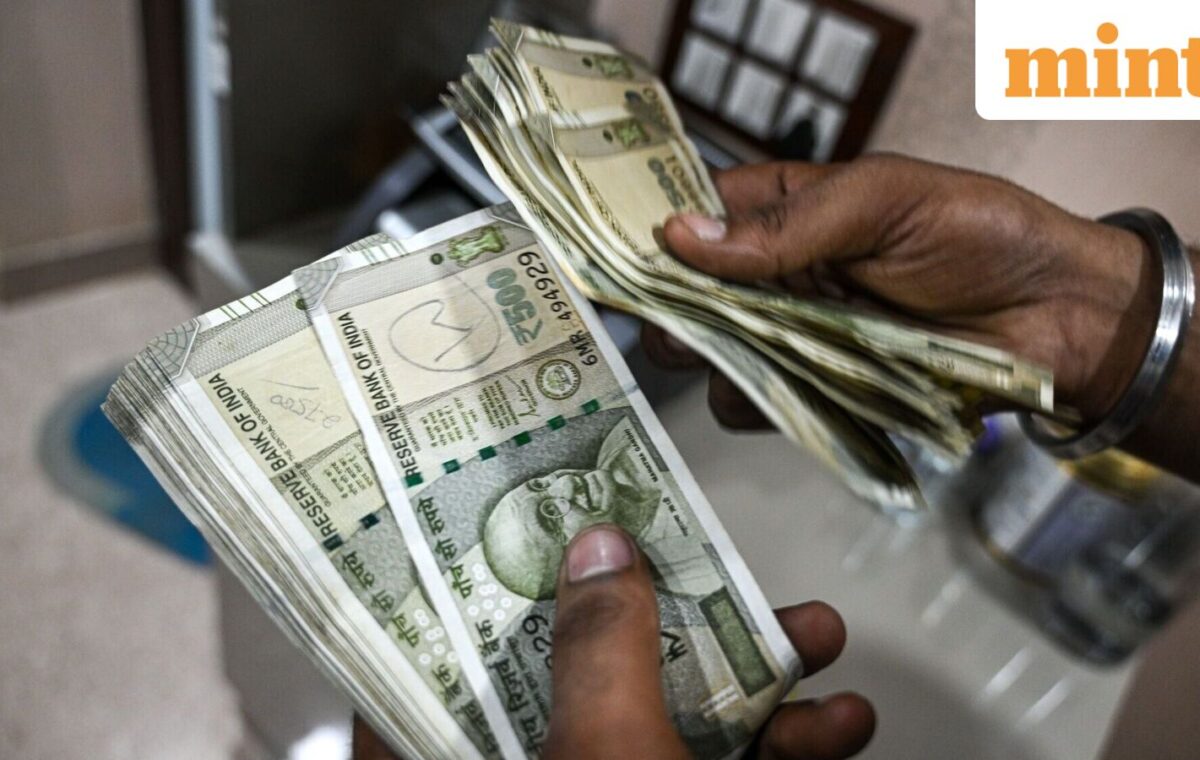
The Dearness Allowance (DA) is an important component of the salary of central government employees and pensioners. It is revised periodically by the government to compensate for changes in the cost of living, with inflation data playing a key role in determining the revised rate.
The central government generally revises the Dearness Allowance (DA) twice a year, with the changes taking effect on 1 January and 1 July. The final decision on any changes in dates, rates or other associated factors is of the Union Cabinet.
With expectations building up around the July DA revision, employees may be watching for the government's approval and the eventual implementation of the hike. Still, what holds equal significance is how the DA is calculated. What is the process? And when does the eventual hike take effect?
For serving central government employees and pensioners, the revision of dearness allowance and dearness relief, respectively, is based on a well-thought-out formula.
Adhil Shetty, CEO, Bankbazaar, explains this aspect in detail, stating, “Dearness Allowance is revised periodically to account for changes in the cost of living. For central government employees, the revision follows an established formula based on the recommendations of the 7th Pay Commission and relevant inflation data. The process involves assessing the applicable Consumer Price Index for Industrial Workers (CPI-IW) data to arrive at the DA rate. The calculated rate then goes through the government's approval and notification process. Understanding this process helps explain how changes in inflation data feed into the periodic revision of DA and when the revised allowance becomes applicable."
The DA calculation, therefore, does not depend simply on the latest inflation figure. Deciding on a DA hike for a particular period of time entails following a host of factors diligently, such as previous hikes, current inflation rate, and future financial projections, along with other similar factors. Furthermore, relevant CPI-IW data is considered under the prescribed formula to determine the rate applicable to central government employees.
Once the final rate is calculated, it goes through three important steps:
It is important to note that the revised DA is generally applicable from the notified effective date. This clearly means that there can be a gap between the effective date and the date on which the central government formally approves or announces the revision. In case the revised allowances are made effective retrospectively, employees may receive arrears for the intervening period.
For example, a DA notification might be officially released on 1 September 2026, but might be effective from 1 July 2026. Therefore, in such a case, eligible employees and pensioners will get relief starting from 1 July 2026.
For all serving central government employees and pensioners, understanding this process is important because a reported DA hike or a calculation based on inflation data does not, by itself, mean that salaries have increased immediately.
In summary, the journey from inflation data to a higher salary involves several stages, such as CPI-IW data, calculation of the DA rate, approval by the central government, dissemination of the final official notification, and final implementation.
Having a clear understanding of these steps can help pensioners and serving government employees distinguish between expectations around a DA hike and the point at which the revised allowance actually becomes payable.
Shivam writes on personal finance, equity markets, and mutual funds. He has previously contributed to several leading publications, including Moneycontrol. He can be reached at shivam.shukla@htdigital.in
Catch all the Instant Personal Loan, Business Loan, Business News, Money news, Breaking News Events and Latest News Updates on Live Mint. Download The Mint News App to get Daily Market Updates.
Log in to our website to save your bookmarks. It'll just take a moment.