You have reached your maximum number of saved items.
A lot of the fear – and excitement – around AI is based on an assumption that it will be effective and rapid … like a good painkiller.
People scared of mass job losses, for example, assume AI will – quite soon – be good enough to take over our jobs. And many of those excited about the possibility of kicking back and relaxing (or raking in a lot of profit) by putting AI to work also assume it’s a fast-moving, formidable beast.
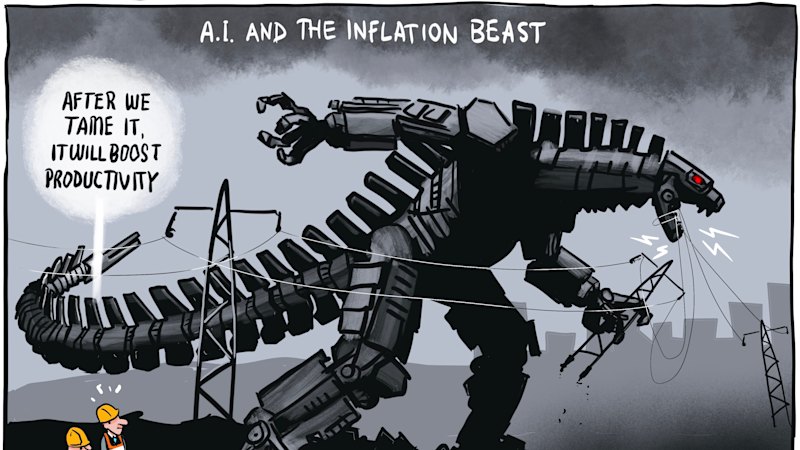
Perhaps most promisingly, for anyone who has been listening to economists’ cries about Australian productivity stagnating and prices stubbornly rising, AI is like a knight in shining armour: one that might be able to yank us out of our predicament.
Because here’s the thing: if AI can help us cut costs or slash the time we spend on making things or providing services, it could bring down the costs of production, and therefore the prices we pay for these things. AI could also help slow down price growth by making it easier for businesses to increase supply, bringing it closer in line with demand, and therefore reducing price pressures.
These things would ease our cost-of-living crisis and improve our standard of living. It seems, at least, like AI could be the answer to some of our biggest economic problems.
But like a lot of “silver bullets”, it’s not quite as simple as we might think. And there’s likely to be some economic growing pains before we see any potential benefits.
The Reserve Bank pointed out this week, as it has for many weeks now, that our inflationary woes come from a combination of things (including global oil shocks and conflicts over which we have little to no control) but that, fundamentally, it’s because of an imbalance between supply and demand in the Australian economy (some of which we do have control over).
Some of us might be trimming our spending, especially if we’re getting hit by higher interest payments, but Australian households as a whole – and especially those that are more wealthy – are still spending … quite a lot, including on things that are not strictly necessary.
Meanwhile, because we’ve got a limited amount of resources, and we haven’t improved our ability to get more out of them, our capacity to grow supply has been stuck, stopping us from being able to meet growing demand.
As you know, when demand outstrips supply, prices tend to go up.
Despite nearly one-third of Australian big businesses having adopted AI in 2024-25, up from less than 10 per cent in 2021-22, we haven’t seen noticeable growth in productivity – or job losses.
Of course, correlation (or lack thereof) doesn’t always mean causation. But it’s clear that while job growth has been slowing for some occupations, especially those exposed to AI – such as telemarketers and registry clerks – most jobs remain intact or have just seen some parts of their job requirements shift.
And when it comes to productivity benefits, they remain unremarkable. The uptake of AI hasn’t (yet) led to a miraculous boom in our stagnating productivity growth.
First, the productivity benefits of major technological advancements tend to take a long time to “diffuse” – or spread – across the economy. The capabilities of AI might seem to be growing in leaps and bounds, but like any technology – from computers to the steam engine — getting it adopted and used effectively by a large share of the economy is likely to take more than just a few years.