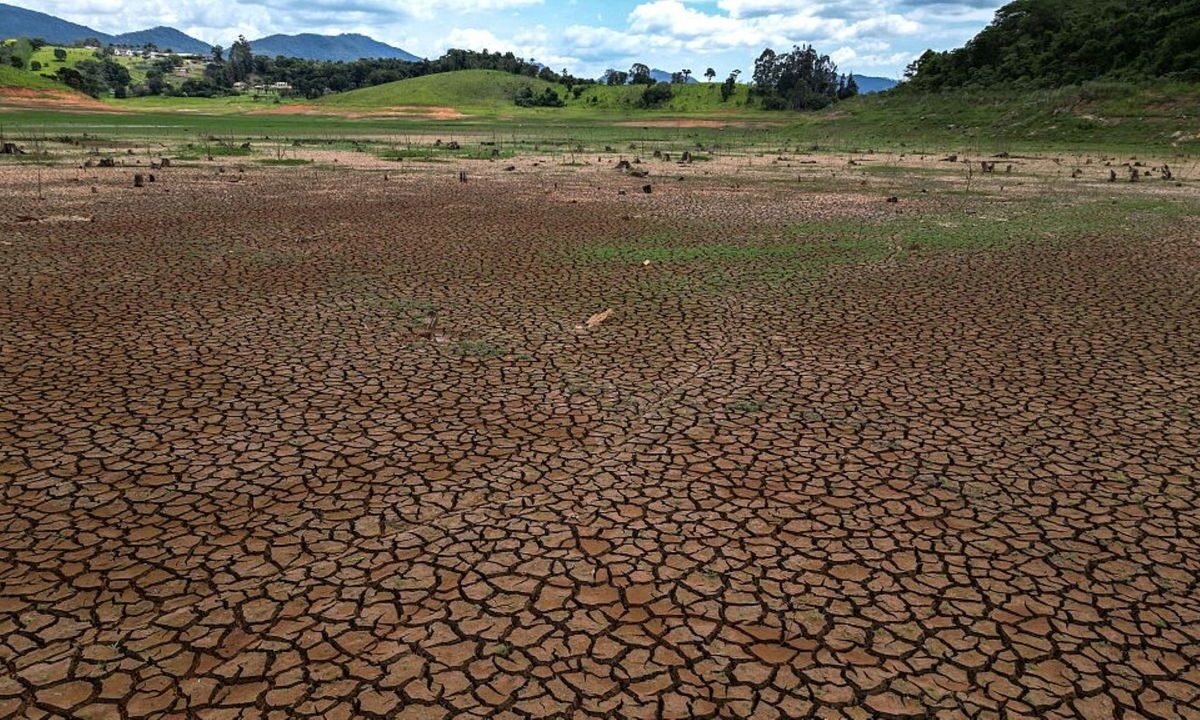
New research suggests some of Brazil's most important aquifers, located beneath major agricultural regions, aren't being replenished. What does this mean for the country's water supply and food exports?
When you purchase through links on our site, we may earn an affiliate commission. Here’s how it works.
Brazil is home to some of the world's largest aquifers, yet many of those groundwater stores — which provide 55% of the country's water — have shrunk so much over the past 25 years that they face irreversible damage. This groundwater depletion has been caused by drought, increased water evaporation due to climate change, and pumping for human consumption, new research suggests.
Most of the world's soybeans, sugarcane, oranges and coffee — as well as a big proportion of the world's cotton and corn — are grown in the areas with the most depleted aquifers, so the dwindling groundwater supply could have ripple effects for food markets around the world, including in the U.S.
The depleted aquifers may also collapse river systems that produce hydroelectric power for Brazil, forcing the country to turn to coal or biomass for electricity, experts told Live Science.
Groundwater declines probably won't lessen total agricultural production in the next 10 to 20 years. "The concern is what happens if these trends persist for several decades," study first author Augusto Getirana, a researcher in the Hydrological Sciences Laboratory at NASA's Goddard Space Flight Center, told Live Science in an email. "Brazil is one of the world's major breadbaskets, so its water security has consequences well beyond the country itself."
Brazil holds the world's largest renewable freshwater reserves by country, mostly thanks to the Amazon Basin and its rainforest ecosystem. However, compared with countries like the U.S. and India, which have thousands of groundwater measuring sites, Brazil's network of monitoring wells is extremely sparse. Therefore, for the study, Getirana and his colleagues trained artificial intelligence (AI) models to fill in the gaps in the data.
The researchers fed the models measurements from 398 monitoring wells, satellite data showing tiny shifts in gravity resulting from groundwater changes, and information about the geology and land cover in different areas, among other datasets. AI reconstructed monthly groundwater level changes between 2002 and 2023 across different aquifers in Brazil at a resolution of about 6 miles (10 kilometers), Getirana said.
"We then reconstructed groundwater levels to estimate aquifer recharge — how much water reaches and replenishes the groundwater system — throughout the country," he explained.
The results, which were published June 3 in the journal Science Advances, showed severe, persistent groundwater losses in parts of central, northeastern and southeastern Brazil — including portions of the São Francisco, Paraná, Southeast Atlantic and East Atlantic basins, which together cover 760,000 square miles (1.97 million square kilometers), or about 23%, of Brazil's land area.
A map showing Brazil's hydrological regions.
Some of Brazil's most critical aquifers went years with no recharge. By contrast, the Amazon Basin and parts of southern Brazil showed either no change or localized groundwater gains attributable to shifts in rainfall and natural climate variations, Getirana said.
"There is no single trend for the entire country," he said. "We found a clear geographical contrast."
The study didn't attribute groundwater changes to specific pressures, but it is clear from the data that climate shifts played a major role in the observed patterns, Getirana said. Several of the sharpest declines in aquifers came after prolonged droughts and major climate events, such as an El Niño cycle between 2015 and 2016.
Due to patchy monitoring, it is difficult to untangle and quantify the impacts of agriculture, industry and households on groundwater levels. However, the results revealed a substantial overlap between groundwater losses and areas with intense irrigation, urban and industrial demands, mining, land conversion and high well density, Getirana said.