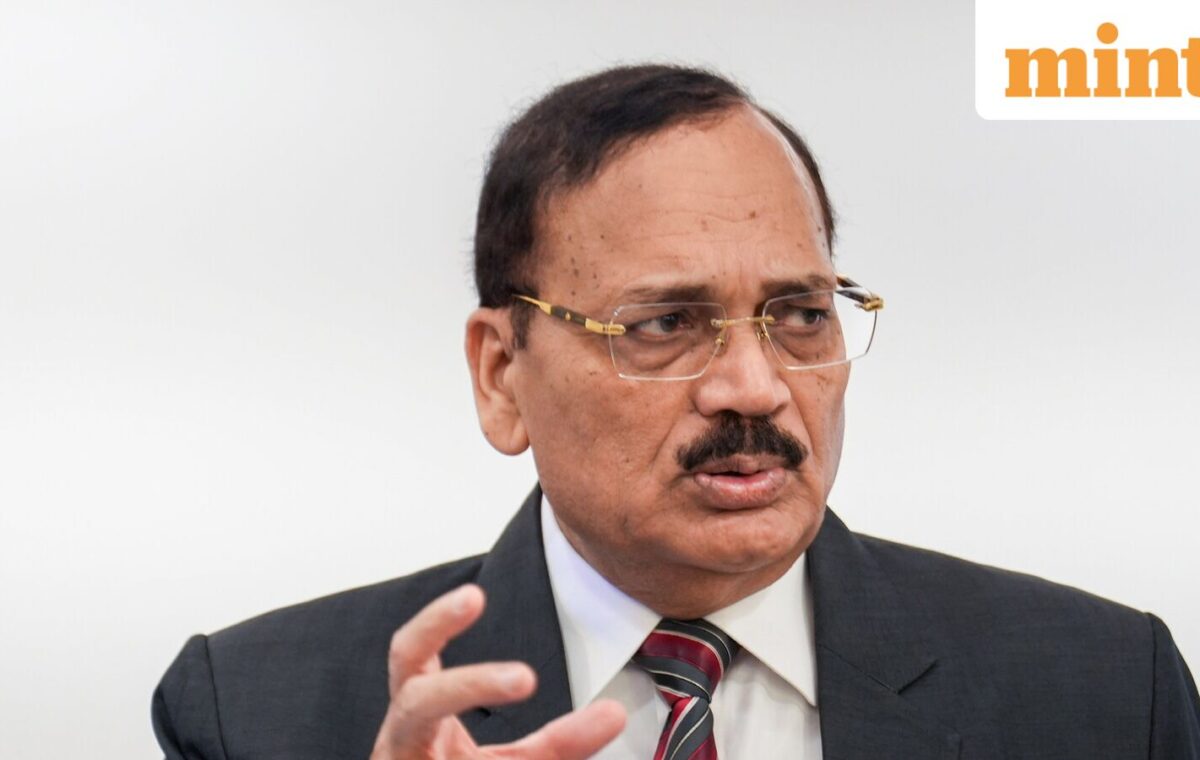
A late-evening effort by the Bar Council of India to scuttle the enrolment of new graduates from top law school Nalsar—and its swift reversal following a public outcry—has sparked consternation in the legal fraternity, with senior lawyers saying the move has brought the statutory body into disrepute. The BCI's actions also drew a sharp rebuke from Chief Justice of India Surya Kant, whose invitation to the Nalsar convocation, ironically, had triggered the student protest that led to the now-withdrawn BCI diktat.
A Supreme Court bench led by Kant on Friday said students had a right to protest and that the regulator had “no business” intervening in the matter.
“Naturally, this is absolutely uncalled for. It’s a dialogue between students and me. Who are they to raise an issue? This is totally uncalled for. In my student days I have been actively involved in student activities. Assuming, even if they are wrong, they have a right to protest. BCI doesn’t have any business,” CJI Kant remarked while hearing pleas challenging BCI's decision.
“Issue notice. Meanwhile, no punitive action to be taken against students of Nalsar in respect of the incidents mentioned in the subject letters,” the bench, comprising Kant and Justices Joymalya Bagchi and V. Mohana, said.
Issued on Thursday by BCI chairman Manan Kumar Mishra, the directive also required Nalsar to identify students involved in the campaign. The pleas before the top court challenged the BCI’s authority to intervene and sought an inquiry into how the action was authorized.
Nalsar, meanwhile, has said in its reply that it would first examine whether the proposed inquiry was constitutionally permissible and place the matter before its Executive Council before responding to the BCI. “Given the nature of the request, the university will have to consider whether conducting such an inquiry will be a constitutional exercise of its powers.”
Queries emailed to Nalsar and the Bar Council of India on Thursday and Friday went unanswered. BCI chairman Mishra also did not respond to calls and text messages.
Senior lawyers have called for a probe into the origins of the original enrolment ban.
Former additional solicitor general and Nalsar distinguished professor of constitutional law Raju Ramachandran said the episode had damaged the reputation of the legal profession. “Great damage has been done to the image of the Indian legal profession. We have been held up to ridicule. The legal profession, which should be in the forefront of civil liberties and democratic rights, was trying to punish students for exercising their constitutional freedom. It will take some time for this damage to be repaired, and for the reputation of lawyers to be restored.”
Nitin Podar, senior corporate and M&A lawyer and former partner at JSA Advocates and Solicitors, called for an investigation into how the BCI decision originated. “This needs to be probed. We need to investigate who prompted the BCI to issue such a notification. Who made the calls? Who was upset about the students’ campaign? I am sure it was not simply Manan Mishra’s idea. There must have been people who pushed for this and thought the students needed to be taught a lesson.”
Mishra is also a Rajya Sabha member representing the ruling Bharatiya Janata Party.
Podar said the episode also raised wider questions about the BCI’s credibility.
“The manner in which this was handled has seriously damaged the credibility of the BCI as an institution. This is not a small matter. You are dealing with the future of hundreds of young lawyers.”
The controversy has also opened a second front over the BCI’s accountability and election structure, particularly the repeated election of Mishra as chairman. He first assumed the charge in 2012 and was re-elected for a seventh consecutive term in March 2025.
Senior advocate Menaka Guruswamy, who is also a Rajya Sabha MP from the Trinamool Congress party, questioned the institution’s accountability to younger lawyers. “For far too long, the legal profession has been controlled by unelected functionaries. The bulk of the profession today consists of young, first-generation lawyers, and nobody speaks for them. I think we really need to ask what kind of institution the Bar Council of India is and how the legal profession can emancipate itself from this system.”