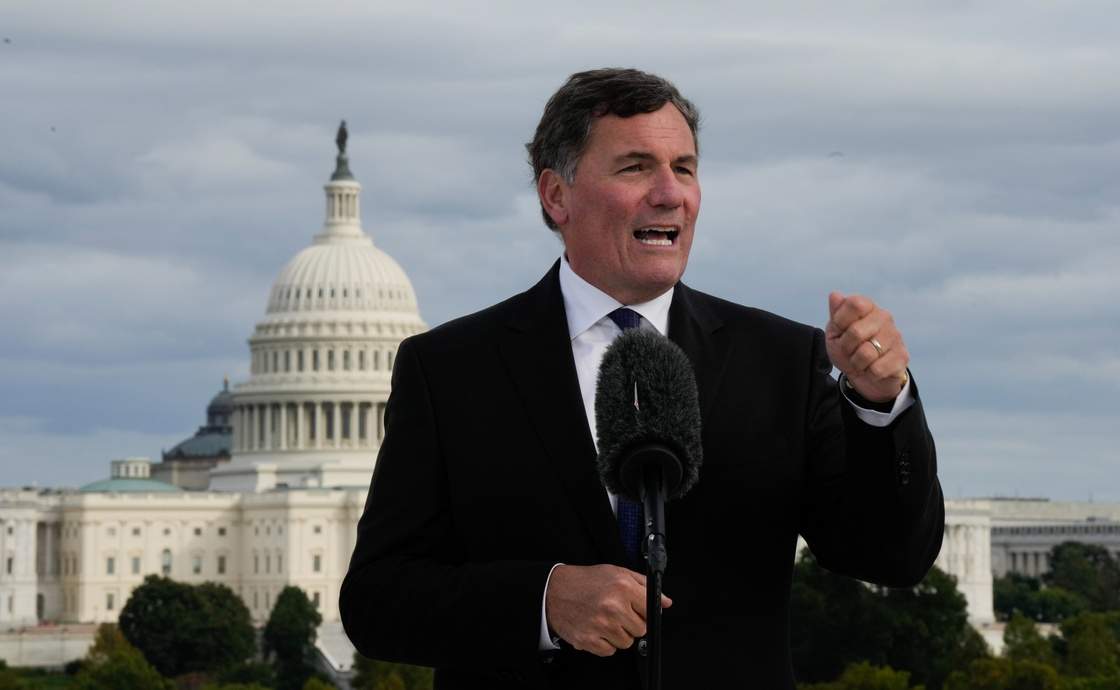
Canada-U.S. Trade Minister Dominic LeBlanc met with U.S. Trade Representative Jamieson Greer in Washington on Thursday afternoon as trade talks continue with less than a week to go before a fresh round of American tariffs are due to hit Canada.
Canada’s chief negotiator Janice Charette was also part of those talks, LeBlanc confirmed on social media after the meeting.
“Negotiations are ongoing, and we continue to advance Canada’s interests,” the minister posted on X.
I met with my counterpart, United States Trade Representative Jamieson Greer, this afternoon in Washington, D.C. alongside Canada’s Chief Trade Negotiator. This is our fourth meeting in the last three weeks. Negotiations are ongoing, and we continue to advance Canada’s…
— Dominic LeBlanc (@DLeBlancNB) August 13, 2026
Sources with direct knowledge of the negotiations told Global News on Thursday that the Trump administration is pushing to keep at least some level of tariffs on vehicles and auto parts compliant under the Canada-U.S.-Mexico Agreement on free trade (CUSMA) under an eventual deal.
The sources added that Canada is expected to make additional concessions beyond dropping provincial and territorial boycotts on U.S. alcohol and easing restrictions on dairy imports — two irritants identified by the U.S. that are behind the latest tariff threat.
While Canada is willing to walk away from a deal if tariffs are not reduced enough, the sources said the preference of the Carney government is to get a deal now, as part of a three-step trade strategy they are attempting to employ.
That strategy would start with a deal on on sectoral tariffs and avoiding new ones coming into place, followed by new partnerships with the U.S., in areas like trade and defence and, finally, renegotiating CUSMA, according to the sources.
While Canada has been dealing with U.S. President Donald Trump’s tariffs for more than a year, including with sectoral tariffs on steel, aluminum and automobiles, the vast majority of Canadian goods traded under the CUSMA have been exempt from the tariffs.
Trump has vowed to hit Canada with new sweeping 50 per cent tariffs on a wide range of goods.
Trump’s decision to impose 50 per cent tariffs on Canadian goods was in response to what the U.S. calls “discriminatory” measures.
Trump signed three executive orders, each one using a different justification for the new tariff: the provincial and territorial boycotts on American alcohol products, Canada’s retaliatory tariffs on U.S.-made vehicles and auto parts, and quotas on American dairy imports under Canada’s supply management system.
In early 2025, several Canadian provinces removed U.S. alcohol from their shelves in response to Trump’s trade war and threats to make Canada the “51st state.”
The trade negotiations have hit several snags with the Americans refusing to accept a deal that does not include at least some tariffs on steel, aluminum, automobiles and softwood lumber, sources told Global News earlier this week.