In 1868, the Drum Creek Treaty pushed the Osage Nation from Kansas to present-day Oklahoma, then known as Indian Territory.
More than 150 years later, roughly 200 people gathered in Pawhuska, Oklahoma to revisit that history. Osage individuals, Netflix producers, actors and cultural and historical consultants filled the Osage Casino and Hotel for a screening of Episode 7 of the streamer’s new adaptation of “Little House on the Prairie,” which dramatizes the treaty’s signing.
Unlike the original stories, Netflix’s new eight-episode adaptation, which premiered July 9, highlights the story of the Osage people, whose land Laura Ingalls Wilder’s family illegally settled on in 1869, and were later pushed off of by the U.S. government.
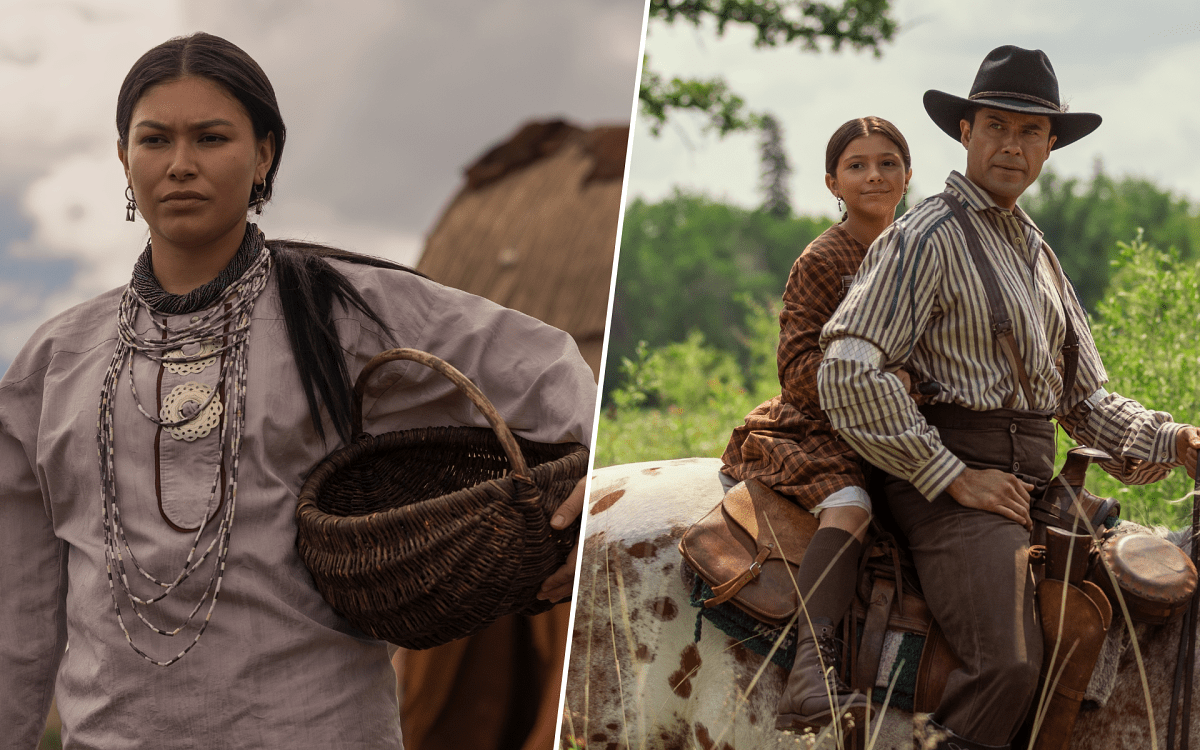
The series primarily represents the Osage perspective through the fictional Mitchell family, whose storyline runs nearly parallel to the Ingalls family and provides an Indigenous lens on the story.
For the cast and crew who spent months trying to wrestle an erased history onto the screen, earning the Osage Nation’s approval was more important than that of any fan or critic.
The long-awaited verdict arrived when the credits rolled, and the Osage Nation principal chief approached actor Meegwun Fairbrother, who portrays farmer and father William Mitchell in the series. Fairbrother recalls the Chief telling him, “‘This is our stamp of approval. We like it,’” he tells TODAY.com.
Indigenous stories weren’t only left out in the original books and adaptation. In recent years, Wilder’s stories have also been criticized for including depictions of Indigenous people that reflect racial attitudes common among white settlers of the 19th century.
Production sought to strike a delicate balance: accurately portraying the Osage Nation’s fight to stay on their own land while also preserving the heart and “overall sensibility” of Wilder’s tales that drew readers to the stories in the first place, Robert Warrior, an Osage historical consultant and professor of American literature who worked with the show’s creators, tells TODAY.com.
Read on to learn more about the historical moment the series stepped into, and what it was like for the actors to depict Osage culture and history onscreen.
When the Ingalls family made their famous journey to present-day Kansas, they arrived on land that wasn’t legally open to settlement. But Pa didn’t know that when he arrived, and neither did many of the settlers who showed up to claim land they had been told was available, Warrior explains.
Railroad companies also wanted access to the region, he says, and those economic interests often benefited from encouraging settlers to move into the area before legal questions about land rights were resolved.
The tensions in the region weren’t just between settlers and Indigenous people. Competing claims to land, political power and economic opportunity collided across the territory.
Facing displacement and hostility, Osage people were forced to make difficult decisions about survival, identity and their futures, the historian explains. Roughly 4,500 Osage people ultimately left their homeland and way of life in Kansas, and relocated to Oklahoma, what was then called Indian Territory, Warrior says.
But not all families made the choice to leave. About 19 Osage families chose to remain in Kansas, which is the historical basis for the Mitchell family storyline depicted in Netflix’s series. The few who stayed encountered intense discrimination: two heads of those families were killed by settlers, Warrior says, and nearly all eventually fled Kansas and joined the broader Osage community elsewhere.
Really, one of Warrior’s most important goals in consulting for the show was depicting that Osage people, like the Ingalls family, had their own ambitions, disagreements and family dynamics.