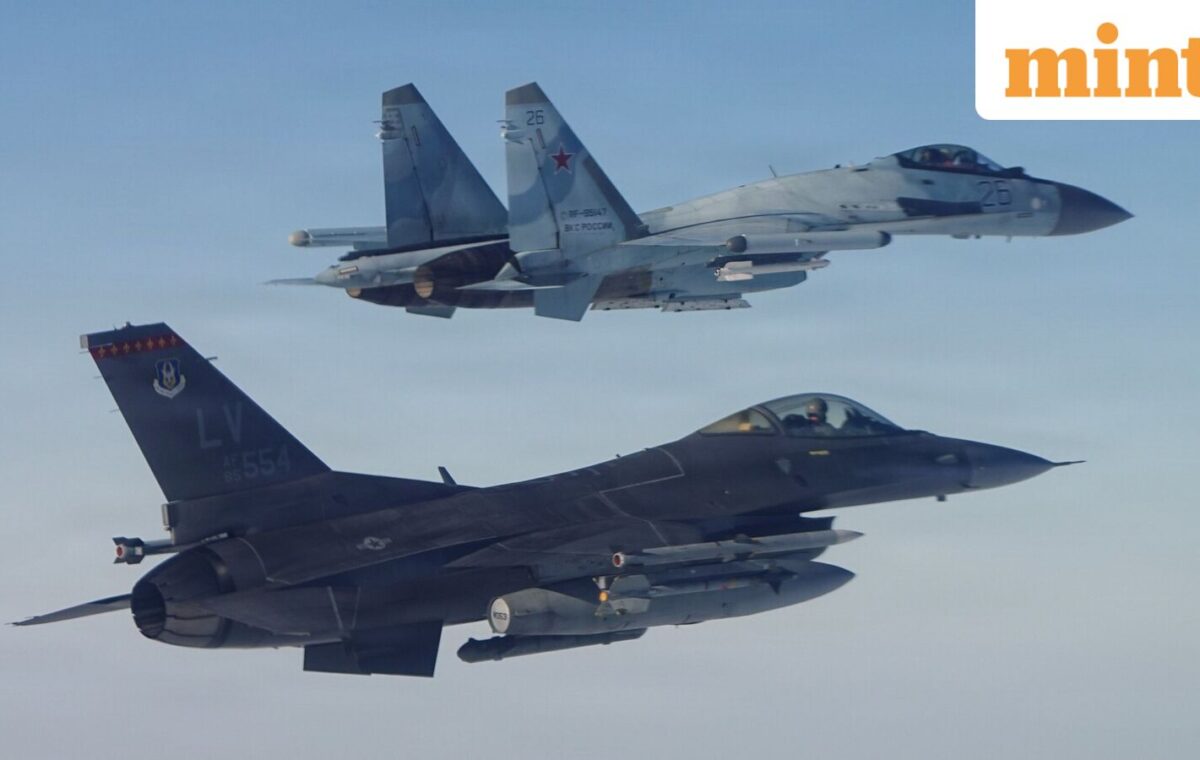
Pakistan's ageing F-16 fighters, supplied by the United States, faced significant limitations during the 2025 India-Pakistan conflict. India named its counter-offensive Operation Sindoor. The claim about Pakistan's ageing fighter jets comes from a retired Pakistan Air Force officer, according to Military Watch Magazine.
The F-16s reportedly struggled due to limited missile range. Their AIM-120C-5 missiles have an effective range of around 100km. However, the actual engagement range varies considerably when manoeuvring targets are involved.
This highlights growing gaps within Pakistan's diverse fighter fleet. Older American jets increasingly lag behind newer Chinese aircraft in terms of technology.
Pakistan has increasingly relied on Chinese-supplied combat aircraft in recent times. The JF-17 now forms the backbone of their fleet. The more advanced J-10C is also being procured steadily.
Given the F-16 fleet's age, speculation about its retirement has grown substantially. Some suggest these aircraft could retire by the mid-2030s, according to Military Watch Magazine. Maintenance costs remain notably higher than newer Chinese alternatives.
Pakistan is also reportedly planning to acquire J-35 fighters, according to the publication. These fifth-generation aircraft would further widen capability gaps against India.
According to this assessment, missile limitations have affected operational tactics. F-16s approaching the frontline risked entering the Indian fighters' engagement range first. This reportedly made commanders cautious about deploying F-16s extensively.
Pakistan first acquired F-16s back in the early 1980s. These initially faced disadvantages against Soviet aircraft over Afghanistan. Modernisation in the early 2000s finally introduced radar-guided missiles.
This somewhat narrowed the gap with India's Su-30MKI fighters. The Su-30MKI features more powerful radar and superior electronic warfare capabilities. It also carries a larger missile payload with better flight performance.
For decades, F-16 fighter jets remained central to Pakistan's fighter fleet. They played key roles during the 2019 India-Pakistan confrontation.
However, the acquisitions of the Chinese JF-17 Block III and J-10C changed things significantly. These introduced advanced radar systems, along with the long-range PL-15 missile. This missile reportedly offers considerably greater range than older alternatives.
Jane's Defence estimates the PL-15's maximum range at roughly 300 km, the publication added. Its radar seeker is reportedly harder to jam electronically, too.
The J-10C's introduction reportedly gave Pakistan a notable advantage initially. Pakistani sources have claimed that multiple Indian Rafale jets were shot down.
These specific claims regarding Rafale losses remain disputed and unverified independently. India has strongly denied Pakistan's claims of shooting down multiple Rafale fighter jets.
Operation Sindoor was a four-day military conflict between India and Pakistan. It occurred from 7 to 10 May 2025. It marked a shift in India's counterterrorism approach.