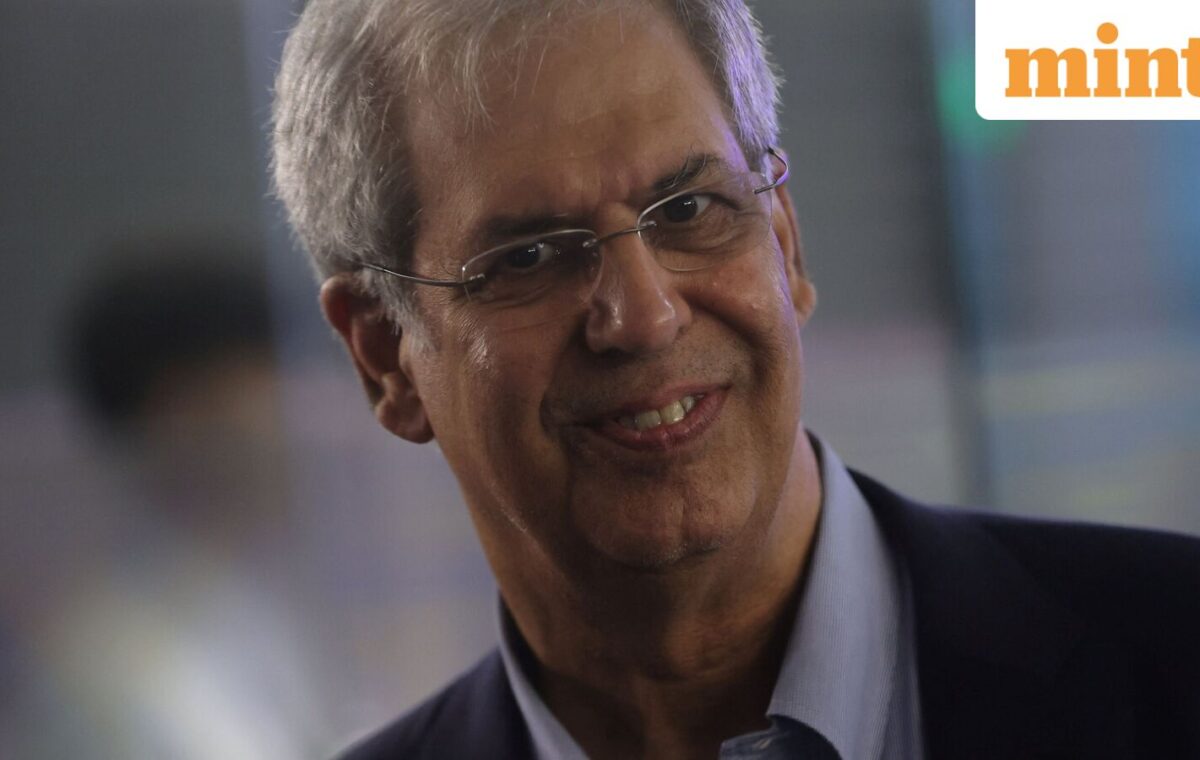
Natarajan Chandrasekaran announced his resignation as the chairman of Tata Sons on Wednesday, after leading the salt-to-software conglomerate for more than nine years. 63-year-old Chandrasekaran, who still had six months left before his second five-year term as chairman of Tata Sons came to an end in February 2027, told the board that he would not offer himself for another term.
While it was widely expected that Chandrasekaran, who spent 40 years with the Tata Group, would leave after the end of his second term, his announcement came as a surprise to many. As the one-and-a-half-century-old conglomerate faces a leadership vacuum at a time when it is facing several turbulences, it has also brought the focus back to the power struggle that had been brewing in Tata Sons.
Notably, in the February 2026 board meeting, Noel Tata, the chairman of Tata Trusts, opposed the move to extend Chandrasekaran's tenure as Tata Sons chairman. The Sir Dorabji Tata Trust and Sir Ratan Tata Trust unanimously passed a resolution recommending a five-year extension, and the Tata Sons Nomination and Remuneration Committee formally backed it. Four out of six Tata Sons board directors also voted in favour of the reappointment during the February 2026 board discussions.
Noel Tata serves as the chairman of Tata Trusts, which holds a 66% stake in Tata Sons. His position has become pivotal following Chandrasekaran's exit, as he is now a key decision-maker for the Tata Group.
Chandrasekaran resigned due to the lack of unanimous support from the Tata Sons board for his reappointment, leading to a leadership vacuum and uncertainty for stakeholders.
Noel Tata opposed the five-year extension of Chandrasekaran's tenure during a board meeting in February 2026, where the proposal could not proceed due to his lack of support.
Chandrasekaran's resignation raises concerns about governance and stability within Tata Group, as it leaves a significant leadership gap that the group needs to address promptly.
There are suggestions for Noel Tata to consider restructuring Tata Sons’ governance to ensure clearer oversight and decision-making, particularly in the wake of communication breakdowns observed during Chandrasekaran's tenure.
The Tata Sons board currently has six directors: Chairman N Chandrasekaran, Tata Trusts Chairman Noel Tata, Tata Trusts Vice-Chairman Venu Srinivasan, Group CFO Saurabh Agrawal, and independent directors Harish Manwani and Anita Marangoly George.
Chandrasekaran, who has completed 40 years of his professional life at Tata Group, said Sir Dorabji Tata Trust (SDTT) and Sir Ratan Tata Trust (SRTT) had unanimously recommended extending his tenure by another five years, and a resolution was tabled at the Tata Sons board meeting on 24 February 2026.
In his letter on Wednesday, Chandrasekaran wrote: "However, the proposal was not carried through because one of the Board Members did not support it, and in the absence of unanimous support, I chose to defer the decision.”
Noel Tata, who succeeded his half-brother Ratan Tata as the chairman of the Tata Trusts, has emerged as the key decision-maker for the Tata Group.
He was born in December 1957 as the son of Naval Tata and Simone Dunoyer and is twenty years younger than his half-brother Ratan Tata.
Noel Tata holds a degree from Sussex University (UK) and has completed the International Executive Programme (IEP) at INSEAD.
The 68-year-old is also the chairman of Trent and Tata Investment Corporation, the managing director of Tata International, and the vice chairman of Titan Company and Tata Steel.