British cookie brand Ben's Cookies could have chosen Khan Market, Delhi’s best-known and busiest retail destination, for its first city store. Instead, it opened in June at Meherchand Market on Lodhi Road, a compact retail lane known more for designer and fashion labels than footfall.
A larger shift is playing out across India's urban cities: bigger companies are choosing “city stores” over one big destination bet, some of them staying inside malls, some stepping outside onto less frequented high streets and residential lanes wherever allowed, while some moving into new retail pockets altogether around fresh developer projects.
The common thread isn't the address, it's proximity, walkability and repeat consumption.
Rising rents, urban India’s dense catchments and difficult commutes are reshaping consumer behaviour, forcing retailers, including food and beverage brands, to rethink where and how they operate.
Sanskriti Gupta of Ben’s Cookies India said the brand is looking at premium high streets and neighbourhood catchments with a strong consumer fit and footfall. For takeaway-led formats, such locations also offer convenience and allow brands to become part of consumers’ everyday routines.
Swedish retailer IKEA, which typically operates one or two flagship stores in a city carrying its full range, is now adding smaller micro-market formats tailored to each cluster’s “life at home” needs, with a more limited product range and scaled-down room sets. In July, it opened a smaller format store in Delhi’s DLF Avenue mall.
Its strategy is localized too. A Mumbai room set, for instance, is built around homes closer to 500 square feet with multifunctional furniture such as sofa-cum-beds, quite different from what a South Delhi or West Delhi customer would see.
“We even know that a South Delhi home is very different from a West Delhi home. Same for a Mumbai, SoBo home,” said Pooja Grover, country manager, IKEA India Pvt. Ltd.
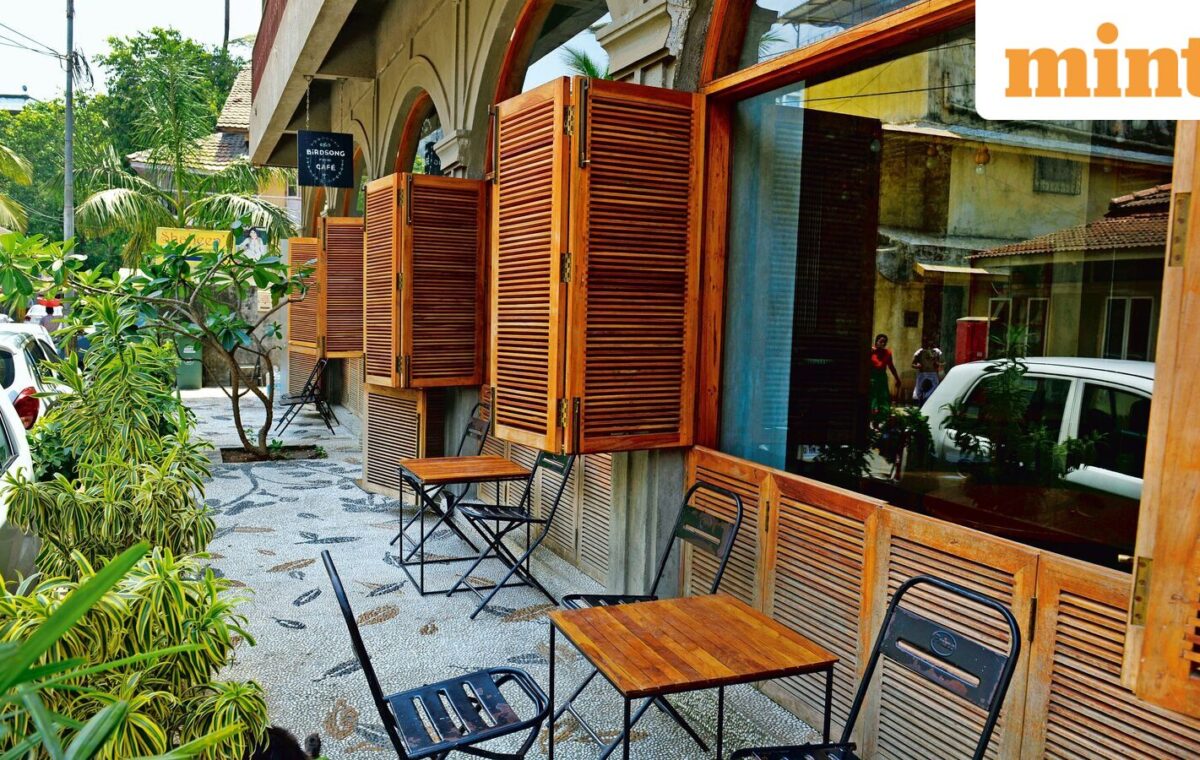
Mumbai has its own version of the trend. Bootstrapped cafe chain Boojee Cafe, for instance, has shunned traditional commercial markets for residential lanes in Bandra West, with outlets near Carter Road and Perry Cross Road on New Kantwadi Road and on 16th Road, betting on neighbourhood footfall rather than a market’s pull.
Thakur Village and Borivali West are also emerging as new hubs for restaurant brands, with large, premium gated communities.
Harminder Sahni, chairman and managing director of retail consultancy Wazir Advisors, said consumers are no longer willing to travel an hour or more to shop. It is also because the original appeal of destination retail has now faded. “Convenience is now shaping purchase decisions. E-commerce and quick commerce and local stores are dominating, and so retailers will have to lean on smaller formats,” he said.
Luxury retail is watching closely, too. Aditya Birla Fashion and Retail Ltd (ABFRL), which runs Galeries Lafayette in India, is weighing smaller city-format stores closer to affluent pockets instead of betting everything on large flagships. “You need to move closer to where your customers are,” said Sathyajit Radhakrishnan, chief executive, international brands, at ABFRL, pointing to South Mumbai and pockets of Delhi as distinct, self-contained consumption markets in their own right.
Traffic and the clustering of affluent buyers in specific pockets, he said, are what's making micro-markets impossible to ignore.
But the shift isn't purely about consumer preference. It's also a real estate math problem. There are only a handful of developers with the scale to build very large shopping centres, and soaring land and construction costs have made new malls upwards of 500,000 sq. ft increasingly hard to pull off, said Anuj Kejriwal, founding partner and CEO, retail, Europe, the Middle East, and Africa for consultancy Anarock.
He said developers are increasingly favouring open-air, low-rise high streets and neighbourhood strips over capital-heavy malls, and high streets and small-format retail now account for roughly 60% of annual organized retail leasing across top cities.