Get the Popular Science daily newsletter💡
Breakthroughs, discoveries, and DIY tips sent six days a week.
The current digital landscape is changing by the day, and arguably not for the better. An ongoing inundation of AI slop, gamified search engines, and toxic social media ecosystems has understandably left many users yearning for the internet’s “good ol’ days,” even if some of those memories are tinted by rose-colored glasses. DIY-minded programmers recently introduced a web archive that ends on November 30, 2022—the day OpenAI debuted ChatGPT. Now, creators have taken the tailored internet experience a step further with I Love the 90s!, a nexus of TV clips, music videos, games, and selected website archives dating as far back as 1996.
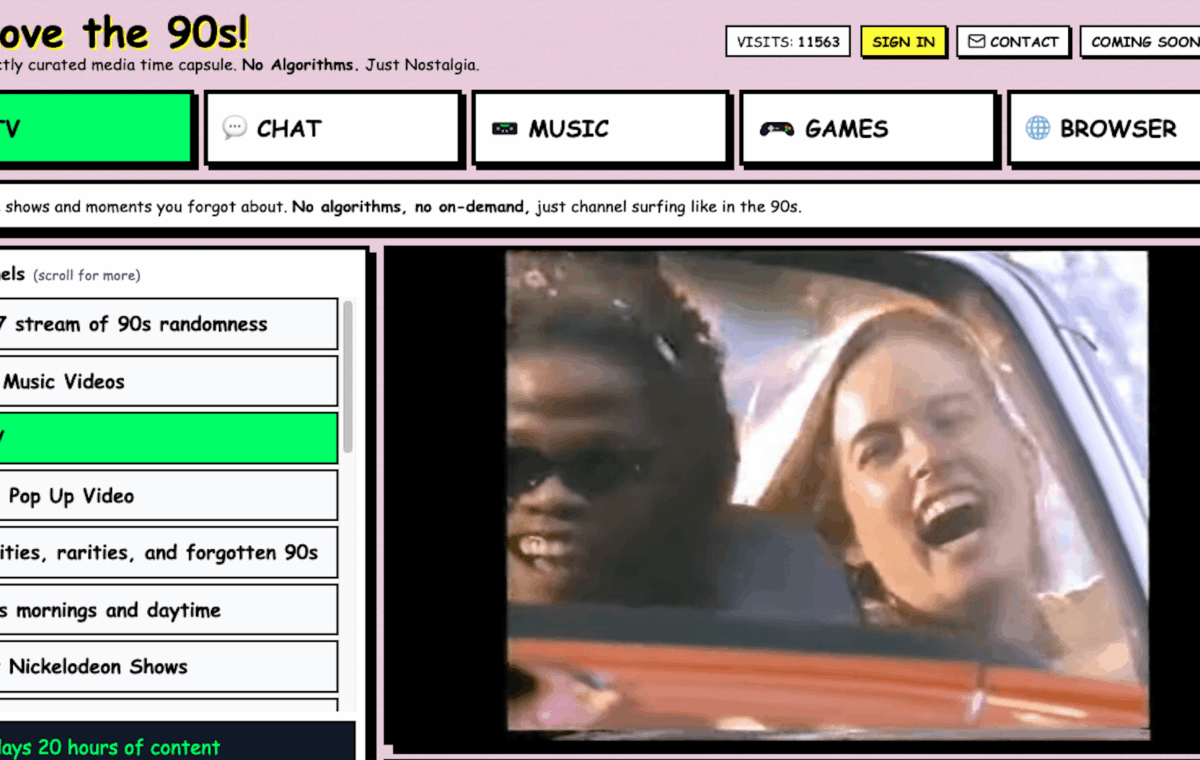
Described as a “perfectly curated media time capsule” of websites “when they never looked better,” I Love the 90s! boasts no algorithmic interference, bots, or AI-tainted content. Instead, over 11,000 visitors (and counting) have accessed nearly 100 days’ worth of YouTube and Archive.org uploads spanning classic MTV and VH1 music videos, kid’s shows, “lost” Nickelodeon episodes, and even steady streams of 90s commercials and movie trailers. A browser tab also offers Internet Archive versions of sites like Yahoo (1996), Craigslist (1997), and Geocities (1997), while the music section’s catalog is designed to mimic a classic Windows Media Player.
Some features aren’t technically throwbacks, but at least maintain the throwback aesthetic. I Love The 90s! also integrates The Weather Channel’s recently debuted Retrocast, which brought back its popular meteorological look for up-to-date local forecasts. Creating an account also unlocks more online amenities including a 24/7 chatroom, the ability to build a buddy list, and an option to save your favorite tunes—just remember the website’s overall conceit.
“This isn’t Spotify,” the website warns. “Want a playlist? Burn or borrow a CD-R.”
2026 Popular Science Home of the Future Awards
39 products that will improve your everyday life.
Andrew Paul is a staff writer for Popular Science.