Published: 16:00 BST, 12 August 2026 | Updated: 01:13 BST, 13 August 2026
Britain's worsening drought could trigger outbreaks of infectious diseases, scientists have warned.
As rivers and ponds dry up, animals and disease-carrying insects can be forced into ever-smaller pockets of water, creating potential hotspots for infection.
A new review has examined almost 100 previous studies to investigate how increasingly dry conditions could reshape the spread of infectious diseases.
Britain is not immune to the disease risks created by drought, although the threats here would be different from those seen in other parts of the world.
One of the biggest concerns is leptospirosis, also known as Weil's disease, which is a bacterial infection already found in the UK.
The disease is spread by bacteria carried in the urine of infected animals, particularly rats and livestock, which can contaminate rivers, lakes and other waterways.
An infected human can experience symptoms from mild flu-like aches to life-threatening organ failure.
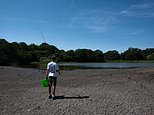
As rivers and ponds dry up, animals and disease-carrying insects can be forced into ever-smaller pockets of water, creating potential hotspots for infection. Pictured: The exposed, cracked and dried mud bed of Hollow Pond in east London
The researchers, from the University of Colorado at Boulder, warn that climate change is making droughts more frequent, extreme and unpredictable, creating a new challenge for controlling disease.
They warned that in the US and parts of Europe, West Nile virus and cholera could become more common thanks to increased dry spells.
While West Nile virus is not currently circulating in British mosquitoes, experts are already monitoring the possibility of it becoming established as the climate changes.
The UK Health Security Agency detected fragments of West Nile virus genetic material in British mosquitoes for the first time in 2023, although officials stressed there is currently no evidence of ongoing transmission in the UK.
Weil’s disease, on the other hand, is already present in the UK and is carried by animals including rats and livestock.
The bacteria can contaminate rivers, lakes and other surface waters through animal urine, and people can become infected when contaminated water gets into cuts or through the eyes, nose or mouth.