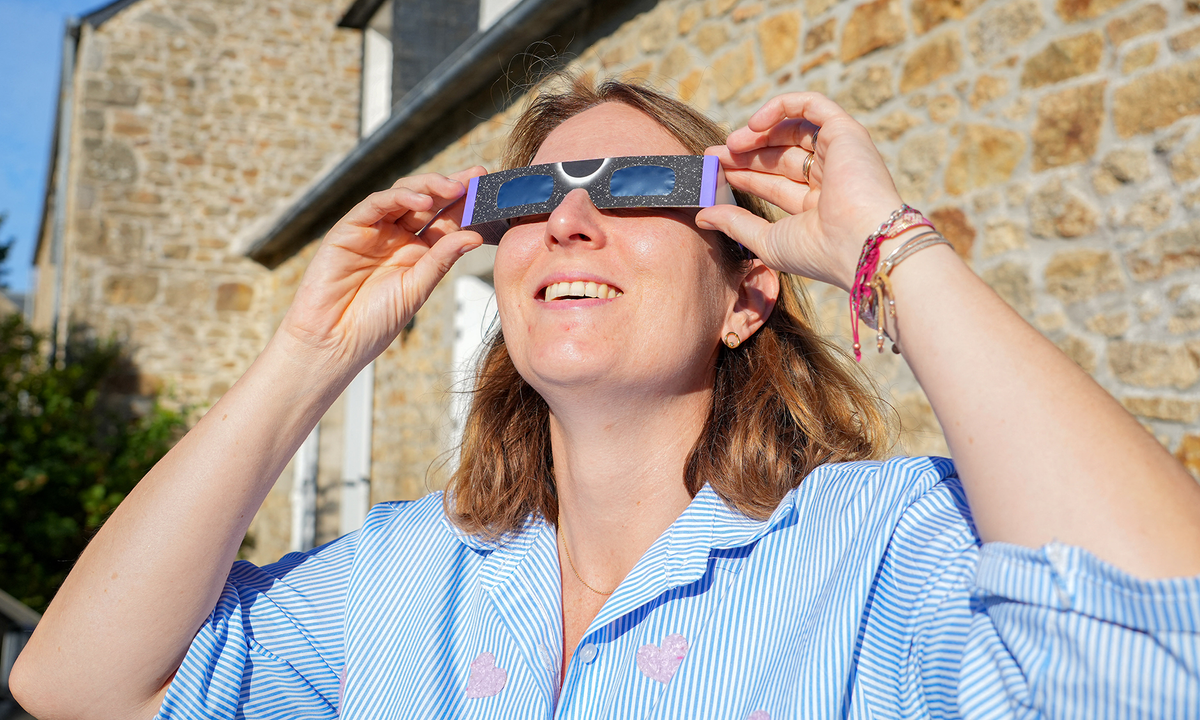
Are you watching the solar eclipse and Perseid meteor shower tonight? Live Science readers reveal their thoughts about tonight's stargazing phenomena
When you purchase through links on our site, we may earn an affiliate commission. Here’s how it works.
For space fans and skywatchers, Wednesday, Aug. 12 is destined to be a date for the history books. Viewers in North America — including Alaska, eastern Canada and parts of the northeastern U.S. — will be able to see a partial solar eclipse during the daytime.
Across the pond, a total solar eclipse will be visible from eastern Greenland, western Iceland and northern Spain. (If you're planning to see this rare event in person, it's important to wear certified solar eclipse glasses during the partial phases of the eclipse — which means throughout the entire eclipse for everyone in North America. We have some solar eclipse gear suggestions that can help you watch this skywatching event from anywhere.)
Once the sun goes down, the night sky will offer its own treat: the Perseid meteor shower, which peaks overnight on Aug. 12-13. Thanks to a new moon, stargazers will have an even better chance of catching these lights streaking across the night sky, with the best hours to watch occurring from midnight to 2 a.m. local time. According to The Planetary Society, observers in dark-sky areas can hope to catch between 50 and 75 meteors per hour. The dark skies also make it a great night to try observing the Milky Way or the six planets that will appear together before dawn.
In a Live Science poll, we asked our readers whether they would be observing today's solar eclipse or tonight's Perseid meteor shower.
More than 240 readers responded to the poll, which was published Aug. 10. At the time of writing, the results showed that 51% of respondents will be watching both events, with 21% interested only in the Perseid meteor shower. About 20% of readers noted that they're not in a great place to watch the solar eclipse, with one commenter noting, "I'm in Georgia, not a viewing area, but I'll be looking online!" (Space agencies NASA and ESA will both be offering live streams of the eclipse from Spain, starting around 1 p.m. EDT).
What was perhaps the most surprising is that 2% of readers admitted they will not be watching either event but will instead stay inside and “scroll on Instagram.”
But some of those who are planning on witnessing these rare phenomena are making it an experience to remember. One commenter mentioned, "My brother is heading to Spain for the eclipse, meeting with a group of surfers, they'll surf into the eclipse."
Get the world’s most fascinating discoveries delivered straight to your inbox.
Will you be enjoying today's skywatching events? Let us know in the comments below.
Kenna Hughes-Castleberry is the Content Manager at Live Science. Formerly, she was the Content Manager at Space.com and before that the Science Communicator at JILA, a physics research institute. Kenna is also a book author, with her upcoming book 'Octopus X' scheduled for release in spring of 2027. Her beats include physics, health, environmental science, technology, AI, animal intelligence, corvids, and cephalopods.
You must confirm your public display name before commenting
Please logout and then login again, you will then be prompted to enter your display name.