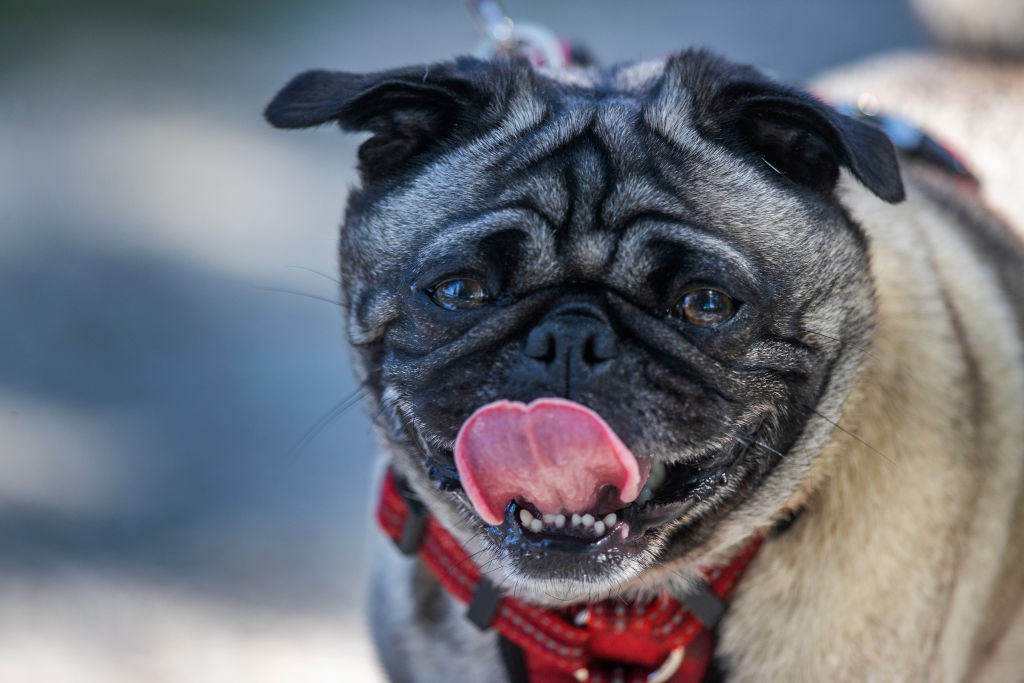
You might be surprised to learn that Dr. Daniel Griffin, chief of infectious diseases at Island Infectious Disease Medical in Long Island, N.Y., lets his two dogs lick him.
He’s not delusional. “We know how dogs greet each other,” he says. “We know where that tongue has been.” But he lets his expertise take over afterward. Griffin diligently washes his hands after his dogs lick them, especially before picking up a slice of pizza.
That’s more or less the expert consensus: love the pet, wash your hands. Living closely with pets brings you closer to germs, but for most people, ordinary contact is low-risk. There are exceptions, however. Here, experts answer the face-licking question and eight others about hygiene and animals you might encounter.
First, forget the thing you may have heard your whole life. “I used to hear, ‘Oh, dogs’ mouths are like 10 times cleaner than people’s mouths,’” says Kelley Steury, a veterinarian and clinical associate professor at the University of Nevada, Reno School of Public Health. “I don’t think that’s based in science.”
A dog’s mouth, like a person’s, is full of bacteria. One species commonly found in dogs, Capnocytophaga canimorsus, can occasionally cause serious illness in people. Most of the time, though, nothing happens. “It doesn’t really pose a problem,” Steury says. The trouble starts when saliva gets past the body’s defenses—through a bite or into an open cut, for example. In rare cases, the infection can progress to sepsis and become fatal.
The risk also depends on who’s getting licked. People being treated for cancer or taking immune-suppressing drugs are more vulnerable to severe C. canimorsus infection. So are people without a spleen and those with alcohol-use disorder. But for healthy kids and adults, the occasional lick is fine, experts say.
Official guidance takes the cautious route, though: Keep dogs away from your mouth and face, and don’t let them lick open wounds. Saliva is more of a concern when it reaches broken skin or a mucous membrane, such as the mouth or eyes. If your dog gets you anyway, wash the area afterward. And if you’re immunocompromised or don’t have a spleen, ask your doctor what precautions make sense. But the fact that dogs, like so many of our daily exposures, can carry germs is not “a reason to not own a dog,” she says.
A cat lick is usually a non-event, too, provided your skin is intact. Cats commonly carry Pasteurella multocida, but on unbroken skin, Steury says, it “pretty much will not be a problem at all.”
Experts are more concerned about bites. A cat’s teeth are narrow and sharp, so they often puncture instead of scraping the surface. “The tooth acts kind of like a needle,” Steury says, “and it’ll inject that bacteria into your deep tissues.” What looks like a pinprick can be a deeper wound than it appears.
If a cat bite breaks the skin, wash it immediately with soap and running water and see a medical provider, Steury says.
“I definitely respect the claws of cats,” says Dr. Peter Chin-Hong, an infectious disease specialist at the University of California, San Francisco.
If a claw catches you, wash your skin right away with soap and running water. The goal is to rinse the bacteria away before it settles in, not to disinfect. “Disinfectants don’t kill everything,” he says. “Running things are better than stagnant things in general.”
After that, pay attention to the area. Increasing redness, pus, or a fever over the next several days are all reasons to see a medical professional. So is a swollen lymph node on the same side of your body as the scratch, which can signal cat-scratch disease, a bacterial infection most common in kids. Location matters, too. Chin-Hong is extra cautious when a bite or scratch lands directly over a joint, where an infection can be harder to treat.
Coming home from surgery might be when you most want your furry friend on your bed. It’s also when experts want you to put a little distance between your pet and whatever is healing.
Dr. Ashley Drews, an infectious disease specialist at Houston Methodist, has seen patients develop infections after a pet licked an incision or surgical drain. “That’s not a good idea,” she says. Keep the site covered and your pet away from it.