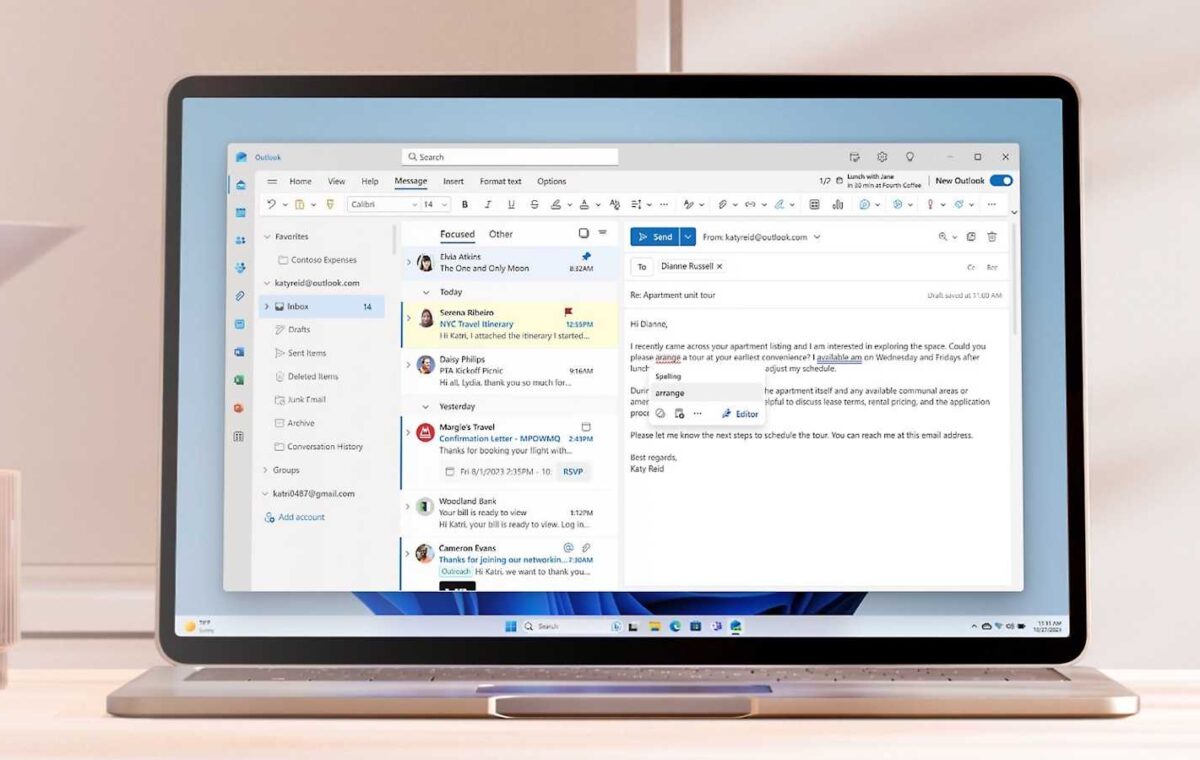
For several months now, the ‘Try the new Outlook’ button has been appearing in the classic Outlook, allowing you to switch to the new version of the email program. Microsoft hopes that as many users as possible will make the switch as soon as possible. However, the new version still lags significantly behind the old one in terms of functionality.
Furthermore, it only allows emails to be stored online on a Microsoft server. If you want to ensure that the button for the new Outlook isn’t accidentally clicked, you can remove it using a registry entry. To do this, first close the classic Outlook. Then type regedit into the search box on the taskbar and click on the ‘Registry Editor’ result.
If you want to avoid accidentally activating the new version of Outlook, you can remove the toggle in the classic Microsoft Outlook.
Follow the path “HKEY_CURRENT_USERSoftwareMicrosoftOffice16.0OutlookOptionsGeneral” and right-click in the right-hand pane. Select ‘New > DWORD (32-bit) Value’ and name the new value ‘HideNewOutlookToggle.’
Then double-click it and enter 1 as the value. When you restart Outlook, the toggle will have disappeared.
Further reading: Windows’ new Outlook app: 4 key details you absolutely need to know
This article originally appeared on our sister publication PC-WELT and was translated and localized from German.