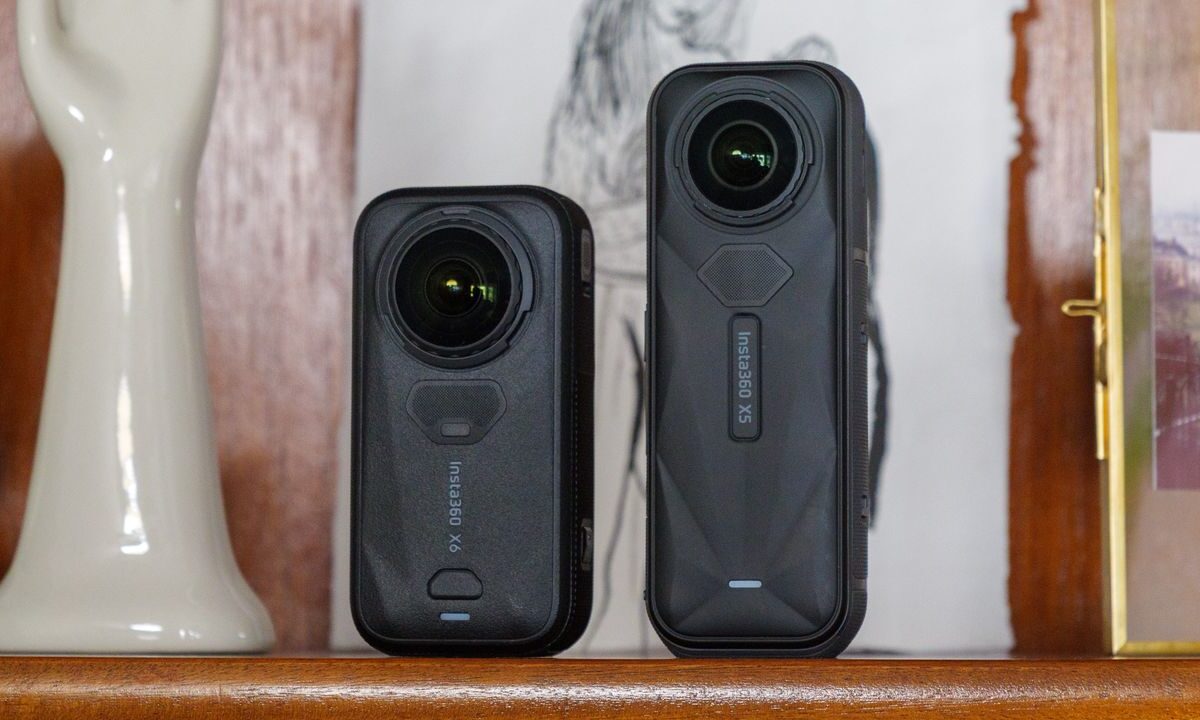
The Insta360 X6 beats the X5 in five head-to-head tests, but the gap isn't as wide as the spec sheet suggests — here's what's actually worth paying more for
When you purchase through links on our site, we may earn an affiliate commission. Here’s how it works.
Like the X5 was before it, the X6 is the best all-round 360 camera you can buy, offering excellent image quality day and night.
A rugged, reliable camera that makes the process of making great 360 videos wonderfully simple.
The Insta360 X5 has sat at the top of TechRadar's best 360 camera guide since its arrival in the spring of 2025, fending off strong challenges from the DJI Osmo 360 and the GoPro Max 2 along the way. Despite the competition, it's been the 360 camera to beat for well over a year.
Now in steps another model, this time from within Insta360 itself; the X6, which arrives as the company's tenth-anniversary flagship. On paper the X5's successor is a significant step up across almost every major spec: bigger sensors, faster frame rates, tougher waterproofing, longer battery life, and a set of pro-video tools the X5 doesn't have.
I've spent time testing both 360 cameras extensively — check out my Insta360 X6 review — and while the X6 isn't a wholesale reinvention of the formula, the upgrades it does bring are real and, in several cases, substantial. Here are the five biggest differences you need to know about if you're deciding between them, followed by my early verdict on which one deserves your money.
The headline hardware change between these two cameras is sensor size. The X5 introduced dual 1/1.28-inch sensors that were a big step up from the X4's, and the X6 goes further still with a new pair of 1/1.1-inch sensors. Insta360 says that's 33% more sensor area, and around four times the light intake per frame.
In practice, I'd say the difference this makes in good daylight conditions is real but subtle, and not as dramatic a jump as the X4-to-X5 upgrade was. Where the X6 really pulls ahead is in low light. The X5's PureVideo mode was already the best low-light performer in its category, but the X6 pushes noise reduction and detail retention further still, helped by 10-bit color depth now being supported across every shooting mode — including PureVideo, which wasn't the case on the X5.
The maximum frame rate and resolution have both gone up too. The X6 shoots 360 video at up to 8K/50fps, compared with the X5's 8K/30fps cap, giving smoother results at the top resolution. And 360 photo resolution has increased from 72MP on the X5 to 120MP on the X6.
None of this makes the X5's image quality suddenly look poor; it remains excellent for its generation. But if outright image quality, in any light, is your priority, the X6 is a genuine step forward rather than an incremental one.
Sign up for breaking news, reviews, opinion, top tech deals, and more.
Both cameras were already rugged by 360 camera standards, but the X6 pushes things further – and deeper. It's IP68-rated and waterproof to 20m without any additional housing, compared with the X5's 15m — a significant improvement if you regularly shoot unhoused underwater footage rather than reaching for a case every time. Both cameras reach 60m with their respective official dive cases, so we can call it even for serious diving use.
Lens durability has improved too. Insta360 says the X6's lenses are five times more scratch-resistant than the X5's, and cheaper to replace on top of that (from $26.99 US / £20.99 UK / AU$35.99 opposed to from $29.99 US / £29.99 UK / AU$54.99). I didn't manage to put either camera's lenses to a real scratch test during my reviews, but the X5's tool-based replacement system was already reliable and affordable, so this looks like a refinement of something that wasn't broken rather than a fix for something that was.
Body design plays into durability too, if less directly. The X6 is squatter and lower-profile than the X5's familiar candy-bar shape (DJI and GoPro rivals are squatter-still), which may make it a more comfortable, less obtrusive fit for helmet mounts or other body-worn setups, and slightly less exposed to knocks in the process.