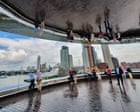
The regeneration of historic warehouses has transformed this former red-light district into one of the port city’s most vibrant areas
A thin peninsula just south of Rotterdam’s centre, Katendrecht was once at the heart of the world’s busiest port, home to continental Europe’s first Chinatown and a lively sailors’ quarter. Its later reputation as a red light district has been shrugged off – part of the city’s wider reinvention in the aftermath of extensive second world war bombing.
Still Europe’s largest port, Rotterdam’s maritime history is very much evident today, with the former headquarters of the Holland-America Line now a hotel just a short hop across the Rijnhaven Bridge. The 2012 opening of this pedestrian and bicycle bridge finally connected cut-off Katendrecht to Wilhelminapier, which was a jumping off point for transatlantic migration, and is today a major cruise terminal, with more than 100 ships departing every year.
The opening of the Fenix museum of migration last year and the reopening of the Nederlands Fotomuseum in a new location here in February have accelerated Katendrecht’s rise in status, following on from the entrepreneurs and creatives who have introduced craft breweries, food halls and design boutiques in recent years.
Former warehouses have been transformed – into the aforementioned museums among other venues – and a lively cultural and arts scene has grown as the neighbourhood has seen new residents rediscover the formerly downtrodden area.
With more big construction projects under way, Katendrecht will be transformed further over the next five years, with apartments, shops, a five-star hotel, an urban beach and, notably, the Rotterdam Centre for Dance, Danshuis, on the horizon.
Deliplein is the place to begin – the tree-lined square lies at the heart of the old sailors’ quarter and houses more than 20 restaurants and bars. Originally home to the first Chinese restaurant in the Netherlands, Delistraat is buzzing from morning to night.
Start at Jordy’s Bakery, where flaky pastries, vegan muffins, sourdough sandwiches and speciality coffees will fuel you for the morning. Across the road in the Fenix atrium, O: Anatolian Café is run by the Michelin-starred chef Maksut Aşkar; on the menu are all-day Turkish breakfasts, meze platters, sandwiches and salads at extremely reasonable prices.
Kaapse Brouwers in the Fenix Food Factory is where the post-work crowd heads. Sit on the terrace, admire the waterfront view and explore its range of more than 20 craft beers on tap – from Belgian blonds and New England IPAs to pilsners and sours. And back on Delistraat, Café de Ouwehoer is a classic old-style pub with a nod to the area’s past – and a huge range of whiskeys to boot.
A few doors down, finish your evening at the small but perfectly formed fine-dining establishment De Matroos en Het Meisje (The Sailor and the Girl), which offers a changing daily menu. With the option of choosing from four to six courses, dependent on season and produce, dishes could be charred carrot, cured Japanese fish, creme fraiche and onion, or chicken breast with mushroom beurre blanc, blackberries and crisped rice.
Fenix is the obvious first stop. Funded by the philanthropic foundation Droom en Daad (Dream and Do), the museum of immigration opened last May in a renovated historic warehouse and finally gave Katendrecht a real focal point for visitors.
Formerly part of the world’s largest warehouse for cargo transfer, the museum reflects the fact that millions of migrants arrived at and departed from the port in search of a new life. At its heart is the Tornado, a spectacular mirrored spiral staircase, which offers 360-degree views across the neighbourhood, docks and the city. It symbolises the central theme, with architect Ma Yansong describing it as “a metaphor for the journeys of migrants”.
The industrial space is used sparingly to display photography, art and sculpture that communicate the experience of immigration, movement and displacement of peoples. It’s humbling and moving. The exhibition All Directions features more than 100 artists, with stories of the war in Kyiv and refugee camps in Tunisia, Jordan and Lebanon, as well as a lifesize New York bus made from fabric.
The Family of Migrants exhibition showcases more than 200 photos from around the world, depicting the story of migration from the late 19th century to the present day. And the Suitcase Labyrinth has about 2,000 donated cases, dating from 1898 to today, with 30 audio stories detailing the unique past of some of them.
Farther down the waterfront, the newly opened Nederlands Fotomuseum is also in a renovated warehouse – formerly used to store coffee from Brazil – and is topped with a modern anodised aluminium structure. Inside, the exposed brick, rough-edged concrete and steel girders offer a striking contrast to the impressive photography on display.